If you run a business in Qatar and you have ever searched for your own company on Google, you probably noticed something frustrating. Either you don’t appear at all, or you’re buried somewhere on page three behind competitors who, frankly, offer less than you do. This is not a coincidence. It is the direct result of how search engine optimization works in a market like Qatar, where digital adoption is sky-high but strategic online visibility remains surprisingly low.
Qatar has one of the highest internet penetration rates on the planet. According to DataReportal’s 2025 overview, approximately 99.1% of the population is connected to the internet, with over 2.91 million active users in a country of roughly 2.95 million residents. Mobile connectivity sits above 96%, and the average Qatari user spends more than 7 hours daily online. Google commands around 96.3% of the search engine market share in the country. These numbers tell you one thing clearly: your customers are searching. The question is whether they are finding you or someone else.
The gap between how digitally active people in Qatar are and how poorly most local businesses handle their online presence is staggering. Restaurants in The Pearl still rely entirely on Instagram. Engineering firms in West Bay have websites that haven’t been updated since 2019. Retail shops in Villaggio and Landmark Mall pour money into paid ads without a single organic search strategy in place. This is the reality on the ground, and it represents one of the biggest missed opportunities in the GCC right now.
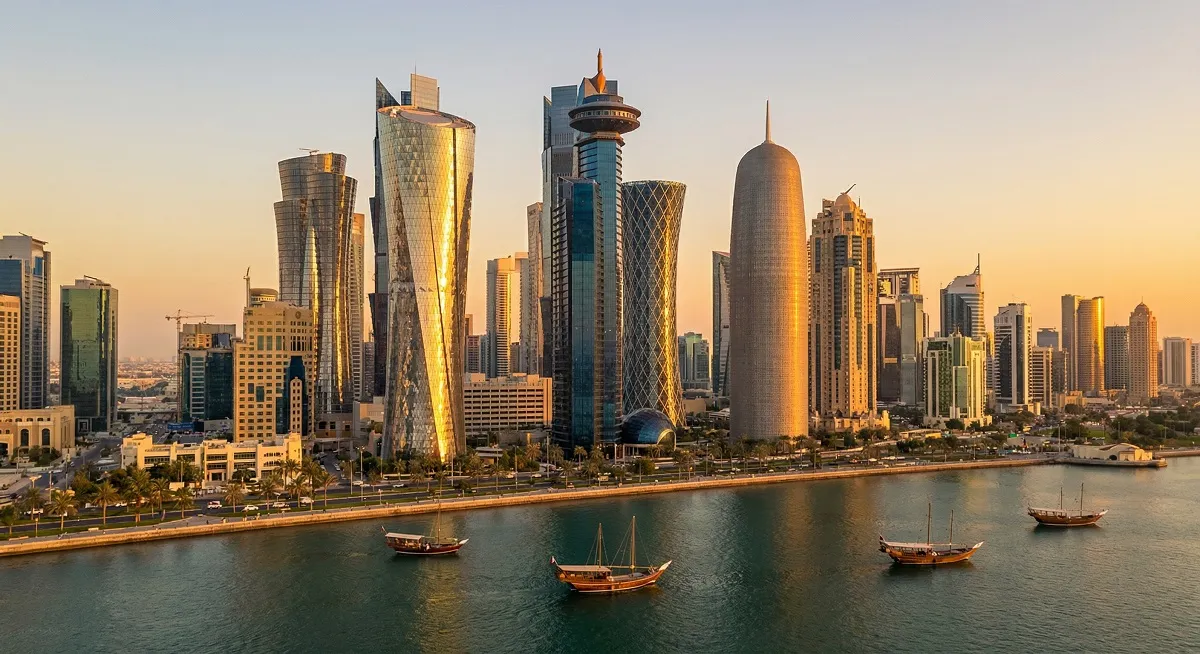
How People in Qatar Actually Search on Google
Understanding search behavior in Qatar requires looking beyond just keywords. The population here is roughly 85-88% expatriate, coming from South Asia, Southeast Asia, the Arab world, Europe, and North America. This creates a unique search landscape where English dominates commercial queries, Arabic drives a significant portion of local service searches, and a growing number of queries come through voice search on mobile devices.
When someone in Lusail types “best Italian restaurant near me” at 8 PM on a Thursday, Google is not just matching keywords. It is evaluating which restaurants have optimized Google Business Profiles, which have recent reviews, which websites load fast on mobile, and which ones provide structured data that Google can actually read. The same applies when a procurement manager at Qatar Energy searches for “industrial equipment supplier Doha” during work hours. The businesses that show up earned that spot through deliberate effort, not luck.
Voice search adds another layer. With the massive smartphone penetration in Qatar, people are increasingly asking Google questions in a conversational tone. Phrases like “where can I get my car serviced in Al Wakrah” or “what’s the best nursery in Al Rayyan for toddlers” are actual queries that trigger local results. If your website doesn’t answer these questions naturally within its content, you’re invisible to this entire segment of potential customers.
One detail that most agencies overlook in Qatar is the Arabic search volume. While English gets more total searches, Arabic queries often have far less competition and much higher conversion intent. Someone searching “مطعم لبناني في الدوحة” (Lebanese restaurant in Doha) is ready to visit, not just browsing. The businesses that invest in Arabic SEO alongside English capture both audiences and essentially double their visibility.
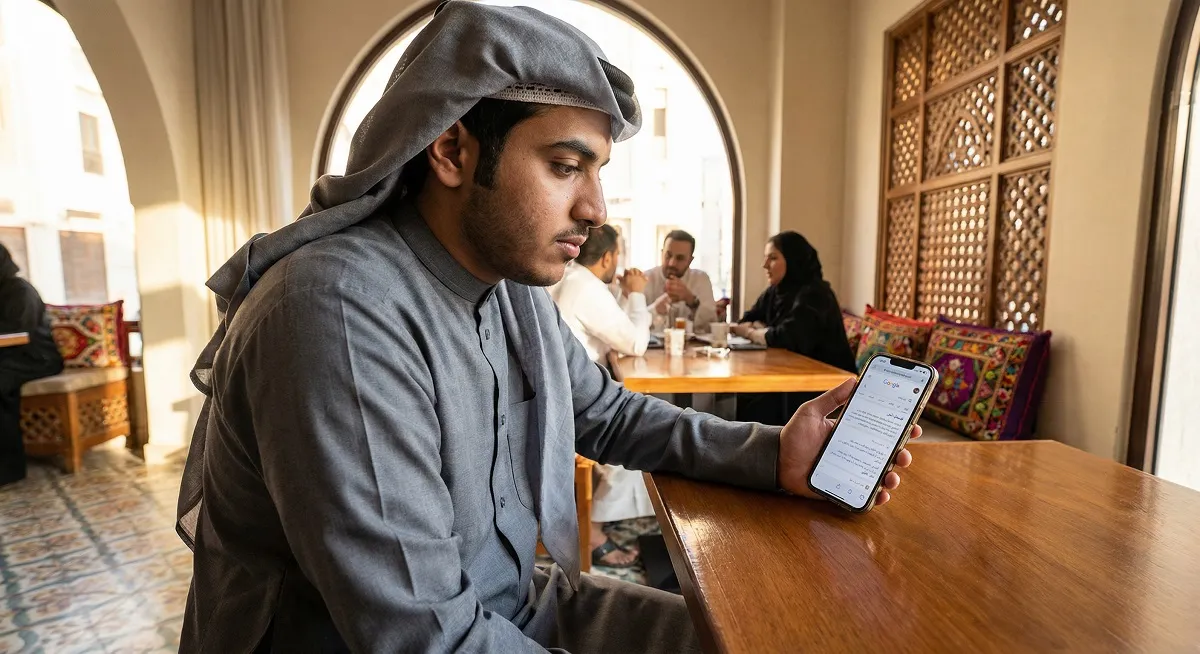
The Bilingual Problem: Why One Language Is Never Enough in Qatar
Here is where things get interesting and where most businesses in Qatar make their first critical mistake. They build a website in English and assume that covers everyone. Or worse, they create a Google-translated Arabic version and think that qualifies as bilingual content. Neither approach works, and Google knows the difference.
A properly built bilingual website for the Qatar market means two things. First, the technical structure has to be correct. This involves hreflang tags, separate URL structures for Arabic and English content, RTL (right-to-left) design considerations for the Arabic version, and proper encoding. Second, the content itself has to be natively written for each language. Not translated. Written. There is a massive difference between translating a service page and creating Arabic content that uses the actual phrases and terminology your Arabic-speaking customers search for.
Consider a dental clinic in Al Sadd. Their English page might target “teeth whitening Doha” while their Arabic page should target “تبييض الأسنان الدوحة” with content structured for how Arabic speakers phrase questions and expect information. These are two different content strategies under one brand roof. Clinics, law firms, real estate agencies, and even automotive showrooms that get this right see measurable jumps in traffic within 60 to 90 days.
The data backs this up. In 2025, Arabic internet content still represents less than 3% of all content online despite Arabic being the fifth most spoken language globally with over 420 million speakers. In Qatar specifically, Arabic search queries for services like accounting, legal consultation, healthcare, and education have grown by an estimated 18-22% year over year. Businesses that invest in genuine Arabic SEO are competing in a space where the supply of quality content is far lower than the demand.
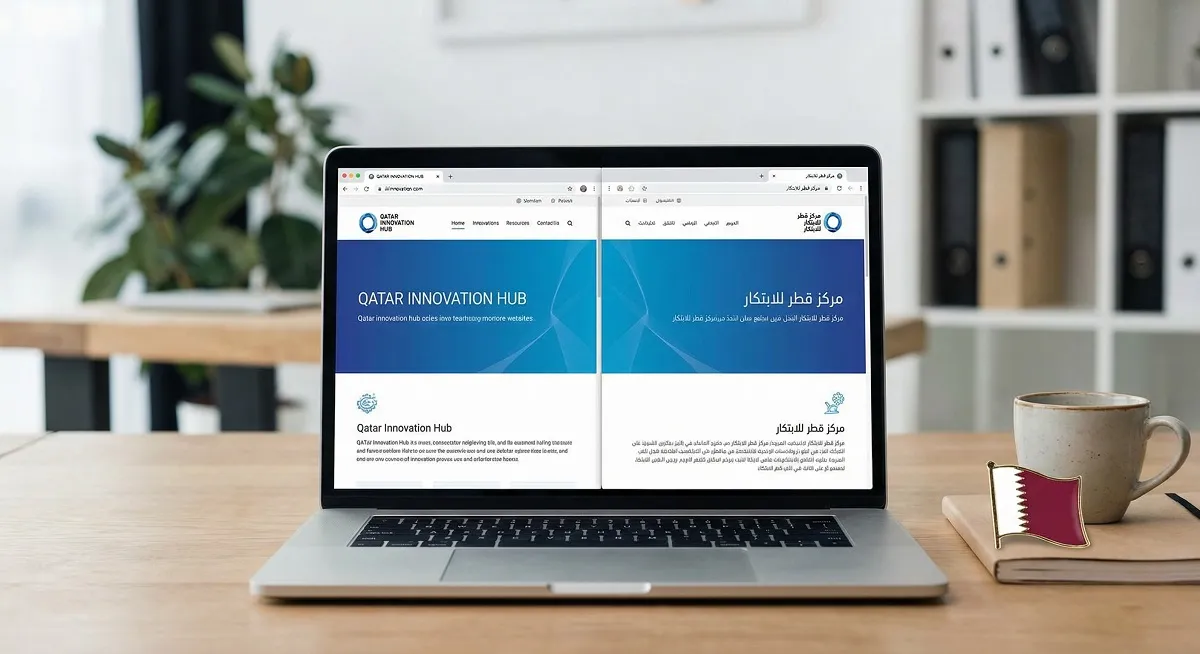
Website Design in Qatar: What Google Actually Rewards in 2026
Let’s be direct about something. A beautiful website that loads slowly, isn’t mobile-optimized, and has no technical SEO foundation is just an expensive digital brochure. It might impress people you send the link to directly, but Google will never recommend it to anyone searching for what you offer.
Google’s Core Web Vitals remain a ranking factor in 2025, and this is where many Qatar-based websites fall short. Largest Contentful Paint (LCP) needs to be under 2.5 seconds. First Input Delay has been replaced by Interaction to Next Paint (INP), which should be under 200 milliseconds. Cumulative Layout Shift (CLS) should stay below 0.1. These are technical benchmarks that directly affect whether your website ranks or not, and most sites built by agencies in the region don’t meet them.
Beyond speed, website architecture matters enormously. A single-language website for an English-speaking audience in Qatar requires clean navigation, service pages targeting specific local keywords, a blog strategy that answers real questions people ask on Google, and proper schema markup so Google understands what your business actually does. A bilingual Arabic-English website doubles the structural complexity but also doubles the opportunity.
E-commerce websites in Qatar face even more specific challenges. The Qatar e-commerce market was valued at approximately $5.8 billion in 2024 and is projected to exceed $7.2 billion by 2026, according to Statista. With platforms like Snoonu, Talabat, and various independent Shopify stores competing, product page SEO becomes critical. Product titles, descriptions, image alt text, category page optimization, and internal linking all determine whether your products show up when someone searches “buy office furniture Doha” or “عطور رجالية اونلاين قطر” (men’s perfume online Qatar).

Local SEO and Google Business Profile: The Most Underused Tool in Qatar
If there is one thing that delivers the fastest return for businesses in Qatar, it is a properly managed Google Business Profile. And yet, most business profiles in Doha are either unclaimed, incomplete, or haven’t been updated in months.
When someone searches “car wash near me” in Doha, Google pulls results from Google Business Profiles first. Before any website. Before any ad. The map pack, those three businesses that appear with a map at the top of search results, gets clicked more than 42% of the time on mobile devices. If your profile is not in that pack, you are losing customers every single day to competitors who may not even be better than you.
Managing a Google Business Profile is not just about filling in your phone number and address. It involves regular posting, responding to reviews strategically, adding photos consistently, updating business hours for holidays and Ramadan, using Google’s Q&A feature, and selecting the correct business categories. For businesses with multiple locations in Qatar, whether in Doha, Al Khor, Al Wakrah, or Lusail, each location needs its own optimized profile with unique descriptions and localized keywords.
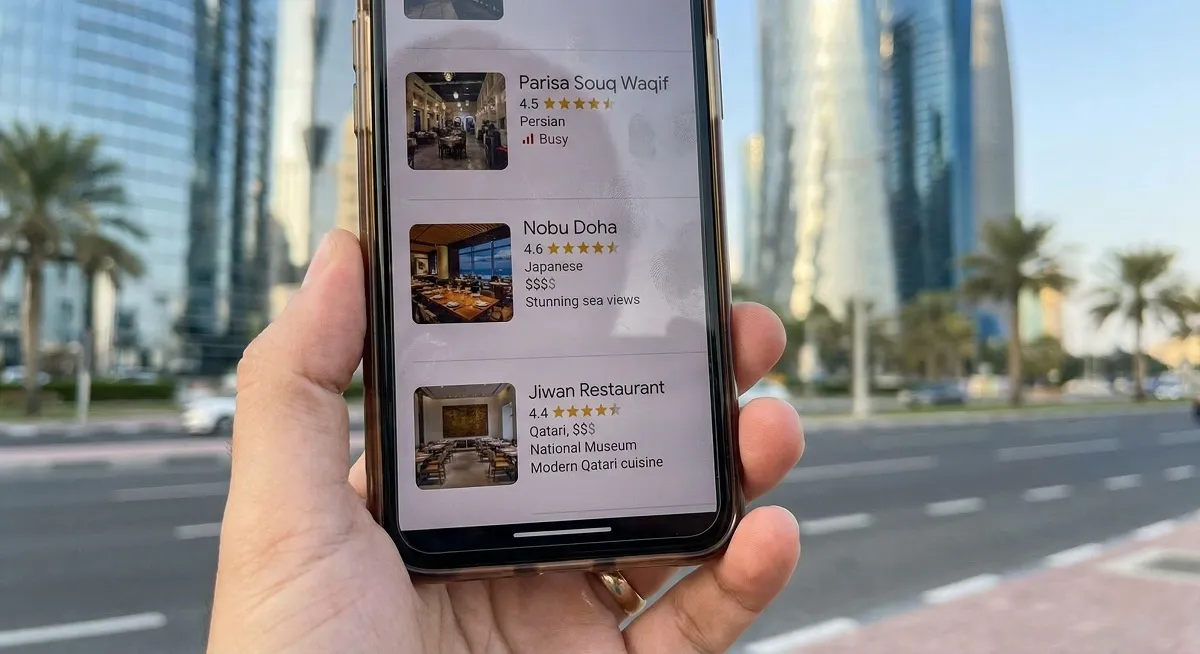
Restaurants and cafés in Qatar have an added opportunity here. Google Business Profiles for food establishments now integrate menu information, reservation links, popular times data, and review sentiment analysis. A shisha lounge in Katara Cultural Village or a fine dining restaurant in Msheireb Downtown that fully optimizes their profile will consistently outrank competitors who only focus on social media.
Hotels and hospitality businesses in Doha have a parallel opportunity on TripAdvisor, which still drives a significant amount of booking decisions for tourists. Qatar welcomed approximately 4.1 million international visitors in 2024, building on the post-FIFA World Cup momentum. Hotels in West Bay, The Pearl, and Lusail that manage their TripAdvisor presence alongside their Google profile create two powerful visibility channels. Responding to reviews, updating property photos, and ensuring NAP (Name, Address, Phone) consistency across both platforms directly impacts search rankings.
E-Commerce SEO in Qatar: The Numbers Most Business Owners Don’t Know
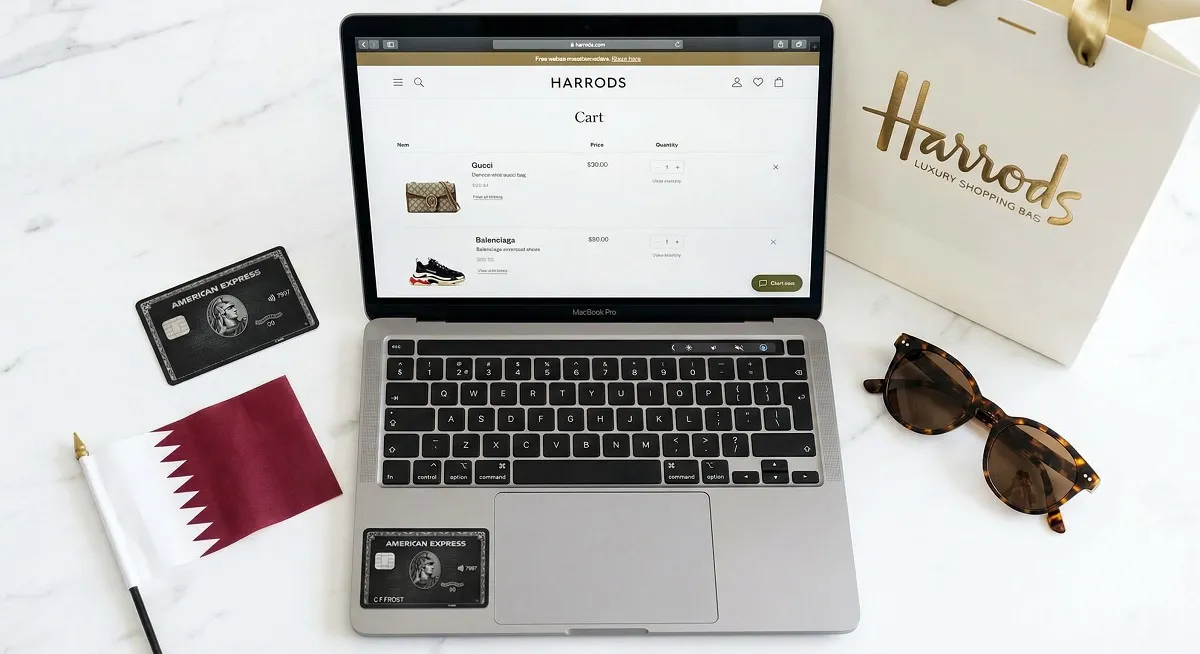
Qatar has one of the highest GDP per capita figures in the world, sitting at roughly $88,000 in 2025. Disposable income is high. Online shopping habits are well-established and growing. Yet the majority of Qatari e-commerce businesses treat SEO as an afterthought, relying almost entirely on Instagram marketing and paid Google Ads.
Here is the problem with that approach. Paid ads stop the moment you stop paying. SEO compounds. A product page that ranks organically for “luxury watches Doha” or “organic skincare Qatar” will continue bringing traffic for months or even years after the initial optimization work. The return on investment is not comparable.
Category pages are particularly important for e-commerce SEO in Qatar. Instead of just labeling a page “Women’s Clothing,” optimizing it as “Women’s Clothing in Qatar – Modest Fashion & Designer Brands” targets a specific search intent while also signaling relevance to Google. Internal linking between related products, proper use of breadcrumb navigation, and strategic keyword placement in product descriptions all contribute to how Google crawls and ranks an online store.
One often-overlooked element is the checkout experience. Google factors in user behavior signals. If users land on your site and immediately bounce because the checkout is confusing or the site feels untrustworthy, those engagement metrics hurt your rankings. Secure payment gateways, clear return policies, and fast mobile loading times are not just UX concerns. They are SEO factors.
Why Most SEO Agencies in the GCC Get Qatar Wrong
This needs to be said because it directly affects business owners making decisions about their digital marketing investment. Many agencies operating in the Gulf treat Qatar the same as the UAE or Saudi Arabia. They apply the same keyword strategies, the same content templates, and the same technical approaches. This is a fundamental mistake.
Qatar’s market has unique characteristics that require tailored strategies. The population density is concentrated heavily in Doha and its immediate surroundings. The expat-to-citizen ratio creates distinct consumer behavior patterns. The business landscape mixes mega-corporations in sectors like LNG, construction, and finance with a growing SME ecosystem supported by Qatar Development Bank. Each of these segments searches differently, buys differently, and trusts different types of online content.
E-E-A-T (Experience, Expertise, Authoritativeness, Trustworthiness) has become Google’s primary framework for evaluating content quality. For businesses in Qatar, this means your website needs to demonstrate genuine local expertise. Case studies from actual projects in Doha. Team pages showing real people with real credentials. Content that references specific Qatar regulations, landmarks, and market conditions. Generic content written for “the Middle East” doesn’t cut it anymore.
The businesses that succeed with SEO in Qatar are the ones that treat it as a long-term investment, not a one-time project. A well-designed single-language website is the foundation. Adding Arabic creates the competitive edge. Consistent Google Business Profile management builds local authority. E-commerce optimization captures high-intent buyers. And for the hospitality sector, TripAdvisor and review management complete the picture.
What Makes SEOinGCC Different from Other Agencies Serving Bahrain?
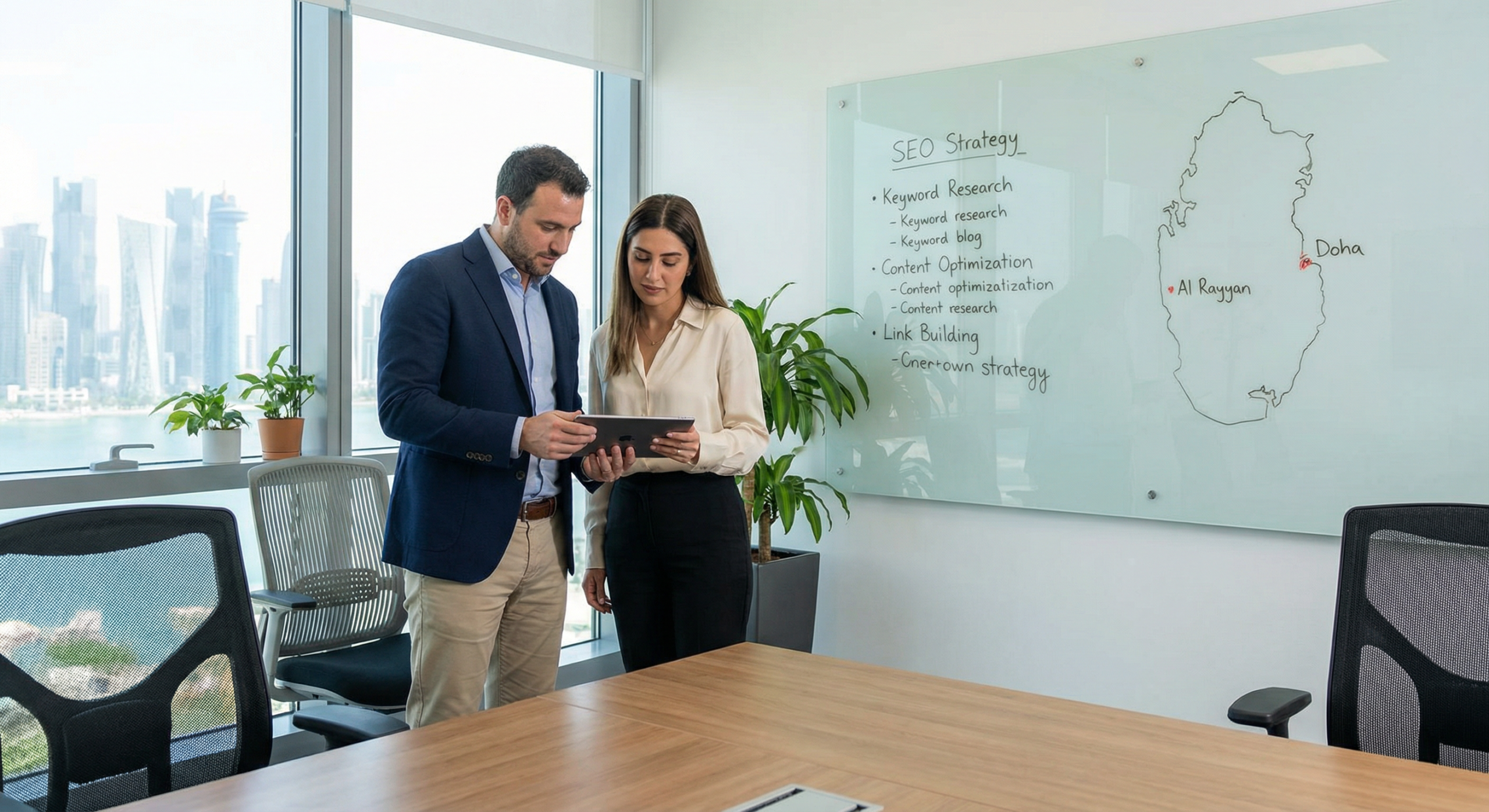
We specialize in the Gulf. Our name is our mission. We do not serve clients in Europe or America and apply their playbook to Bahrain. Every strategy, keyword, content recommendation, and cultural nuance is built for the GCC market.
We separate services clearly. Twelve distinct packages, each with a defined scope, written SLA, and professional contract. You never wonder what you are paying for.
We refuse to cheat. No purchased reviews on Google or TripAdvisor. No keyword stuffing. No link schemes. No cloaking. No manipulation of any kind. Our work survives every algorithm update because it follows every guideline.
We communicate reliably. Monthly PDF reports. Strategy calls. WhatsApp for urgent matters. Email responses within 3 business days. Review responses within 2 business days. These are contractual commitments, not marketing claims.
We set honest expectations. No guaranteed rankings. No promised revenue numbers. We commit to professional execution and transparent reporting. We show you the data and let results speak.
We consolidate intelligently. Our Hotel and Restaurant packages replace the need for multiple separate agreements. No overlapping fees, no duplicated work, no confusion.
SEO Services Packages
Google Business Profile Packages
Web Design Packages
TripAdvisor & Hospitality Packages
The reality is straightforward. Qatar has nearly universal internet access, a wealthy and diverse population, and a business environment that is modernizing rapidly under Vision 2030. The companies that establish strong organic search visibility now, while competition for SEO in Qatar is still relatively low compared to markets like the UAE or Saudi, will hold a significant advantage in the years ahead.
Reach out today:
📞 +968 7922 9535
📧 seoingcc@gmail.com
🌐 SEOinGCC
Whether you are a law firm in West Bay, a restaurant group in Lusail, an online store selling luxury goods, or a contracting company in the Industrial Area, your next customer is already on Google right now looking for exactly what you offer. The only question is whether your business is the one they find.
Yes, and this is where local SEO becomes the great equalizer. A small bakery in Al Wakrah with a properly optimized Google Business Profile and a fast, well-structured website can outrank a large chain for local search queries. Google rewards relevance and quality, not just brand size.
Hotels, restaurants, tour operators, and entertainment venues in Qatar benefit directly from TripAdvisor optimization. With over 4 million tourists visiting Qatar in 2024, travelers frequently check TripAdvisor rankings and reviews before making decisions. Optimizing your listing, managing reviews, and maintaining updated photos and information directly impacts bookings.
Absolutely. For local searches in Doha, the Google Map Pack appears above all organic results. Businesses with fully optimized profiles including regular updates, review responses, and accurate information consistently outperform those without. For restaurants, clinics, salons, and retail shops, it is often the single most important digital asset.
Pricing varies based on complexity. A professional single-language website starts at a different range than a fully bilingual Arabic-English website with e-commerce functionality. The key is not the cost but whether the website is built with SEO architecture from the start, as retrofitting SEO into a poorly built website often costs more than doing it right initially.