Small business Oman online: The Tailor in Al Khuwair Charges More
There were two tailoring shops on the same street in Al Khuwair. Same quality. Similar prices. Both run by experienced craftsmen who could stitch a dishdasha in their sleep. One had a small Google Business Profile with 42 reviews, a WhatsApp booking link, and basic photos showing finished garments. The other relied on his shop sign, his regular customers, and twenty-three years of being on that street.
The first tailor started receiving calls from neighborhoods he had never served — Bausher, Al Mouj, even Sohar. Customers mentioned finding him on Google when searching for “best tailor Muscat” and “تفصيل دشداشة مسقط.” His workload increased by roughly 35% over eight months. He hired an assistant. He raised his prices slightly. Customers still came.
The second tailor noticed his foot traffic dropping. Not dramatically at first — a few fewer customers per week. Then it became noticeable. By month fourteen, he was operating at a loss. Last month, the shop closed. Twenty-three years, gone. Not because the market disappeared, but because the market moved to a place where he did not exist.
This is not a story about tailors. This is a story about every single business in Muscat that believes quality alone is enough. It is not. It has not been for at least three years. Quality gets you referrals from existing customers. Visibility gets you customers who never knew you existed. Referrals sustain a business. Visibility grows one.
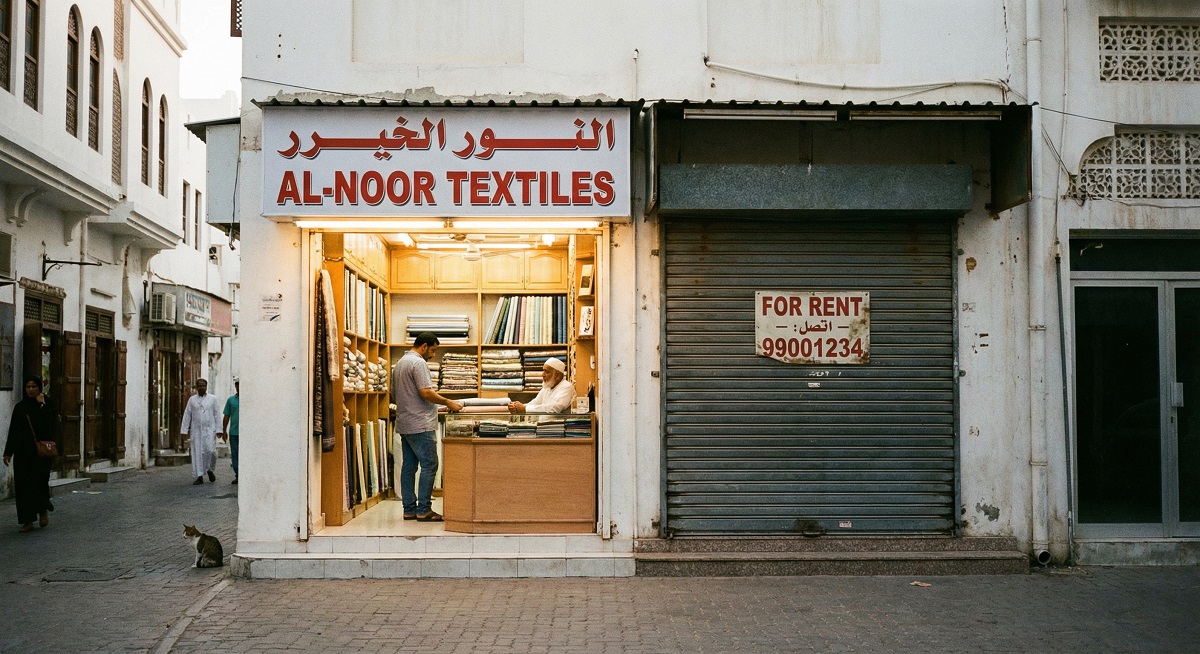
47,000 Businesses. One Google. The Math That Decides Who Grows and Who Doesn’t
Muscat’s commercial landscape is dense. The Ministry of Commerce, Industry, and Investment Promotion reported approximately 47,000 active commercial registrations in the Muscat Governorate as of late 2025. These range from single-person freelance operations to multi-branch retail chains, from home-based catering businesses to industrial manufacturers in Rusayl.
Out of those 47,000, fewer than 4,000 have a functioning website indexed by Google. Fewer than 6,500 have a claimed and complete Google Business Profile. The remaining 36,000+ businesses exist only in the physical world — visible to people who walk or drive past, invisible to anyone who searches.
Now consider how the population of Muscat interacts with the world. Oman’s internet penetration hit 96.4% in 2025. Smartphone ownership exceeds 94%. Google commands 97% of search engine usage in the country. The average Omani resident spends 7.2 hours daily on connected devices. When they need something — a service, a product, a solution — the reflex is not to drive around looking. It is to type and tap.
In a city of 1.5 million people, with nearly universal internet access, the gap between 47,000 businesses and 4,000 websites represents something extraordinary: a market where 91% of businesses have voluntarily made themselves unfindable to the primary tool their customers use to make purchasing decisions.
This is not a technology gap. Technology is available and affordable. This is a perception gap. And the 9% of businesses on the other side of it are absorbing a disproportionate share of revenue growth, new customer acquisition, and market influence.
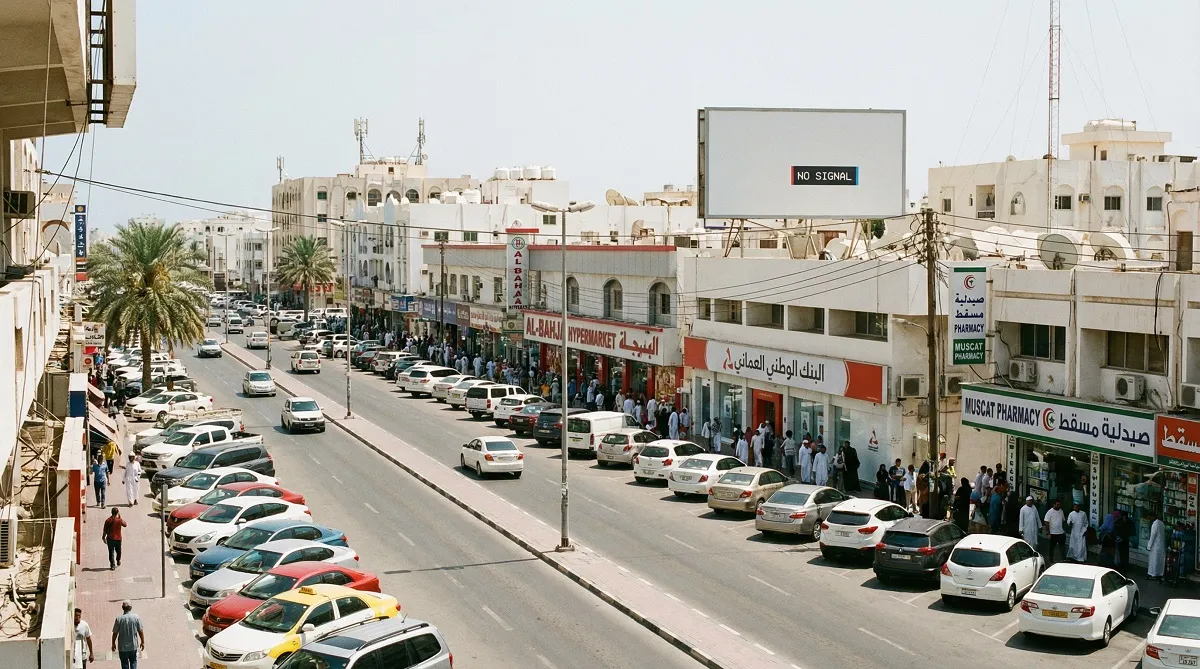
Revenue Does Not Grow by Opening More Hours.
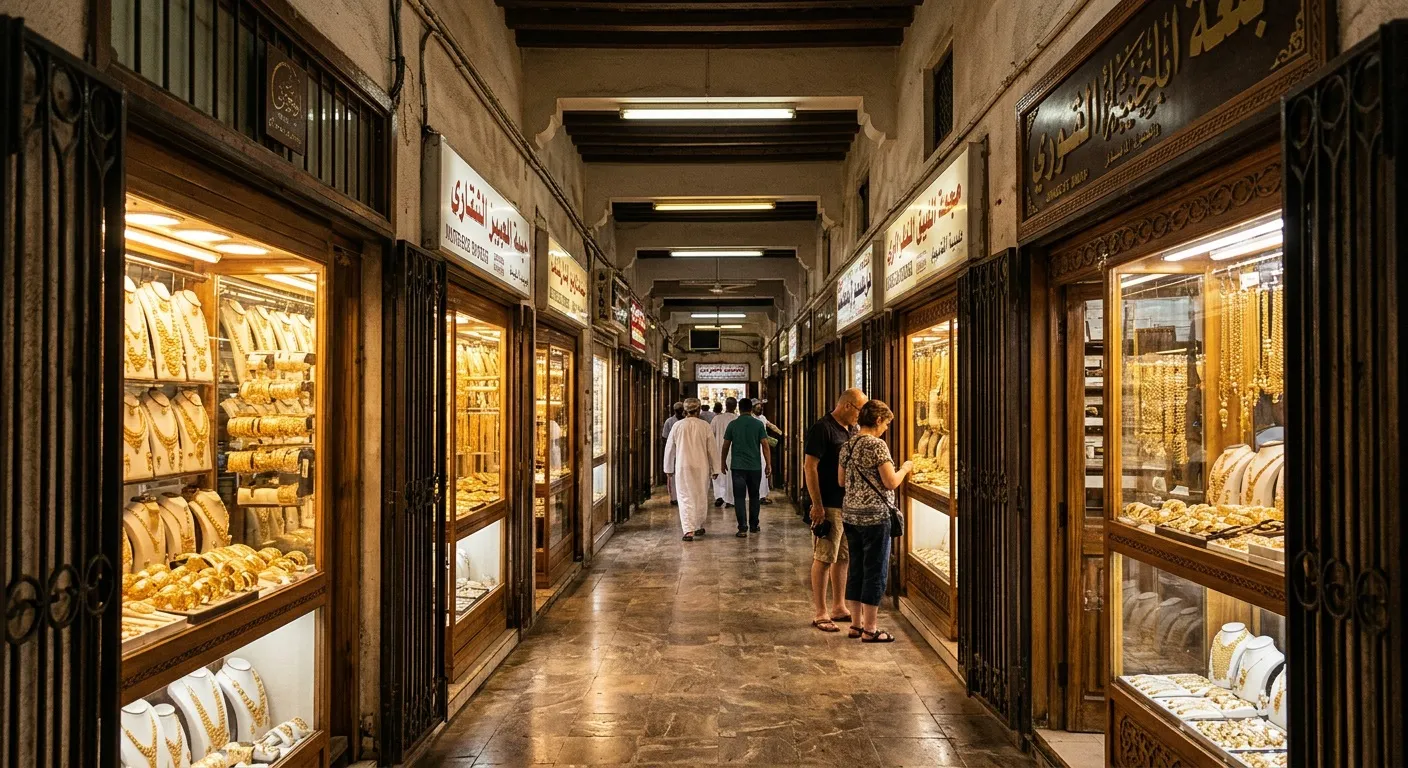
Inside the Malls: Where Professional Displays Meet Amateur Digital Presence
A common response from business owners in Muscat when revenue plateaus is to extend operating hours, add staff, or increase advertising spend on social media. These are incremental moves. They add cost proportionally to the hope of adding revenue. They do not change the fundamental equation of how many potential customers know the business exists.
Consider the arithmetic of a service business — say a general maintenance company in Ruwi serving homes and offices across Muscat:
Without web visibility: Revenue comes from repeat customers, referrals, and occasional Haima/OLX postings. The company serves approximately 40 clients per month. Revenue sits around 3,200 OMR monthly. Growth rate: flat or declining as older clients leave Oman and referrals slow.
With web visibility: A basic website with service pages, a Google Business Profile managed weekly, and a review collection system. Within four months, the company appears in Google’s Map Pack for “maintenance company Muscat,” “صيانة منازل مسقط,” and “handyman near me Al Khuwair.” New client inquiries from Google: 12-18 per month. Revenue climbs to 4,800-5,600 OMR. Growth rate: compounding, because every completed job generates a review that strengthens the Google profile that generates the next inquiry.
The second company did not work more hours. Did not hire more staff initially. Did not spend more on Instagram ads. It simply became findable at the moment someone needed its services. The revenue increase came from a channel that did not exist before — organic search — and that channel operates 24 hours a day, including Friday mornings when the owner is at the mosque, and Wednesday evenings when the office is closed.
This is not unique to maintenance companies. The identical transformation applies to:
- A physiotherapy clinic in Qurum that starts appearing for “علاج طبيعي مسقط”
- A printing shop in Wadi Kabir that ranks for “business cards printing Muscat”
- A pet grooming service in Al Mouj that shows up for “pet groomer near me”
- A tutoring center in Al Ghubra that captures “math tutor Muscat” searches
- An event planning company in Shatti Al Qurum that appears for “wedding planner Oman”
Each of these businesses already has clients. What they lack is the mechanism to continuously add new ones without spending proportionally more on acquisition. A website and search visibility provide that mechanism.
Shift from the souq to the structured retail environment. Gold and jewelry shops in Muscat’s malls operate in a different universe visually — marble floors, security cameras, branded display cases, uniformed staff, POS systems, and corporate presentation. But their digital presence is almost indistinguishable from the souq shops with no signage.
I spent a Tuesday visiting jewelry retailers across four malls. Not as a customer. As someone looking at their Google existence from the parking lot before walking in.
Mall of Oman — Al Seeb: Three dedicated jewelry stores on the ground floor. The largest carries Malabar Gold, one of the biggest jewelry chains in the Gulf. Malabar’s national brand does rank in Google for generic terms, but the specific Mall of Oman branch profile? Last photo uploaded: September 2024. Google Posts published: zero in 2025 or 2026. Branch-specific promotions visible on Google: none. An independent jeweler two units away had a Google profile marked as “Temporarily closed” — it has been open continuously since 2020.
City Centre Muscat — Qurum: The jewelry cluster near the central atrium includes Joy Alukkas, Kalyan Jewellers, and two independent Omani-owned gold shops. Joy Alukkas and Kalyan have national-level SEO from their corporate marketing, but even these large chains show weak branch-specific optimization. The independent shops effectively do not exist on Google. One has a profile with the business name misspelled.
Oman Avenues Mall — Al Ghubra: Two jewelry retailers. One had a single Google review — from 2022, written by what appears to be the owner’s friend. The other had no profile whatsoever. Combined retail space: approximately 140 square meters. Combined monthly rent: estimated 1,600-2,200 OMR. Combined digital presence: functionally zero.
Al Araimi Boulevard — Bausher: A boutique jeweler here carries stunning contemporary designs — clean lines, minimal settings, pieces that would photograph beautifully for Instagram and Google alike. Four employees on the floor during my visit. The shop’s Google Business Profile showed the correct address, phone number, and hours — nothing else. No photos. No products. No posts. No reviews. A digital ghost occupying a physical space.
The collective annual rent paid by jewelry retailers across Muscat’s malls likely exceeds 3 million OMR. The collective investment in Google visibility by these same retailers is approximately the cost of a single gold bangle.
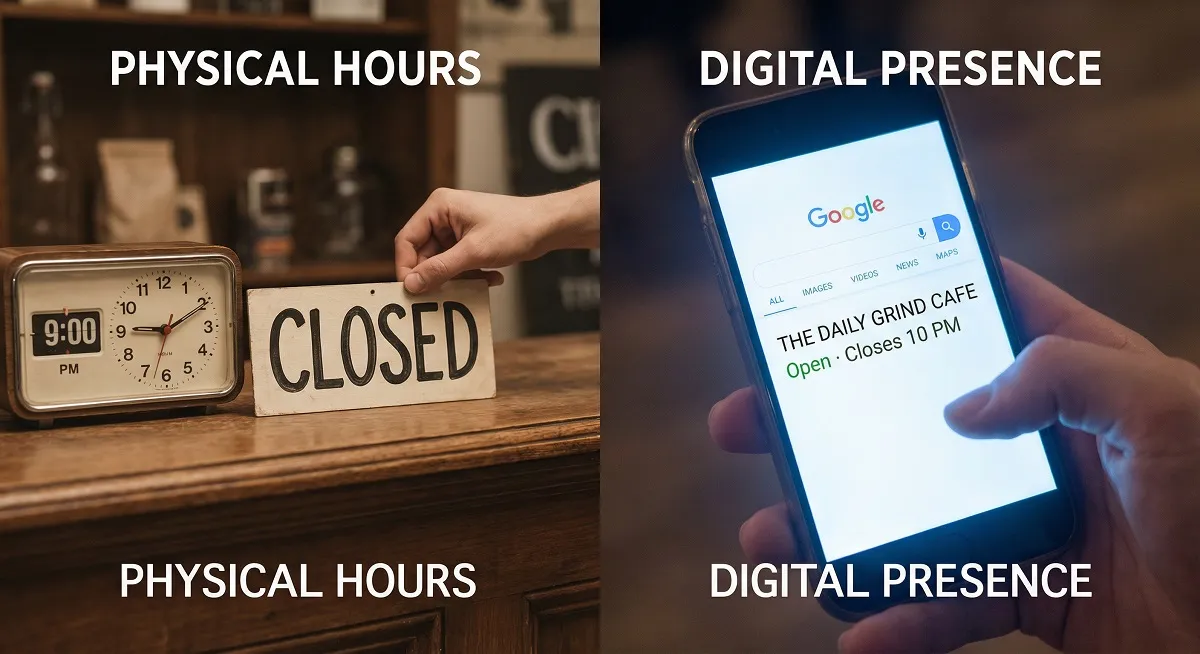
Your Landlord Gets Paid Whether You Have Customers or Not. Google Only Charges You Nothing
This comparison is not rhetorical. It is financial, and it should reframe how every business owner in Muscat thinks about their digital presence.
Rent for a small commercial unit in Muscat ranges from 250 OMR per month in Ruwi or Wadi Kabir to 1,200+ OMR in Mall of Oman, City Centre, or Al Mouj. Average across the governorate for a ground-floor shop: approximately 450-600 OMR monthly.
Staff salaries for two employees: approximately 400-700 OMR combined for entry-level retail or service staff, higher for skilled workers.
Utilities, licensing, insurance: approximately 100-200 OMR monthly.
Total fixed monthly cost to keep a business operational in Muscat: roughly 1,000-2,100 OMR before a single product is sold.
Now — a Google Business Profile costs zero. Maintaining it takes 30 minutes per week. A basic professional website costs between 200-800 OMR as a one-time investment, with hosting costs of 30-60 OMR per year. The ongoing time investment for content updates, photo uploads, and review management is approximately 2-4 hours per month.
The rent generates foot traffic only if the shop is on a busy street. The website generates search traffic regardless of physical location. A furniture workshop tucked behind a warehouse in Rusayl Industrial Estate can attract the same search traffic as a showroom on Qurum commercial road — because Google does not care about your street address. It cares about relevance, reviews, and content.
A business paying 600 OMR monthly in rent but investing zero in digital presence is paying for physical visibility while ignoring the visibility channel that 96% of the population uses daily. The fixed costs are already committed. The marginal cost of becoming findable online is negligible by comparison. The potential return is not negligible at all.

The Carpenter in Rusayl Whose Best Work Has Never Been Photographed
Behind the industrial areas that line the highway between Muscat and Bidbid, there are workshops producing some of the finest handmade furniture in the Gulf. Carpenters in Rusayl, Maabela, and Ghala build majlis seating, bedroom sets, kitchen cabinetry, and custom office furniture — often to specifications that factory furniture cannot match.
These workshops operate on referral networks. A satisfied customer tells a colleague. A completed majlis installation gets admired by visiting relatives who ask for the carpenter’s number. The cycle works, but it has a ceiling. The referral network is limited to the social circle of existing clients. Growth is linear, not exponential.
Now imagine one of these carpenters photographs his completed projects. Not staged studio shots — just honest smartphone photos of a finished walnut majlis set in a client’s home. A custom teak dining table. A children’s bedroom with built-in shelving. He uploads these photos to a Google Business Profile and a simple website with pages for each service category.
What happens next is not theoretical. It is documented across every market where tradespeople have adopted even basic online visibility:
- Search discovery replaces referral dependency. A family in Al Mouj renovating their villa searches “custom furniture Muscat” or “نجار تفصيل مسقط.” The carpenter’s photos appear. The work speaks for itself. The family calls.
- Portfolio replaces pitch. Instead of describing his capabilities verbally to every potential client, the carpenter’s website shows 40 completed projects. The client arrives pre-convinced. The conversation shifts from “can you do this?” to “when can you start?”
- Price sensitivity decreases. A carpenter found through Google with 65 reviews and a portfolio of impressive work commands higher prices than an unknown carpenter found through a WhatsApp forward. Visibility creates perceived value. Perceived value justifies premium pricing.
- Geographic reach expands without physical expansion. The Rusayl workshop that previously served clients within a 15-minute driving radius now receives inquiries from Sohar, Nizwa, and Sur — clients willing to drive or arrange delivery because they found quality online that they could not find locally.
This transformation — from invisible craftsman to findable business — applies equally to electricians, painters, landscapers, interior designers, welders, auto detailers, and every other skilled trade operating in Muscat’s industrial and commercial zones. The craft already exists. The quality already exists. The only missing component is a photograph, a listing, and a search result.

Clinics, Lawyers, Accountants: Professional Services Where Trust Begins on a Screen
Professional service providers in Muscat occupy a peculiar position. They are credentialed. Licensed. Often educated abroad. Their services carry inherent authority — you do not question whether a dentist knows dentistry or whether a lawyer understands contract law. Yet the mechanism by which a new patient selects a dentist or a new client selects a lawyer has fundamentally changed, and most professionals in Muscat have not adjusted.
A 2025 survey conducted across GCC healthcare consumers found that 79% of patients used Google at some point when choosing a new doctor or clinic. They searched for specialty, location, and — critically — reviews. A dermatology clinic in Al Khuwair with a website showing the doctor’s credentials, areas of specialization, before-and-after treatment photos, accepted insurance companies, and 120+ Google reviews at 4.5 stars does not need to compete on price. Trust is established before the patient calls. The first appointment is half-booked before the receptionist answers.
Contrast this with the clinic around the corner — same credentials, same insurance acceptance, same treatment quality — but no website, no Google Business Profile, and no reviews. This clinic competes for the same patients but starts every potential relationship from zero trust. The patient has no information to evaluate. No social proof to reference. No visual evidence of the facility. In 2026, zero information does not signal privacy or exclusivity. It signals absence. And absence is interpreted as irrelevance.
Legal services follow the same dynamic. “محامي في مسقط” (lawyer in Muscat) is searched over 680 times per month. “Company formation Oman” exceeds 540. “Labour lawyer Muscat” reaches 310. Law firms with website pages addressing these specific needs — explaining the process, outlining what clients should expect, demonstrating completed case categories — capture inquiries from Google that firms without web presence never see.
Accounting firms, architectural studios, engineering consultancies, HR recruitment agencies — every professional service in Muscat where the client must choose among multiple providers now faces the same reality: the provider who is findable and informative online gets the first call. The provider who is invisible gets considered only if the first call disappoints.
The Restaurant That Raised Prices and Got Busier. The One That Lowered Prices and Got Quieter
Pricing power is the single clearest indicator of business health. The ability to charge what your product or service is worth — without losing customers — separates businesses that thrive from businesses that survive.
Online visibility directly influences pricing power, and here is why:
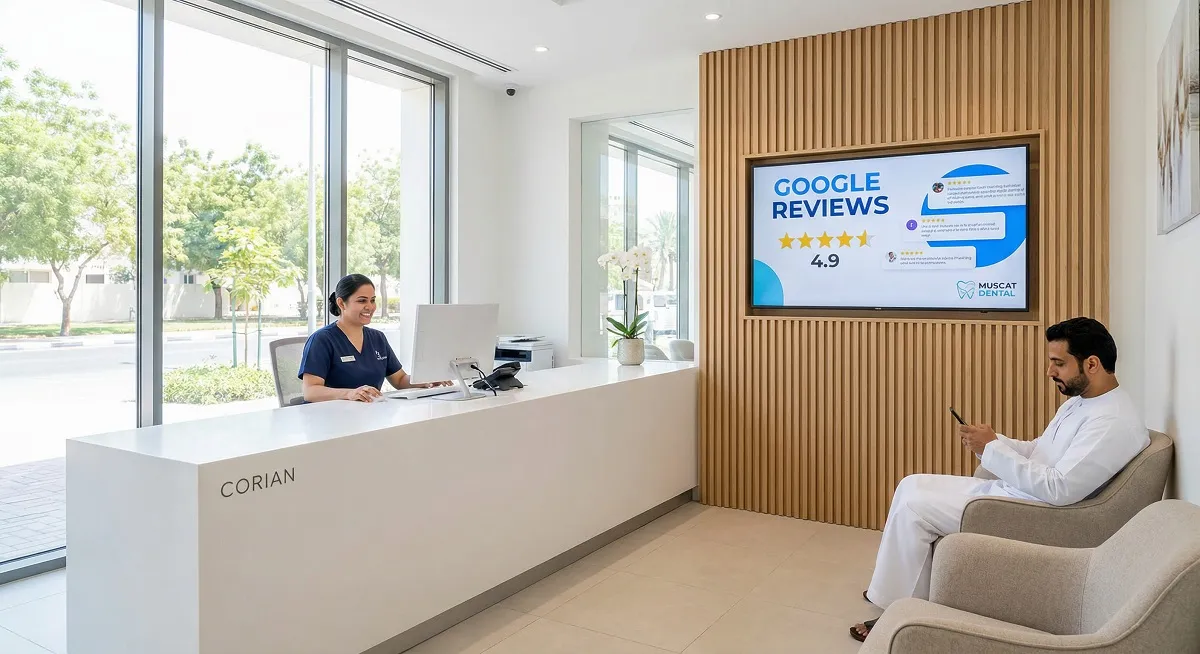
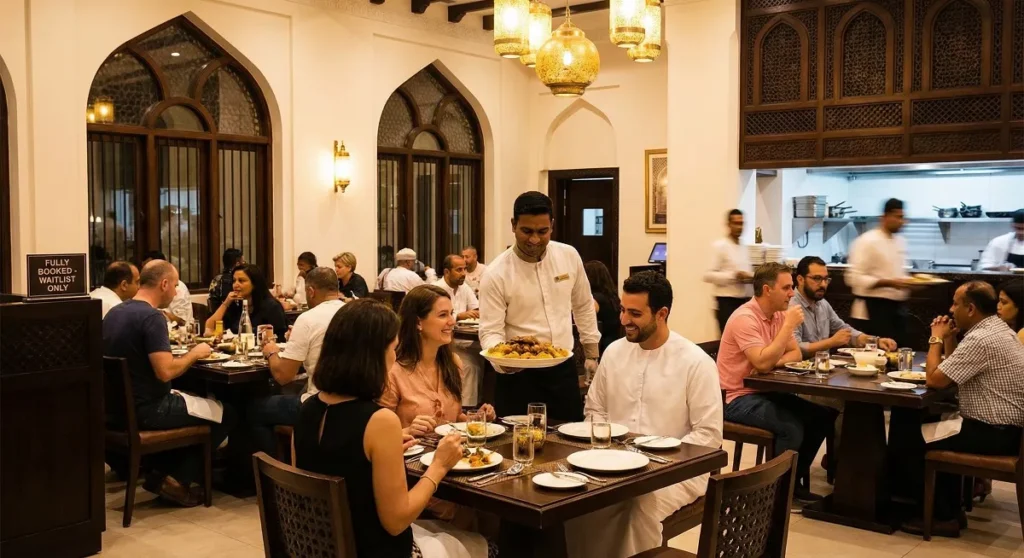
A restaurant in Qurum with 340 Google reviews, professional food photography on its Business Profile, a website with a crawlable menu, and consistent weekly Google Posts has established a public reputation. Customers arriving at this restaurant already believe the food is worth the price because 340 previous customers confirmed it. When this restaurant raises its prices by 10%, the review-based trust absorbs the increase. Customers accept it because the perceived value — built digitally before the visit — justifies the cost.
A competing restaurant two streets away, with identical food quality but no digital presence, cannot raise prices. It has no public reputation to leverage. Customers choose it only because of physical proximity or price. When this restaurant raises prices, it loses the price-sensitive customers who were its only source of new business. When it lowers prices to compete, it erodes margins while attracting more price-sensitive customers who will leave the moment someone cheaper opens nearby.
The visible restaurant controls its pricing. The invisible restaurant is controlled by its pricing.
This dynamic extends far beyond restaurants. A cleaning company in Muscat with 90 Google reviews and a professional website charges 45 OMR per deep clean. A competing company without online presence charges 28 OMR and is busier — but earns less per job, attracts more difficult customers, and has no mechanism to move upmarket. The invisible business is trapped at the bottom of its own market because it has no digital proof of value to justify premium pricing.
Visibility is not just about getting more customers. It is about getting better customers — customers who value quality over price, who leave positive reviews, who refer friends, and who return consistently. These customers aggregate around businesses they found through deliberate search, not businesses they stumbled upon through chance.
The Competitor You Cannot See is Taking Your Customers While You Read This
Most business owners in Muscat believe they know their competition. The shop across the street. The company that advertises on the radio. The brand with the bigger showroom. These are visible competitors — the ones you can see, count, and strategize against.
But the most dangerous competitor is the one you cannot see. The one who does not have a bigger shop or a better product. The one who simply appears on Google when your potential customer searches.
A home cleaning service operating from a small office in Ghala that ranks for “house cleaning Muscat” and “تنظيف منازل مسقط” is pulling clients away from cleaning companies in every neighborhood across the city — companies with more staff, more equipment, more experience. The Ghala company is not better. It is findable. And findability, in a market where 91% of businesses are not findable, is the single most disproportionate advantage any company can hold.
You will never see this competitor at a networking event. You will never encounter their branding on a building. You will never hear about them from your existing clients. But they are there, quietly absorbing the searches that could have been yours, converting the customers who were looking for exactly what you offer, building a review base that makes them stronger with every job completed.
The uncomfortable truth is that this competitor may already exist in your market. Or they may not — yet. But the barrier to entry for online visibility is low enough that any ambitious newcomer with a smartphone, a basic website, and the willingness to manage their Google profile can enter your market’s search results within 60-90 days.
The question facing every business in Muscat is not “should we invest in digital visibility?” It is “can we afford to let someone else become the Google answer for what we do?”

What Visibility Does to Hiring, Partnerships, and Credibility
Revenue is the most obvious benefit of online visibility. But it is not the only one, and for many businesses in Muscat, the secondary benefits prove equally transformative.
Hiring: Talented employees research potential employers on Google before accepting job offers. A business with a professional website, positive reviews, and active social presence attracts better candidates than a business that appears nowhere online. In a market where skilled workers — especially in healthcare, engineering, hospitality, and technology — have multiple offers to evaluate, your Google presence is part of your recruitment package.
Partnerships: Distributors, suppliers, and potential business partners verify credibility through online research. A manufacturer in Rusayl seeking a distribution agreement with a retailer in the UAE will be Googled before any meeting is scheduled. A clean website with company information, product catalogs, and client testimonials passes the credibility check. A blank Google result raises questions that phone calls cannot easily overcome.
Banking and finance: Commercial banks in Oman increasingly review a company’s digital presence as part of business loan and credit assessments. A business with a website, Google reviews, and demonstrable market activity presents a lower risk profile than one with no digital footprint. This is not formal policy at most banks — but loan officers are human, and humans Google.
Government tenders: As Oman’s government procurement processes digitize under Vision 2040, companies with established online presence and documented track records have an advantage in tender evaluations. Digital presence serves as informal evidence of operational legitimacy and market engagement.
Investor confidence: For businesses seeking investment — whether from Oman’s SME Fund, angel investors, or private equity — a company’s online presence is evaluated early in due diligence. An investor searching for your company and finding a professional website with clear service descriptions, client testimonials, and market positioning receives immediate confidence. An investor who finds nothing asks: “If they cannot market themselves, how will they grow with my capital?”
Visibility compounds. It does not just bring customers — it brings the ecosystem of talent, partnerships, capital, and credibility that allows a business to scale beyond its current capacity.

A Neighborhood Bakery. A Legal Firm. A Construction Company. Three Sizes, One Truth
The scale of your business does not determine whether online visibility matters. It determines how that visibility manifests.
The neighborhood bakery in Ruwi does not need a 20-page website. It needs a Google Business Profile with photos of today’s bread, operating hours that reflect its actual 5:30 AM opening, and 50 reviews from regulars who confirm the manakish is the best in the area. This bakery’s digital transformation costs nothing financially and requires 20 minutes per week. The return: every “bakery near me” search within a 3-kilometer radius becomes a potential new customer.
The legal firm in CBD Qurum needs a professional website with pages for each practice area — corporate law, employment disputes, real estate transactions, family law — each targeting the specific terms potential clients search. This firm’s digital transformation requires a modest investment in website development and content creation. The return: inquiries from clients who found the firm through Google, pre-qualified by the information they read, ready to engage at premium rates because the website established expertise before the first meeting.
The construction company in Ghala needs a comprehensive website showcasing completed projects with photos, client testimonials, capability statements, and safety certifications. This company’s digital transformation requires a larger investment commensurate with its larger revenue opportunity. The return: tender opportunities discovered through search visibility, subcontractor partnerships initiated through Google discovery, and a reputation that extends beyond the project sites where their cranes are currently visible.
Each business is different. Each operates at a different revenue level. Each requires a different scope of digital presence. But the underlying truth is identical: customers, clients, and partners find businesses through search. Being absent from search means being absent from consideration. Being absent from consideration means losing to someone who is present — regardless of whether that someone is actually better.
SEO Services Packages
Google Business Profile Packages
Web Design Packages
TripAdvisor & Hospitality Packages
Every debate about whether a business “needs” a website or “needs” SEO misses the fundamental point. The question was never about technology. It was always about customers.
A customer in Al Mouj needs a birthday cake delivered by Thursday. She types “birthday cake delivery Muscat” into her phone. Either your bakery appears with photos, reviews, and a phone number she can tap — or it does not. There is no third option.
A family relocating from Abu Dhabi needs a pediatric dentist in Muscat before their children start school. They type “طبيب أسنان أطفال مسقط” into Google. Either your clinic appears with credentials, parent reviews, and insurance information — or it does not.
A hotel purchasing manager needs 200 units of a specific cleaning chemical delivered monthly. He types “cleaning supplies wholesale Muscat” during procurement hours. Either your distribution company appears with product listings and delivery terms — or it does not.
In each scenario, the customer already exists. The need already exists. The budget already exists. The purchase decision will be made today, this week, this month. The only variable is whether your business participates in that decision or remains unknown.
Forty-seven thousand businesses operate in Muscat. The ones that will grow into next year and the year after are not necessarily the ones with the most capital, the best locations, or the longest histories. They are the ones that made one decision: to be findable at the moment someone needs them.
That decision is available to every business in this city, at every level, starting today.
Reach out today:
📞 +968 7922 9535
📧 seoingcc@gmail.com
🌐 SEOinGCC
You are not being asked to change what works. You are being asked to add a channel that protects what works. Your current revenue comes from a fixed pool of customers — repeat buyers and referrals. That pool shrinks every year as expats leave Oman, as regulars relocate, as preferences shift. You are not noticing the loss because it happens gradually — three fewer customers this month, five fewer next quarter. A website and Google presence do not replace your existing revenue stream. They add a second one that replenishes the pool automatically. The businesses in Muscat that closed in the past two years were not unprofitable when they started declining. They were profitable right up until the month they were not. The decline always looks manageable until it isn’t. An online presence is not a risk to what works — it is insurance against the day it stops working.
This is where online visibility does something that no amount of signage, flyers, or radio advertising can do — it makes your physical location irrelevant to customer discovery. A mobile phone repair shop in a second-floor office behind Ruwi High Street pays 180 OMR rent instead of 700 OMR for a ground-floor mall unit. If that shop ranks for “phone screen repair Muscat” and “تصليح شاشة جوال مسقط” with strong reviews and clear directions on Google Maps, customers will find it, navigate to it, and climb those stairs gladly. Google does not distinguish between a corner shop on Sultan Qaboos Highway and a workshop in an industrial backstreet. It distinguishes between businesses that provide relevant information and businesses that provide none. Some of the highest-revenue service businesses in Muscat operate from locations no customer would ever discover by walking or driving past. Their address is irrelevant because their Google result is their front door.
More than you think. The procurement manager at a Muscat hotel searching for “laundry chemical supplier Oman” is using the same Google as the consumer searching for a restaurant. The office manager at a construction company searching for “أثاث مكتبي مسقط” (office furniture Muscat) is making a purchasing decision the same way a homeowner makes one — by searching, comparing, and shortlisting. B2B purchase cycles are longer but the discovery phase is identical. A 2025 McKinsey study found that 71% of B2B purchasing decisions globally begin with a Google search. In Oman, where business directories are sparse and trade associations provide limited supplier visibility, Google is often the only discovery mechanism available. The industrial supply company in Maabela with a website showing product specifications, MOQs, and delivery terms gets the inquiry. The competitor without a website gets considered only if the first option falls through. B2B or B2C — the principle is the same. Being findable when someone is looking for what you provide is not a consumer marketing tactic. It is a business fundamental.
Nothing changes if the website is built and abandoned. A website without content that matches real search terms, without Google Business Profile integration, without reviews, and without ongoing maintenance will sit silently — and that is the experience many business owners in Muscat have had with web agencies that delivered a beautiful design and disappeared. The difference between a website that generates revenue and a website that collects dust is not design quality — it is whether the site is built around the actual phrases your customers type into Google, whether it loads in under three seconds on a phone, and whether it is connected to a managed Google Business Profile that signals activity and credibility. You can measure results directly: Google Search Console shows exactly how many people found your site through search and which queries brought them. Google Business Profile insights show how many people called, requested directions, or visited your website from your profile. These are not abstract metrics. They are countable actions taken by real potential customers. If after 90 days those numbers are not moving, something specific is wrong and can be fixed. If they are moving — and in a market where 91% of competitors have no presence, they almost always do — then the investment has already begun paying for itself.