Every booking you get through Viator, GetYourGuide, or Booking.com costs you 15 to 25 percent in commission. For a tour operator running OMR 150 desert safari packages, that’s OMR 22 to OMR 37 per booking going to a platform instead of your margin.
Multiply that by 200 bookings per month. You’re transferring OMR 4,400 to OMR 7,400 monthly to aggregators who did nothing except show up when tourists searched Google.
The alternative exists. Tourists who find you directly through Google Search, book on your website, and pay zero commission to intermediaries. The travel agencies in Muscat capturing direct bookings have built three things: a fast website optimized for mobile, local SEO that appears when tourists search, and a Google Business Profile that converts browsers into bookers.
This guide breaks down exactly how direct booking systems work for tour operators in Oman.
The Uncomfortable Gap in Muscat Travel Agency Digital Presence
Let’s look at the current reality of travel agency websites in Muscat.
We audited 35 tour operators in Oman last quarter. The findings were consistent:
- 23 had no website at all, only social media pages
- 8 had websites that took more than 6 seconds to load on mobile
- Only 2 had Arabic content for GCC tourists
- Only 1 had a functional direct booking system
- Zero had properly optimized Google Business Profiles
Meanwhile, when a tourist searches “Oman desert tour” or “Muscat day trips,” who appears? Viator. GetYourGuide. TripAdvisor listings. The OTAs have built exactly what local tour operators haven’t: fast, mobile-optimized, multilingual booking experiences.
What is Direct Booking for Tour Operators?
Direct booking refers to tourists reserving tours through the operator’s own website rather than through OTA platforms. This eliminates commission fees typically ranging from 15 to 25 percent per transaction.
The gap isn’t about marketing budget. OTAs don’t outspend you. They out-optimize you. They’ve built infrastructure that captures tourist search intent while most Muscat travel agencies wait for referrals or hope Instagram somehow converts followers into paying customers.
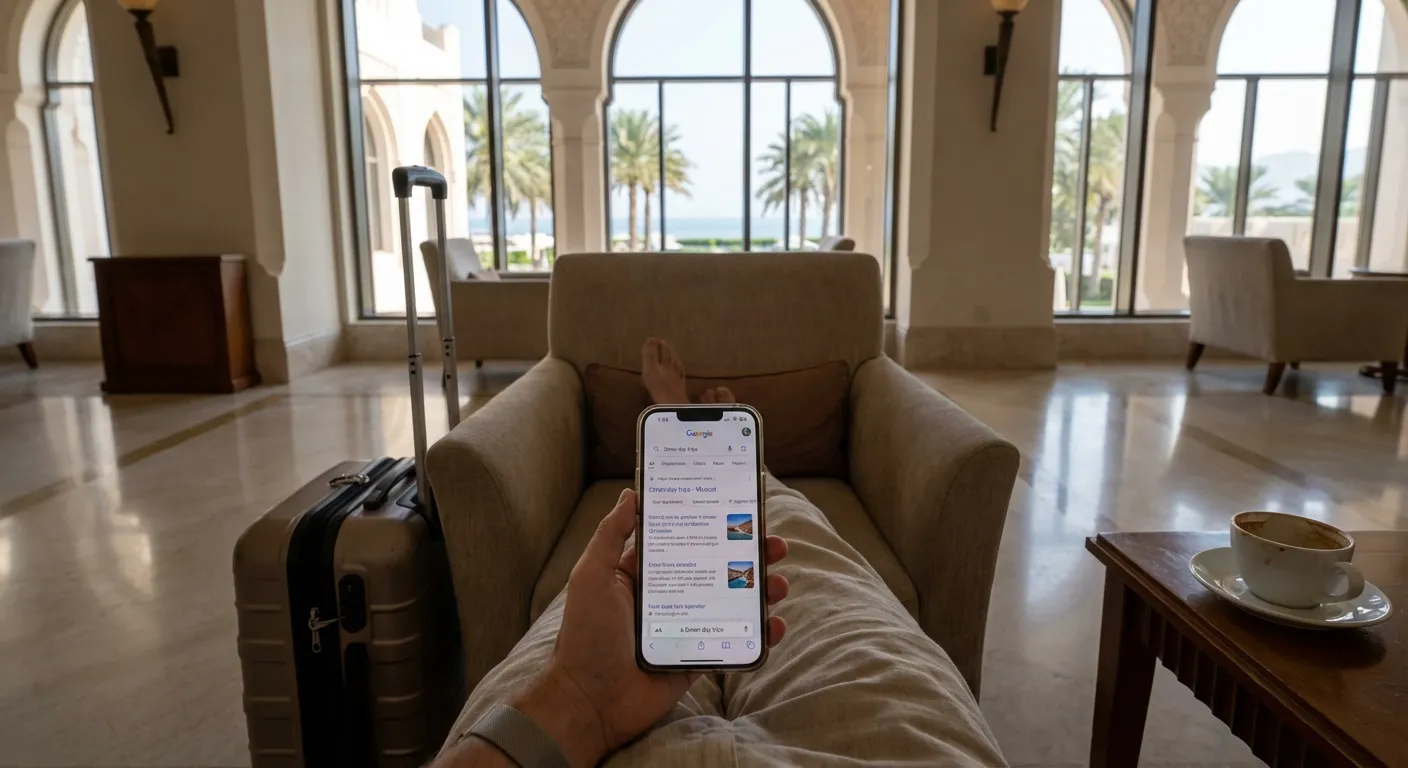
OTA Dependency: Why It Backfires for Tour Operators Long-Term
OTAs solve one problem: visibility. But they create three bigger ones.
Problem 1: Commission erosion
Let’s run the math for a mid-sized Muscat tour operator:
| Annual Figure | Metric |
| 2,400 | Total tour bookings |
| OMR 120 | Average booking value |
| OMR 288,000 | Annual revenue |
| 1,920 | OTA bookings (80%) |
| OMR 46,080 lost | Average commission (20%) |
That OMR 46,080 isn’t a marketing cost. It’s a distribution tax you pay because tourists can’t find you directly.
Problem 2: No customer data
When a tourist books through Viator, Viator owns that customer relationship. They have the email, the travel preferences, the booking history. You have a reservation and a commission bill. You can’t remarket to that tourist for their next Oman trip. Viator can.
Problem 3: Rate parity traps
Most OTA contracts include rate parity clauses. You can’t offer lower prices on your own website. So even when tourists find you directly, they have no incentive to book with you instead of the platform they already trust.
3 Hidden Costs of OTA Dependency for Tour Operators:
Commission rates increase annually, Viator raised rates twice since 2022
Customer data remains with the platform, preventing direct remarketing
Rate parity clauses prevent competitive pricing on your own website
Caution:
Tour operators with over 70% OTA dependency are vulnerable to platform policy changes. One algorithm update or commission increase can eliminate your entire margin overnight. Direct booking channels provide business stability.
Calculate Your Commission Leakage:
Send your monthly booking volume and average tour price. We’ll show you exactly how much you’re paying OTAs and the realistic direct booking percentage you can capture.
[Request Commission Analysis]
Tourism Numbers in Muscat: What Data Shows About Booking Behavior
Oman’s tourism sector is growing. The question is: who captures the digital demand?
According to the National Centre for Statistics and Information (NCSI), Oman welcomed over 3.5 million tourists in 2023, with projections showing continued growth through 2026. But here’s the critical data point: 78% of international tourists research and book activities online before or during their trip.
| Who Currently Ranks | Monthly Volume | Search Term |
| OTAs dominate top 5 | 4,400 | Oman tours |
| TripAdvisor, Viator | 1,900 | Muscat day trips |
| Mix of OTAs and 1 local operator | 1,100 | Wadi Shab tour |
| GetYourGuide, Viator | 880 | Wahiba Sands tour |
| OTAs only | 720 | Nizwa day trip from Muscat |
| 2 local operators ranking | 590 | Dhow cruise Muscat |
| Who Currently Ranks | Monthly Volume | Search Term (Arabic for GCC tourists) |
| Zero local operators | 680 | رحلات سياحية مسقط |
| Directories only | 520 | جولات عمان السياحية |
| Zero competition | 340 | منظم حفلات اطفال مسقط |
(Source: Estimated volumes from Google Keyword Planner 2024, NCSI Tourism Statistics 2023)
The opportunity in Arabic search is massive. GCC tourists from Saudi Arabia, UAE, Kuwait, and Qatar represent a significant segment of Oman’s tourism market. They search in Arabic. And right now, zero tour operators in Muscat are optimized for Arabic search terms.
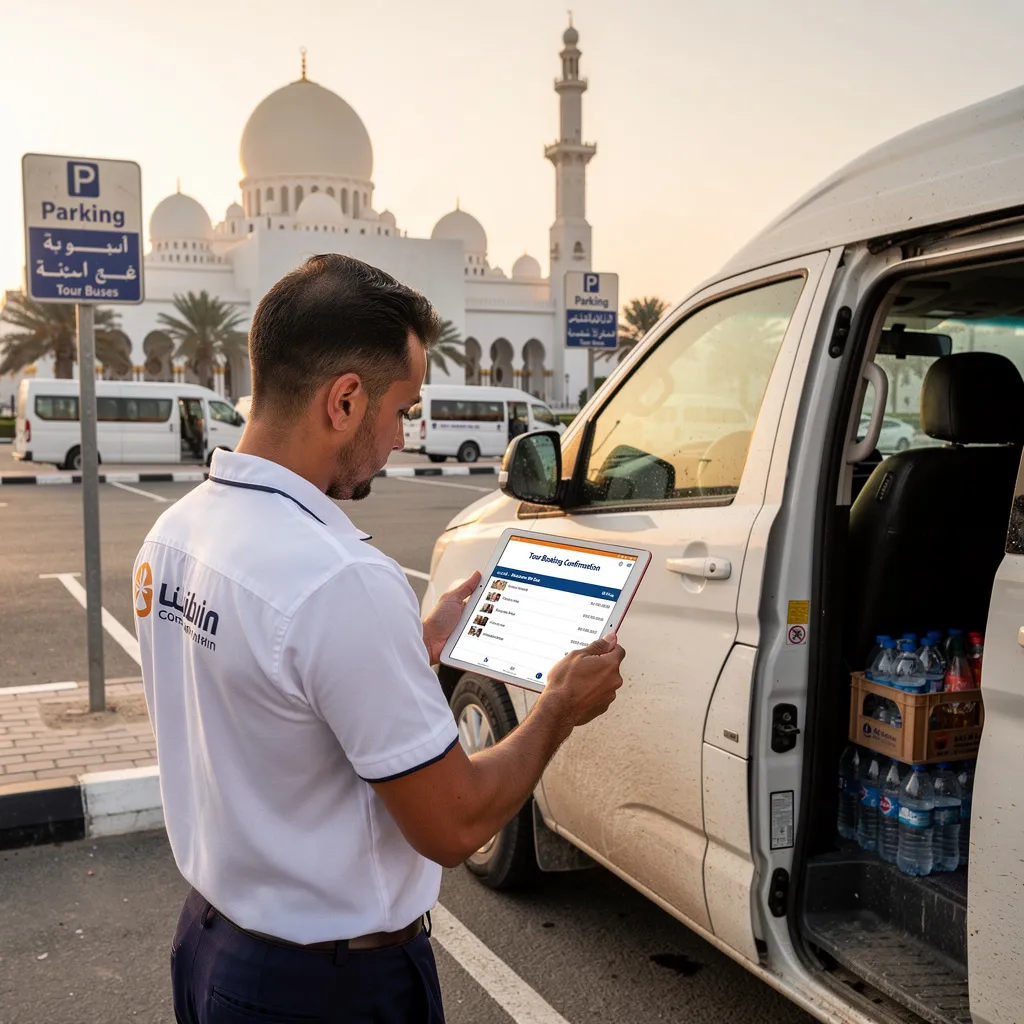
How We Build Direct Booking Systems for Travel Agencies in Muscat
This is the infrastructure we deploy for tour operators who want to reduce OTA dependency and capture direct bookings.
Component 1: Speed-Optimized Mobile Website
Tourists search on mobile. Your website must load in under 3 seconds on a 4G connection.
Technical requirements:
- Image compression for tour photos without quality loss
- Lazy loading for gallery pages
- CDN implementation for international visitors
- Mobile-first responsive design
- One-tap WhatsApp integration
Content requirements:
- Dedicated page for each tour, not one long list
- Each tour page: itinerary, pricing, inclusions, duration, difficulty level
- Location-specific pages: “Tours from Muscat,” “Salalah Excursions”
- Bilingual content: English for international tourists, Arabic for GCC visitors
Component 2: Direct Booking Engine
Tourists who can’t book immediately will leave and book on Viator instead.
Implementation:
- Real-time availability calendar
- Secure payment gateway accepting international cards
- Instant booking confirmation via email and WhatsApp
- Guest checkout option, no forced account creation
- Mobile payment options including Apple Pay
Component 3: Google Business Profile Optimization
When tourists search “tour operator near me” in Muscat, your GBP appears before any website.
Requirements:
- Primary category: “Tour Operator” or “Travel Agency”
- 100+ photos: tours in action, vehicles, guides, destinations
- All tours listed as “Products” with pricing
- Weekly posts featuring recent tours and seasonal offerings
- Business hours including weekend availability
- Direct booking link to your website, not an OTA
Component 4: TripAdvisor Authority Build
TripAdvisor remains the primary research platform for tourists planning Oman visits.
Strategy:
- Claim and verify your listing
- Upload 50+ tour photos
- Respond to every review within 24 hours
- Implement post-tour review requests via WhatsApp
- Target: Top 10 ranking in “Tours in Muscat” category

See What Direct Booking Could Mean for Your Agency:
We’ll show you exactly which tourists are searching for your tours and how to capture them before OTAs do.
[Request Tour Operator Audit]
Tracking Bookings: What We Measure for Tour Operators
Direct booking success requires measurement infrastructure. Here’s the framework we implement:
Booking Source Attribution:
- UTM parameters tracking which search terms drove each booking
- Separate tracking for Google organic, Google Maps, TripAdvisor referral, and direct traffic
- Conversion rate by tour type and price point
- Mobile vs desktop booking completion rates
Revenue Comparison Dashboard:
| Direct Channel | OTA Channel | Metric |
| Tracked | Tracked | Gross booking value |
| 0% | 15-25% | Commission paid |
| Higher | Lower | Net revenue per booking |
| Yes | No | Customer email captured |
| Yes | No | Remarketing possible |
Case Data: Muscat Tour Operator, 12-Month Transformation
Starting position:
- Total monthly bookings: 180
- OTA bookings: 162 (90%)
- Direct bookings: 18 (10%)
- Monthly commission paid: OMR 3,890
After 12 months with direct booking infrastructure:
- Total monthly bookings: 240 (growth from visibility)
- OTA bookings: 108 (45%)
- Direct bookings: 132 (55%)
- Monthly commission paid: OMR 2,590
- Monthly commission saved: OMR 1,300
- Annual savings: OMR 15,600
The operator didn’t reduce OTA presence. They added a direct channel that now captures more than half their business.
SEO Services Packages
Google Business Profile Packages
Web Design Packages
TripAdvisor & Hospitality Packages
Viator charges 20% commission on the retail price. GetYourGuide charges 25 to 30% depending on your agreement. Booking.com experiences charges 15 to 20%. For a OMR 100 tour, you’re paying OMR 15 to OMR 30 per booking to these platforms. Over a year with 1,000 bookings, that’s OMR 15,000 to OMR 30,000 in commission.
Yes, especially for GCC tourists. Visitors from Saudi Arabia, UAE, Kuwait, and Qatar often search in Arabic. Terms like “رحلات سياحية مسقط” have zero competition from local operators right now. GCC tourists typically book higher-value private tours. Capturing this segment requires Arabic content and Arabic-language booking capability.
Website launch to first organic booking typically takes 60 to 90 days. Google Business Profile improvements show visibility within 30 days. For Muscat tour operators, one direct booking of a OMR 400 private tour saves OMR 80 to OMR 100 in commission. That single booking can cover a month of SEO work. Payback period is usually under 90 days.
No. Keep OTA presence but reduce dependency over time. Use OTAs for visibility and volume while building direct booking capacity. The goal is shifting from 90% OTA to 50% OTA over 12 months. Some tourists will always prefer booking through platforms they know. The goal is capturing the tourists who would book direct if they could find you.