Your fastest path to more restaurant sales in GCC isn’t “more posting.” It’s owning demand: a conversion-focused website + Google Maps dominance that turns searches into calls, directions, WhatsApp chats, and reservations.
In most GCC cities, you can see early movement in Maps actions and booking requests within 4–8 weeks once the money leaks are fixed.
To be blunt: if you don’t own your demand, you’re renting it from platforms—and your margin will always be fragile.
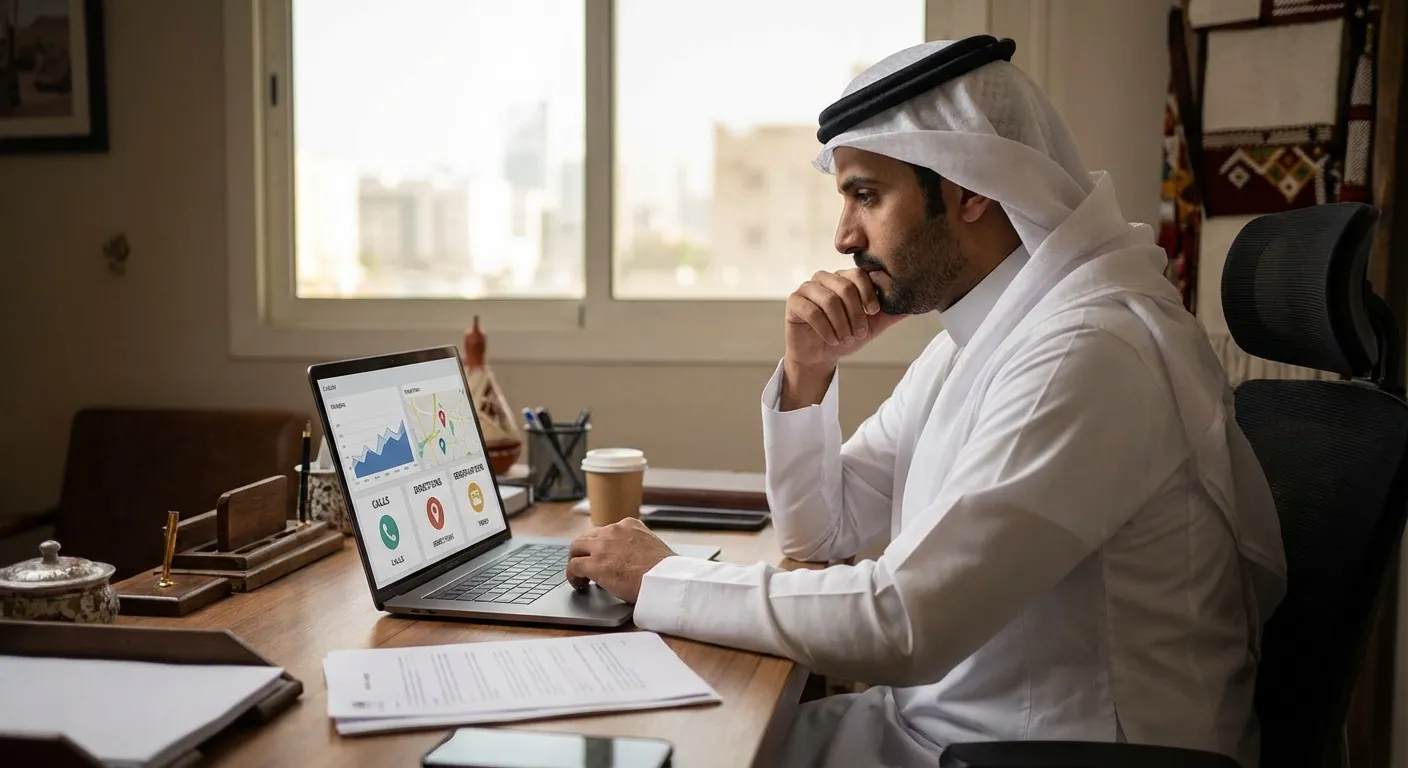
Why Most GCC Restaurants Plateau (Even With Great Food)
If you’re depending on TripAdvisor, delivery apps, and social discovery, you’ll hit a ceiling for three reasons:
- You don’t control the customer journey. The diner can’t instantly confirm your menu, price range, parking, family section, or reservation policy—so they bounce to the next listing.
- You don’t control margin. Platforms optimise for volume and discounts; you need average check and repeat visits.
- You don’t control data. You can’t see which dish, which branch, or which occasion (brunch, business lunch, birthday) actually drives revenue.
For a restaurant, that’s not a marketing issue. It’s an operations + revenue issue: empty tables, slow table turnover, low covers on weekdays, and high no‑show risk when reservations aren’t managed well.
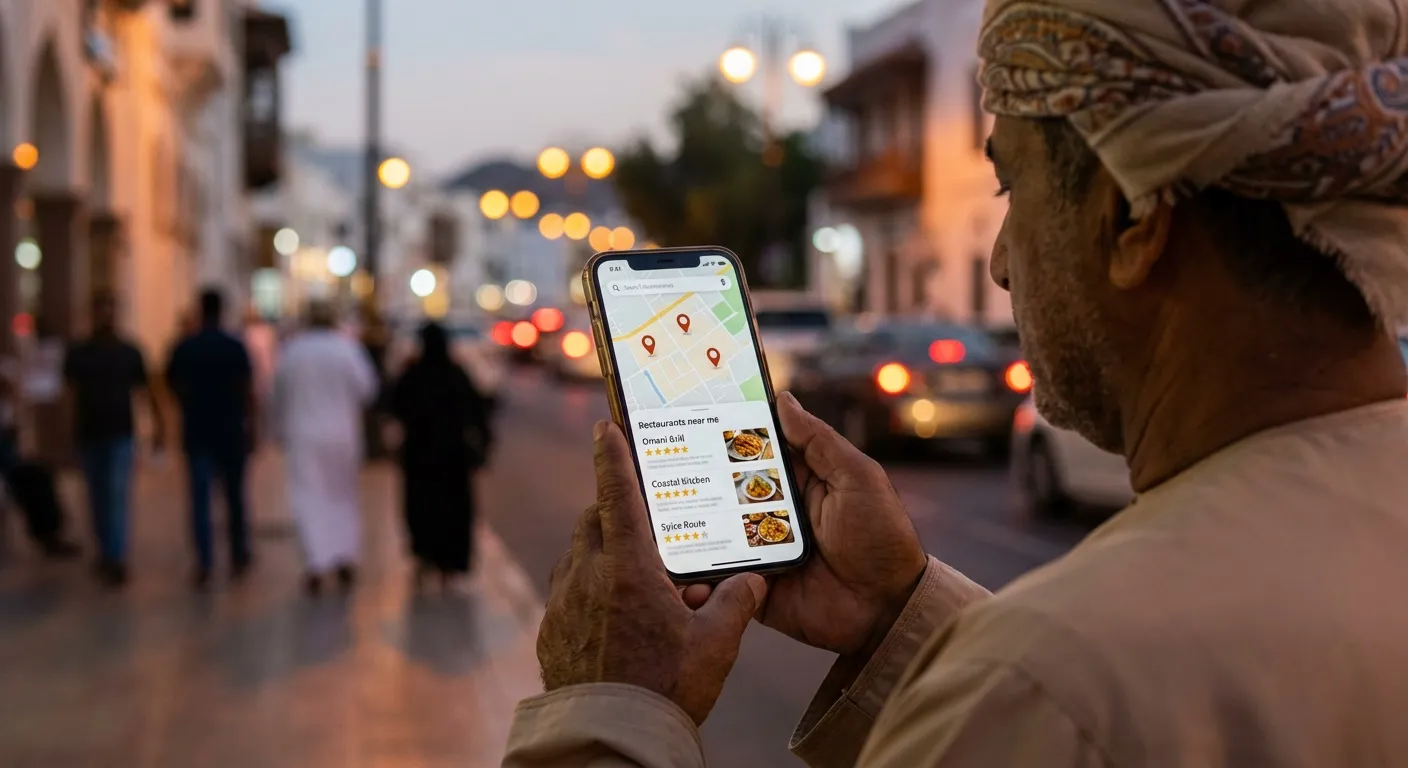
3 Fatal Mistakes That Kill Restaurant Customer Acquisition (And How We Fix Them)
No “decision pages” (you have a brochure, not a booking machine)
A restaurant website must answer decision questions fast: menu, price range, parking, branch info, seating types, timings.
If your site hides the menu, uses a PDF menu, or lacks branch-level detail, you’ll lose the “ready-to-eat” searches.
Industry terms we expect to reflect on the site: menu sections, signature dishes, set menu, business lunch, weekend brunch, family section, outdoor seating, private dining, group booking, no‑show policy, reservation deposit, parking validation, takeaway, delivery radius.
Your Google Maps presence is weak (so you never win “near me”)
In GCC, Maps is where calls and directions happen. If your listing lacks recent reviews, real dish photos, correct hours, or clear category/cuisine signals, your competitor gets the action—even if your food is better.
You can’t prove what generates revenue (so you keep spending blind)
If you don’t track calls, directions, WhatsApp clicks, and reservation submits, you can’t tell whether your growth came from:
- a branch page,
- a brunch page,
- a “business lunch” page,
- or a dish page for your signature items.
Cheap agencies love this situation because you can’t audit impact.
What Ranks Today—And Where Your Restaurant Can Win
For restaurant searches in Muscat, Riyadh, and Dubai, results are typically:
- Google Maps / Local Pack (dominant)
- TripAdvisor / directories (authority + review volume)
- Delivery apps (brand + inventory depth)
- Strong restaurant websites (fast, clear menu, clear location, clear booking)
Your advantage as an independent restaurant: you can create the most convincing decision experience: real photos, clear menu pricing, parking guidance, family seating, private dining capacity, and reservation policy. Platforms can’t express those operational details the way you can.
The “SEO in the Gulf” Method (What We Build for Restaurants)
Deliverables we typically implement (scope, not a tutorial):
- HTML menu experience (not PDF), structured for fast decisions
- Branch pages per location: call button, directions, parking notes, hours, seating types
- Occasion pages: weekend brunch, business lunch, birthday booking, private dining
- Trust blocks: recent reviews, real dish photos, FAQs that remove hesitation
Local SEO + Reputation (Built for Maps actions)
We structure your presence so the Local Pack can’t ignore you:
- entity consistency across listings
- review strategy that increases freshness and relevance
- photo strategy that looks real (not stock)
Technical performance that protects mobile conversions
We enforce performance targets because restaurant customers bounce fast:
- LCP < 1.2s, INP < 200ms, CLS < 0.1 on mobile
Translated into business outcome: faster menu + faster branch page = more calls per 100 visits.

What Happens in the First 14 Days (So You Know What You’re Buying)
- Day 1–3: revenue leak audit (Maps actions, site conversion flow, key pages, competitive SERP reality)
- Day 4–7: blueprint delivery (page map, priorities, KPI targets, tracking plan)
- Day 8–14: implementation starts (highest-impact fixes first; typically menu + branch conversion + measurement)
No surprises: you’ll know exactly what is being built, why, and how it will be measured.
ROI Logic (Simple, Restaurant-Real)
If your average check is AED 120 and you add 10 extra covers/day from qualified calls + reservations, that’s AED 1,200/day before costs.
The point isn’t the exact number—it’s that an owned demand system compounds weekly once it’s in place.
Industry Reality Check (So Expectations Stay Commercial)
| Why it converts in GCC | What we optimize for | Restaurant KPI |
| People search by occasion, not “restaurant” only | Occasion pages + branch clarity | Covers (weekday vs weekend) |
| Less friction = faster booking decisions | Faster decision pages | Table turnover |
| “Brunch”, “business lunch”, “private dining” intent spends more | Attract intent-specific diners | Average check |
| Reduces wasted capacity | Clear reservation policy | No-show risk |
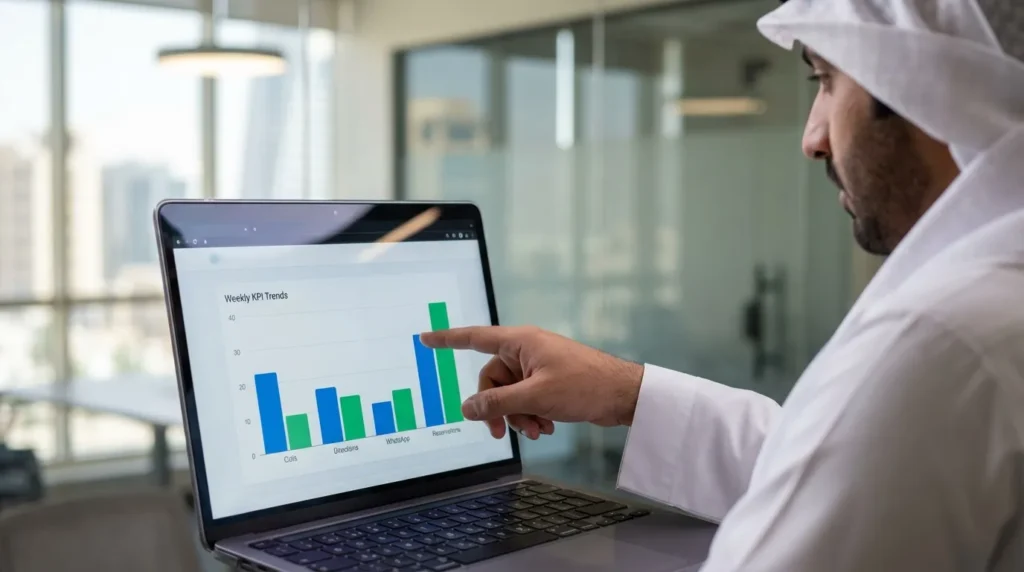
Measurement (How We Prove This Is Working)
We track outcomes that match restaurant operations:
- Calls, Directions, WhatsApp clicks, Reservation submits
- Qualified lead definition: reservation inquiry with party size + time, or call that indicates booking intent
Reporting cadence: weekly snapshot + monthly deep review.
Business translation: you’ll see which branch/page is producing covers—not vague “SEO progress.”
Keyword Intent Map (Restaurant Customer Acquisition Searches)
- Transactional: “book table Dubai”, “brunch reservation Riyadh”, “private dining Muscat”
- Commercial investigation: “best breakfast Dubai”, “best burger Riyadh”, “best brunch Muscat”
- Navigational: “[restaurant name] menu”, “[restaurant name] location”, “[restaurant name] reservation”
- Local (city-modified queries — examples):
- “business lunch Muscat”
- “family friendly restaurant Riyadh”
- “brunch reservation Riyadh”
- “best brunch Dubai”
- “private dining Dubai”
- “seafood restaurant Muscat”
- “restaurant near me Riyadh”
- “breakfast restaurant Muscat”
What We Would NOT Do for Restaurants (Because It Wastes Your Money)
- We will not sell you “blog volume” as a growth plan if you don’t have a converting menu + branch system.
- We will not keep your menu as a PDF and pretend it can compete.
- We will not chase broad keywords that attract browsers instead of bookers.
- We will not run blind campaigns without conversion measurement.
Use this to evaluate any agency—including us:
- Clear deliverables (menu/branches/occasions + tracking)
- KPI definition tied to covers/actions (calls, directions, bookings)
- GCC-specific execution (WhatsApp-first, bilingual intent where needed, weekend peaks, Ramadan if relevant)
- Performance targets for mobile (LCP/INP/CLS) explained in business terms
- A 90-day roadmap with priorities, not a list of 100 tasks
SEO Services Packages
Google Business Profile Packages
Web Design Packages
TripAdvisor & Hospitality Packages
Yes. Platforms help discovery, but your website controls the decision and protects margin through direct bookings and higher-intent customers.
If basics are broken (menu friction, weak branch pages, weak Maps conversion), you often see early movement in 4–8 weeks. Competitive zones can take longer.
Depends on your customer mix. Dubai usually needs both. Riyadh and Muscat can be Arabic-dominant for families, with English important for expats/tourists.
Decision friction: no clear menu/pricing, unclear location/parking, and weak conversion paths (call/WhatsApp/reservation).