That Empty Table on a Friday Night is Not a Timing Problem, It is a Visibility Problem
Friday, 8:14 PM. Your restaurant in Qurum, Muscat has eleven empty tables. The kitchen is ready. The staff is standing. The playlist is running. Three blocks away, a place with worse food and higher prices has a 40-minute wait. You tell yourself it is because they opened earlier. Or their location has more foot traffic. Or they got lucky with a food blogger last month.
It is none of those things.
It is because when someone typed “best seafood restaurant Qurum” into their phone twenty minutes ago, that restaurant appeared and yours did not. When a couple in Salmiya, Kuwait searched “مطعم إيطالي قريب” — Italian restaurant nearby — at 7:30 PM, three results loaded in under a second. Your competitor in Souk Sharq had 214 Google reviews and a photo of their pasta uploaded six days ago. You had 19 reviews from 2023 and a logo as your only photo. When a group of Saudis crossing King Fahad Causeway into Bahrain on Thursday night searched “rooftop bar Juffair,” they found a place with a complete TripAdvisor profile, weekly Google Posts, and a menu they could read on their phone without downloading anything.
None of this is luck. Every full table in your competitor’s restaurant traces back to a decision someone made on a screen. And that decision was shaped entirely by what Google and TripAdvisor showed them in the five seconds they spent looking.
This is not about restaurants only. Coffee shops in Al Khuwair sitting half-empty on weekend mornings while a café two streets over has a queue out the door. Bakeries in Hawalli with outstanding kunafa that nobody outside a two-block radius knows about. Dessert shops in Adliya, Bahrain that rely completely on Instagram and wonder why walk-in traffic dried up after the algorithm changed. Cloud kitchens in Mangaf and Al Mouj spending 40% of revenue on Talabat and Deliveroo commissions while organic Google searches for “burger delivery near me” go to competitors with actual websites.
The food is not the problem. The visibility is.
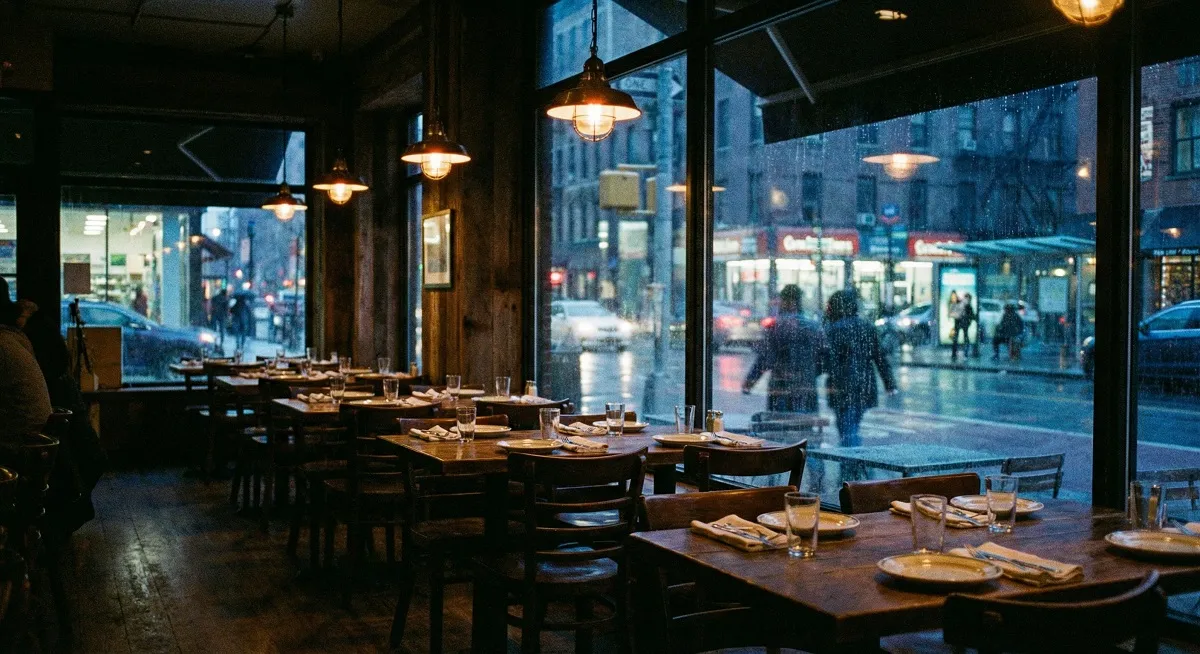
Three Countries, Three Food Cultures, One Shared Problem
Muscat, Kuwait, and Bahrain are often grouped together as “the smaller GCC markets.” That label is lazy and misleading. Each has a food and beverage scene with its own personality, its own customer base, and its own search behavior. But all three share a single problem: the vast majority of food businesses in these cities have no organic Google strategy whatsoever.
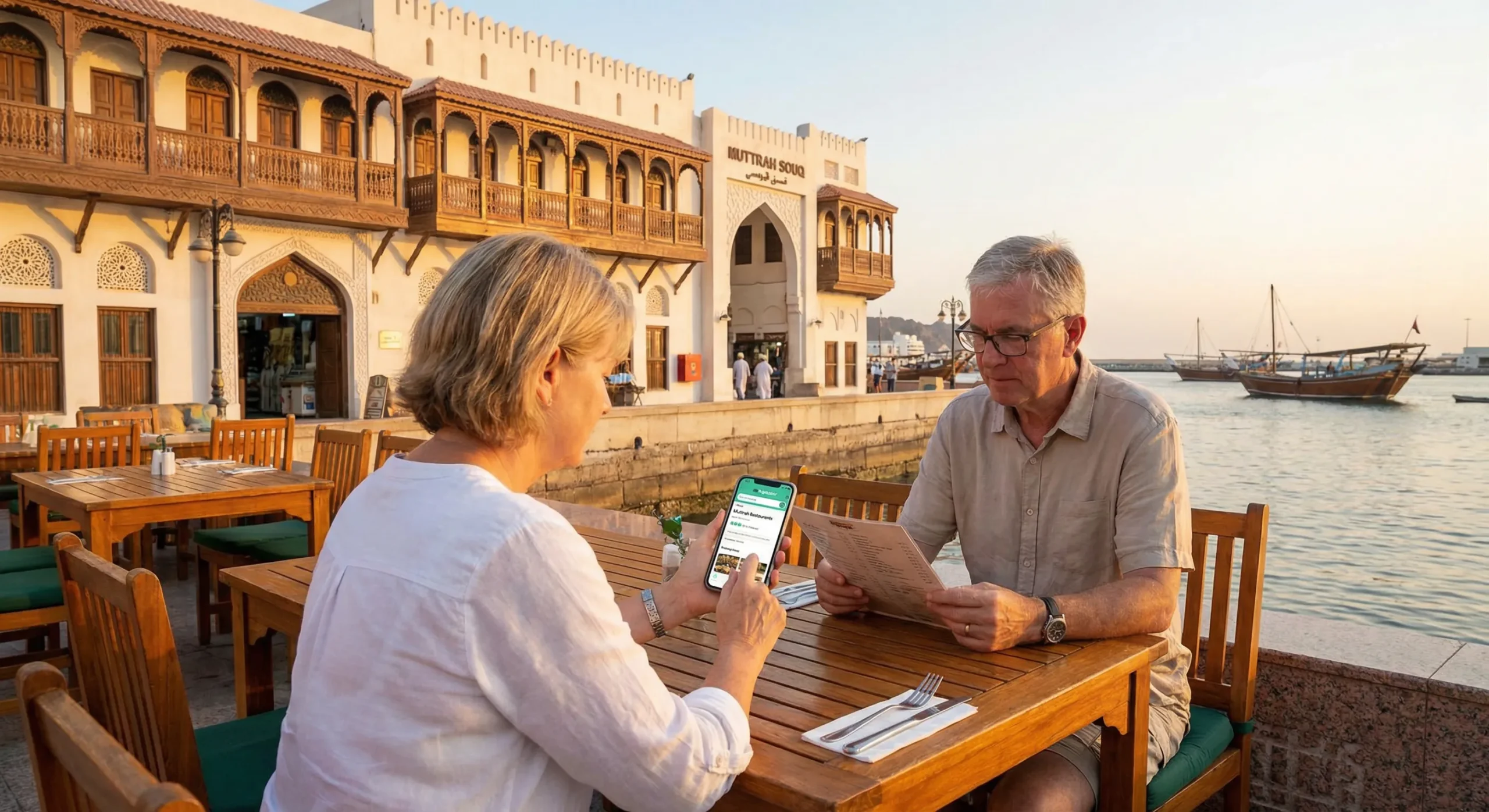
Oman welcomed 3.9 million international tourists in 2024, a number the government plans to push past 5 million by 2027 under Vision 2040. Muscat’s population of approximately 1.5 million supports a growing food scene concentrated along Shatti Al Qurum, MQ (Madinat Al Sultan Qaboos), Al Mouj, Muttrah Corniche, and Al Khuwair. The city has seen a wave of specialty coffee shops, artisanal bakeries, and mid-range restaurants opening over the past eighteen months, but digital maturity in the F&B sector remains low. Most restaurants in Muscat still depend entirely on Instagram and word of mouth. TripAdvisor is particularly influential here because of the tourist demographic — visitors planning trips to Oman check TripAdvisor restaurant rankings before they even land.
Kuwait has one of the highest per-capita food spending rates in the world. Kuwaitis and residents spend an estimated $7.2 billion annually on food and beverages, with a significant portion going to restaurants, cafés, and delivery. The F&B scene in Kuwait is concentrated in Salmiya, Hawalli, Sharq, Mahboula, Fahaheel, and the growing strip along the Gulf Road and Marina Mall area. Arabic is the dominant search language — approximately 66% of food-related Google searches in Kuwait are in Arabic. Yet most restaurant websites in Kuwait are either English-only or nonexistent. The gap between search demand and supply of quality Arabic food content is enormous.
Bahrain is unique because of the Saudi factor. Every weekend, tens of thousands of Saudi visitors cross King Fahad Causeway specifically for dining and nightlife. Bahrain attracted approximately 12.4 million visitors in 2024, and a disproportionate number of them came for food, drinks, and entertainment. The F&B scene in Juffair, Adliya, Block 338, Seef, and Amwaj Islands directly serves this cross-border audience. These visitors search on Google and TripAdvisor before they even leave Dammam or Al Khobar. A restaurant in Juffair that ranks well on both platforms is effectively marketing to eastern Saudi Arabia without spending a single fils on Saudi advertising.
The opportunity across all three markets is the same: food businesses that invest in local SEO, Google Business Profile management, and TripAdvisor optimization right now face far less competition than identical businesses in Dubai or Riyadh. The cost is lower. The ranking timeline is shorter. And the impact on reservations and orders is proportionally larger because the market is less saturated.
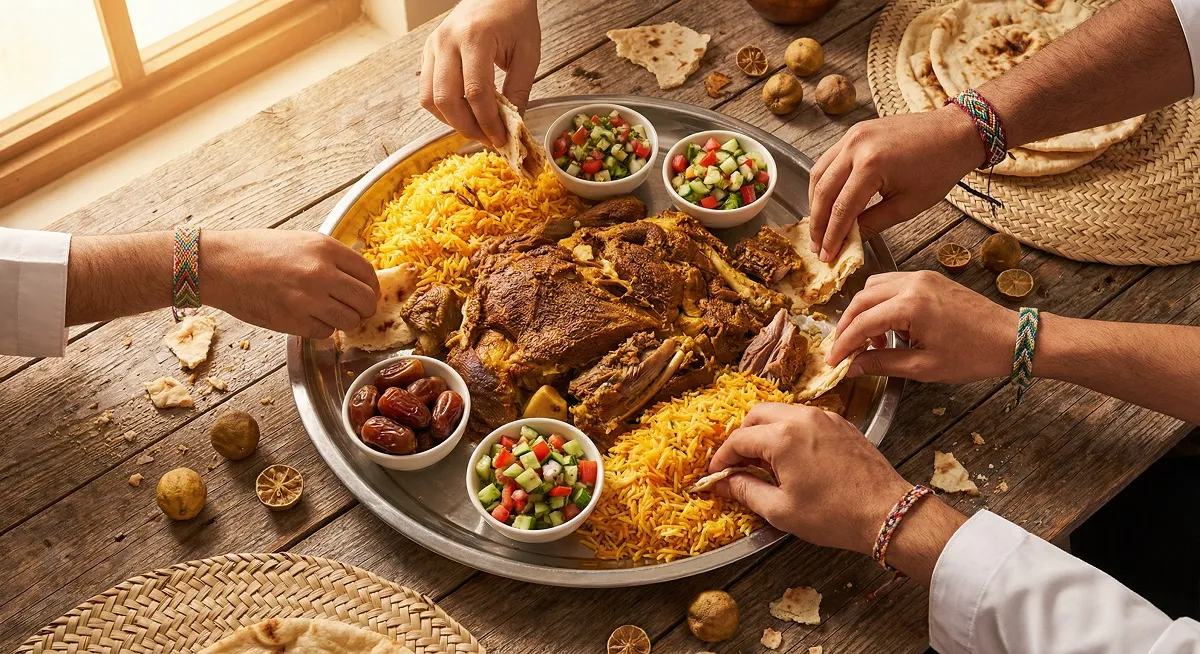
Coffee Shops and Bakeries: You Are Not too Small for Google
There is a persistent belief among small food businesses — specialty coffee shops, neighborhood bakeries, dessert counters, tea houses — that SEO is for big restaurants with marketing budgets. That Google optimization is something chains do. That a six-table café in Ruwi or a kunafa shop in Fahaheel does not need to think about search rankings.
This belief is costing them money every single day.
Google does not care about the size of your business. It cares about relevance. When someone in Al Khuwair, Muscat types “specialty coffee near me” at 9 AM on a Saturday, Google is not filtering by revenue or employee count. It is looking for the closest, most relevant, best-reviewed business that matches that search. A single-location specialty coffee roaster with 87 Google reviews and a complete Business Profile will outrank a chain café with a generic profile and no recent activity.
Bakeries have an especially strong opportunity in Kuwait and Bahrain. Searches for “مخبز قريب مني” (bakery near me), “كيك عيد ميلاد الكويت” (birthday cake Kuwait), “خبز طازج المنامة” (fresh bread Manama), and “best croissant Muscat” happen daily in significant numbers. These are high-intent searches — the person is ready to buy, often within the hour. A bakery that shows up with mouth-watering photos, a 4.6-star rating, and an “Open now” badge on Google Maps converts that search into a customer walking through the door.
Dessert shops face seasonal spikes that make SEO even more valuable. During Ramadan, searches for “حلويات رمضان” (Ramadan sweets), “قطايف الكويت” (qatayef Kuwait), and “best luqaimat Muscat” surge dramatically. During Eid, cake and dessert orders spike. A dessert shop that has built ranking authority throughout the year captures this seasonal demand without spending extra on advertising. The content is already indexed. The reviews are already accumulated. The profile is already optimized. When the surge comes, Google already knows who to show.
Quick bite establishments — shawarma counters, falafel shops, burger joints, manakish bakeries — live or die by convenience searches. “Quick food near me,” “شاورما حولي” (shawarma Hawalli), “best burger Seef Bahrain” — these queries are pure impulse. The customer is hungry now. They will go wherever Google points them. A quick bite place with no Google presence is invisible to every single impulse-driven food decision happening within a one-kilometer radius.
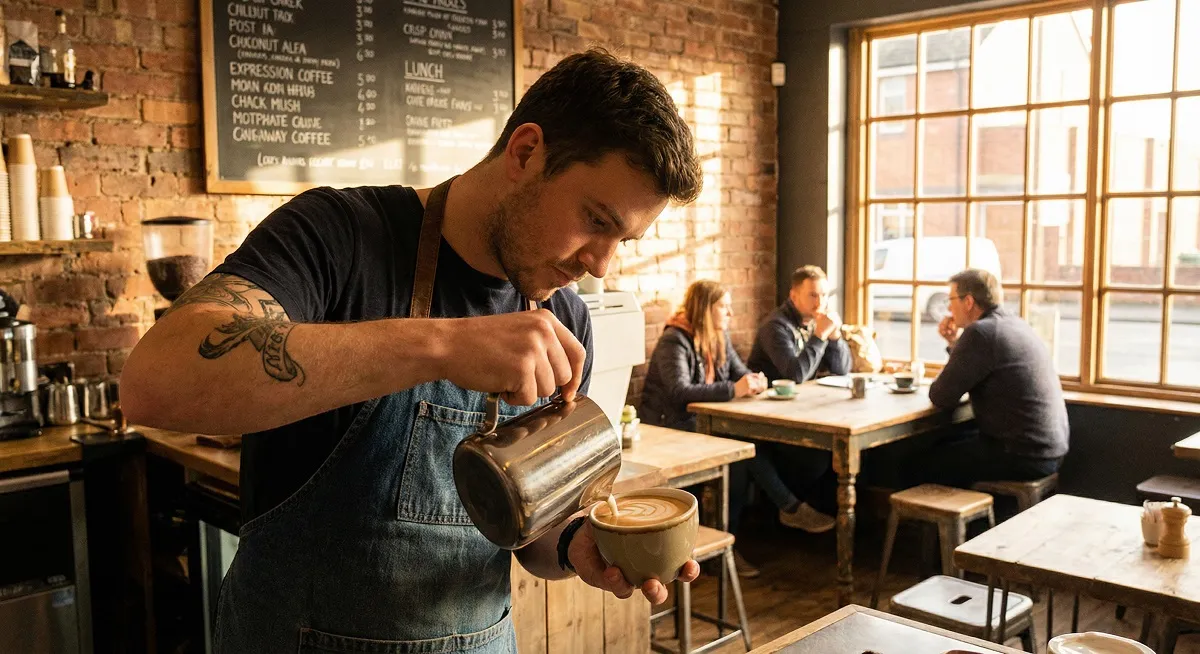
Delivery-Only Kitchens: Invisible by Design, Invisible on Google by Accident
Cloud kitchens and delivery-only restaurants represent one of the fastest-growing segments of the F&B industry across the GCC. In Kuwait alone, the online food delivery market exceeded $680 million in 2024. Bahrain’s delivery market, boosted by a compact geography where everything is within 30 minutes, has grown at over 19% annually since 2022. Muscat’s delivery demand spiked after COVID and never dropped back to pre-pandemic levels.
But here is the paradox: delivery-only kitchens are physically invisible. They have no storefront. No sign. No walk-in traffic. Their existence depends entirely on digital platforms. And most of them have handed over 100% of their digital presence to aggregator apps — Talabat, Deliveroo, Carriage — paying 25-35% commission on every order.
A cloud kitchen in Mahboula, Kuwait that also has its own website ranking for “pizza delivery Mahboula” or “بيتزا توصيل المهبولة” receives orders directly — at zero commission. A delivery-only burger brand in Al Mouj, Muscat that ranks for “burger delivery Al Mouj” captures customers who would otherwise discover them only through Talabat, where they sit next to fifteen competitors on the same screen.
The economics are straightforward. On a 3 KD order in Kuwait, a delivery app takes roughly 0.9-1.0 KD in commission. Multiply by 50 orders daily and that is 45-50 KD per day — over 1,350 KD per month — going to the platform. A website that ranks organically and drives even 30% of orders directly saves the kitchen over 400 KD monthly. That is the equivalent of free rent in some parts of Kuwait.
Google Business Profile for delivery-only kitchens requires a specific setup. Google allows “delivery-only” and “online service” configurations that do not display a physical address but still appear in local search results based on delivery area. The profile should list every cuisine type served, display menu items through Google’s menu integration, and post regularly about new dishes or promotions. Customer reviews for delivery-only brands carry even more weight than for dine-in restaurants because the customer has no physical storefront to evaluate — their entire trust decision happens online.
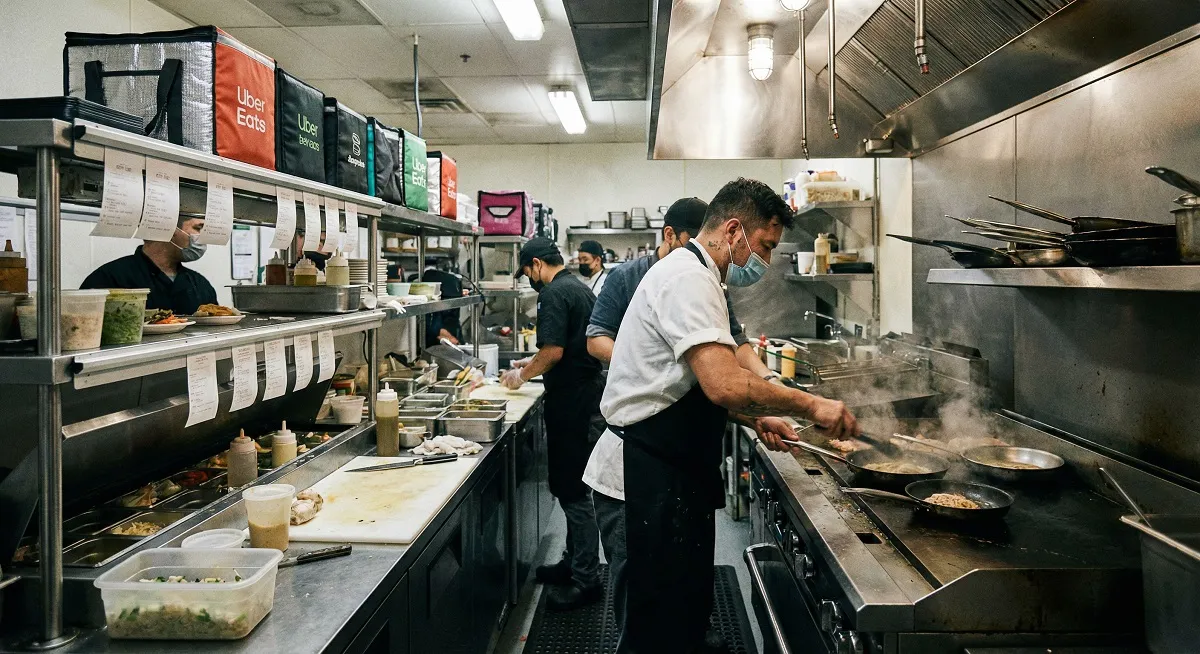
Bars and Pubs: Bahrain and Muscat’s Nightlife Runs Through Google More Than You Think
This segment deserves separate attention because it operates under different dynamics than the rest of the F&B sector. Licensed bars, pubs, lounges, and nightlife venues exist primarily in Bahrain and Oman within these three markets. Kuwait does not permit alcohol sales, which concentrates the nightlife search demand onto Bahrain and Muscat.
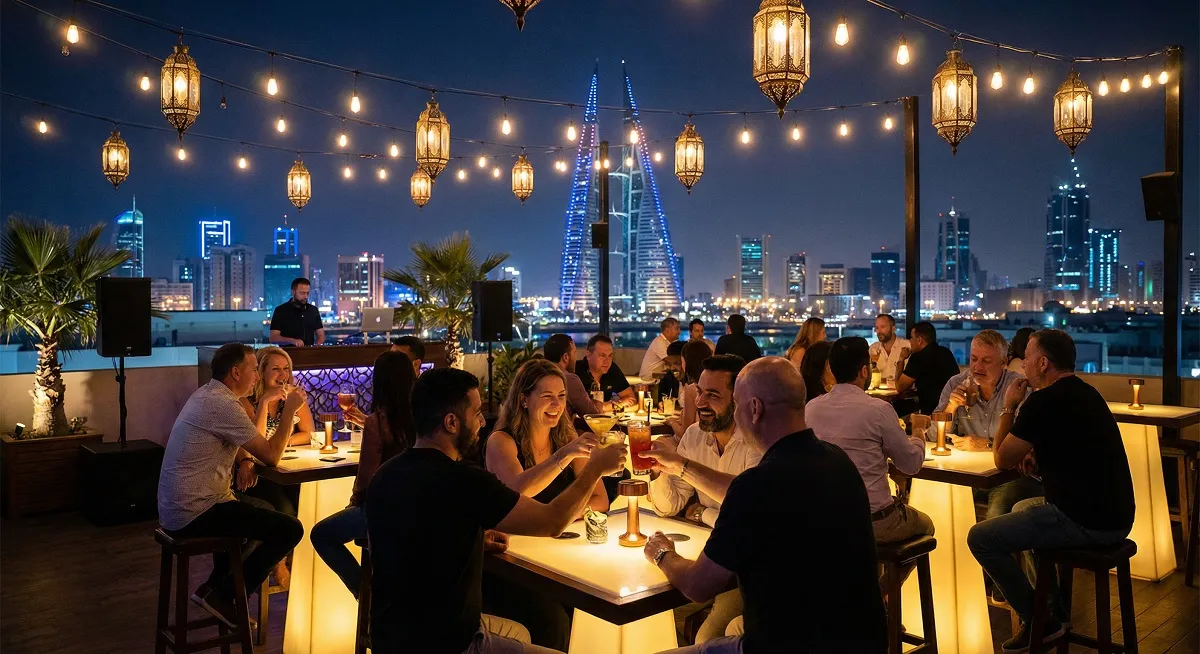
Bahrain’s bar and pub scene, particularly in Juffair, Adliya, and the hotel districts, serves a dual audience: resident expats and Saudi weekend visitors. The Saudi audience is massive. On any given Thursday evening, King Fahad Causeway traffic backs up with visitors heading to Bahrain specifically for dining, drinks, and entertainment. These visitors are searching before they cross — “best bars in Bahrain tonight,” “rooftop lounge Juffair,” “happy hour Adliya” — and their decisions are made on Google and TripAdvisor well before they arrive.
A pub in Juffair that has a fully optimized Google Business Profile with current photos (showing the actual atmosphere, not stock images), updated happy hour timings, weekend event posts, and strong review management is essentially running a free advertising campaign targeting eastern Saudi Arabia 24 hours a day. The reach is extraordinary relative to the effort required.
Muscat’s bar scene is smaller and largely hotel-based, but the search demand exists among tourists and the resident expat community. Queries like “live music bar Muscat,” “pub quiz Qurum,” and “best cocktails Shatti Al Qurum” have consistent monthly volume. Hotels with bars and lounges that optimize these outlets as separate entities within their Google presence — rather than burying them as a sub-page on the hotel website — capture searches that generic hotel listings miss entirely.
TripAdvisor plays a uniquely strong role for bars and nightlife in Bahrain. Tourist and visitor reviews on TripAdvisor for Bahrain’s nightlife venues often read like mini-guides, mentioning pricing, dress codes, crowd demographics, and specific drink recommendations. A bar with a well-managed TripAdvisor profile that appears in the top 10 for “Bahrain nightlife” receives a steady stream of first-time visitors who found them through trip planning research weeks or months in advance.
TripAdvisor is Not Dead. In These Three Countries, It Might Be Your Best Sales Channel
There is a narrative in digital marketing circles that TripAdvisor has been overtaken by Google Reviews and Instagram. In markets like New York or London, there may be some truth to that. In Muscat, Kuwait, and Bahrain? Not even close.
TripAdvisor remains the dominant discovery platform for tourists planning where to eat in Oman. When someone books a trip to Muscat, one of their first actions is checking “Top restaurants in Muscat” on TripAdvisor. The platform’s curated rankings, combined with detailed tourist reviews that describe the experience from a visitor’s perspective, make it uniquely valuable for a market that is actively building its tourism sector.
In Bahrain, TripAdvisor functions as a cross-border marketing tool. Saudi visitors planning a weekend trip check TripAdvisor for “best restaurants in Bahrain” alongside Google. A restaurant ranked in the top 20 on TripAdvisor for Bahrain reaches an audience that extends across the Causeway into Dammam, Al Khobar, and Dhahran — approximately 2 million additional potential customers who make regular trips to the island.
In Kuwait, TripAdvisor’s influence is narrower but still significant among the Western and South Asian expat communities and the growing number of business travelers. For restaurants near Kuwait’s hotel districts and business areas — Sharq, Kuwait City center, Bneid Al Gar — a strong TripAdvisor presence captures a customer segment that does not rely on Arabic-language word of mouth.
Optimizing a TripAdvisor listing is a different discipline than Google Business Profile management, though the two complement each other. TripAdvisor’s ranking algorithm weighs three main factors: review quantity (more recent reviews carry more weight), review quality (higher ratings push you up), and management response rate (businesses that respond to reviews rank higher than those that don’t). Photo uploads, menu completeness, and accurate operating hours round out the profile.
The restaurants that treat TripAdvisor as a passive profile where reviews occasionally appear are missing the point. TripAdvisor is an active ranking system. The businesses that climb its rankings are the ones that systematically request reviews from satisfied customers, respond to every review within 48 hours with personalized messages, upload fresh photos monthly, and keep their menu and contact information current.
What Google Actually Sees When It Looks at Your Restaurant: And What Scares It Away
Most restaurant owners have never looked at their own business from Google’s perspective. If they did, they would understand immediately why they are not ranking. Here is what Google’s crawler encounters when it visits a typical restaurant website in Muscat, Kuwait, or Bahrain:
The menu is a PDF. Google cannot read PDFs embedded in iframes efficiently. When your menu is a downloadable file, Google cannot index individual dishes, cannot match your menu items to search queries like “lamb machboos Kuwait” or “chicken tikka Muscat,” and cannot use your menu content as a ranking signal. A crawlable HTML menu with proper headings and schema markup is worth ten times more for SEO than the most beautifully designed PDF.
The only photos are on Instagram. Google cannot crawl your Instagram gallery. Photos uploaded to your website and your Google Business Profile are visible to Google’s algorithms. Photos posted exclusively on Instagram are invisible to search engines. A restaurant with 50 high-quality food photos on its GBP receives dramatically more visibility than one with zero — regardless of how popular their Instagram is.
The website is not in Arabic. In Kuwait, where 66% of food searches happen in Arabic, an English-only restaurant website is functionally invisible to two-thirds of the searching population. Even in Muscat and Bahrain, where English search volume is higher, Arabic content captures a segment of diners that competitors are ignoring.
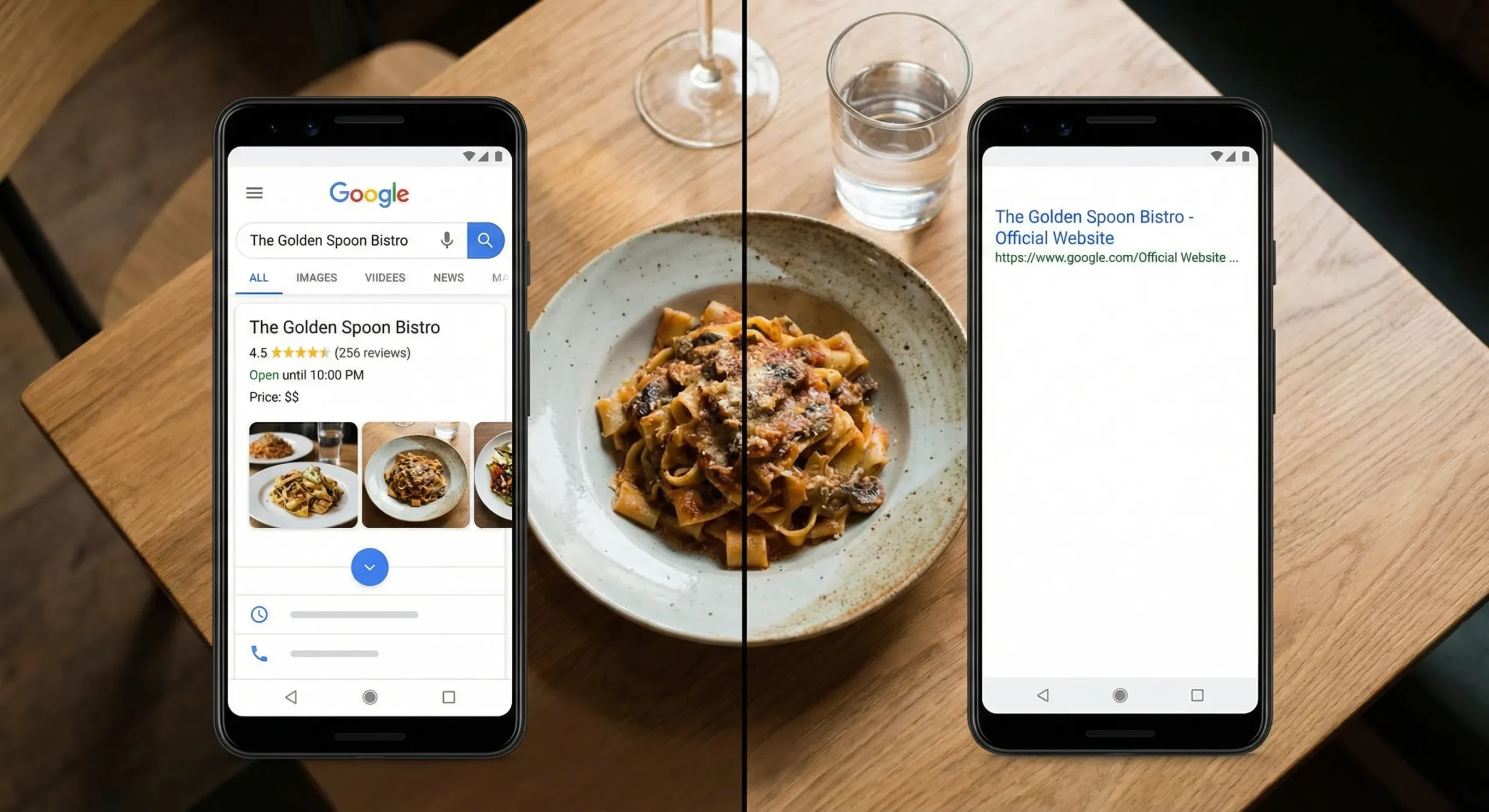
There is no schema markup. Google’s structured data for restaurants can include business type, cuisine, price range, address, phone number, hours, menu items, reservation links, and aggregate review ratings. When properly implemented, this data enables rich results in Google search — those enhanced listings showing stars, price range, and “Open now” directly in the search results. Restaurants without schema are plain blue links competing against competitors showing stars and prices.
The location is vague. “Located in Muscat, Oman” tells Google nothing useful. “Located on Sultan Qaboos Street in Shatti Al Qurum, Muscat, Oman — 200 meters from the InterContinental Hotel” tells Google exactly where you are, matches neighborhood-level search queries, and creates geographic relevance signals that boost local rankings.
The Package That Fills Tables, Drives Orders, and Stops Wasting Your Marketing Budget
Everything described in this article — Google Business Profile optimization, local SEO, TripAdvisor management, Arabic and English content, review strategy, click-to-call setup — is not a wish list. It is a system. And it works best when all the pieces run together.
SEO Services Packages
Google Business Profile Packages
Web Design Packages
TripAdvisor & Hospitality Packages
A restaurant, café, bakery, dessert shop, bar, or cloud kitchen in Muscat, Kuwait, or Bahrain that manages all three channels — Google organic search, Google Business Profile, and TripAdvisor — creates a visibility loop. The Google Business Profile drives Map Pack appearances for nearby searchers. The website drives organic rankings for cuisine-specific and location-specific queries. TripAdvisor captures tourist and visitor research traffic. Reviews on all platforms feed authority signals back into Google’s ranking algorithm. Each channel reinforces the others.
This is not theory. It is the system that the busiest, most fully-booked food businesses in the Gulf are already using — whether they call it “SEO” or not. The difference is whether you build it intentionally or hope it happens accidentally.
Your food is already good enough. Your location is already fine. Your staff already knows how to deliver a great experience. The only missing piece is making sure the people searching for exactly what you offer — right now, tonight, this weekend — can actually find you.
Reach out today:
📞 +968 7922 9535
📧 seoingcc@gmail.com
🌐 SEOinGCC
Being on Google Maps and being optimized on Google Maps are two entirely different things. Your pin exists, yes. But does your profile show that you are open right now? Does it have photos from this month? Have you responded to the review someone left last week? Did you post about your new Friday brunch? Is your menu listed item by item or is it just a phone number and an address? The difference between a basic Maps listing and a fully managed Google Business Profile is the difference between a closed shop with a sign and a shop with the lights on, the door open, and someone greeting you at the entrance.
For Kuwaiti nationals and long-term residents, Instagram plays a huge role in food discovery — that is true. But Kuwait receives over 260,000 international visitors annually, including business travelers, conference attendees, and transit passengers. These visitors check TripAdvisor. Additionally, TripAdvisor profiles feed into Google’s knowledge panels and contribute to your overall online authority. Ignoring it costs nothing to maintain but leaves a free ranking channel completely unused.
The bakery around the corner from you that has a queue every Friday morning — check their Google reviews. Check whether their Business Profile says “Open now” with fresh photos and a mapped location. Small food businesses actually benefit more from local SEO than large ones because Google’s Map Pack shows three results, not thirty. A small bakery in Hawalli with 94 genuine reviews can absolutely outrank a chain with 40 locations but poor profile management.
Yes. Google’s algorithm treats delivery-only and service-area businesses as legitimate local results. Your Business Profile will not show a physical address, but it will show your delivery radius, your menu, your reviews, and your contact information. When someone searches “healthy food delivery Seef Bahrain” and your cloud kitchen has an optimized profile and a fast website with click-to-call and online ordering, you appear alongside dine-in competitors and capture orders at zero commission.