Think You Have a Website? You Might Just Have a Problem
Somewhere in Business Bay right now, a marketing manager is looking at last month’s Google Ads invoice and wondering where all that money went. Across town in Deira, a restaurant owner is watching competitors fill tables nightly while his phone barely rings. Over in Abu Dhabi, a law firm partner just realized that searching for his own practice on Google brings up five other firms first.
These are not hypothetical situations. This is Tuesday in the UAE.
The Emirates sits at a strange intersection. It is one of the most connected, tech-forward nations on earth. Internet penetration reached 99.2% in 2025, with approximately 9.96 million active internet users in a country of just over 10 million residents. Smartphone adoption sits above 97%. The UAE government itself has ranked among the top digital governments globally for three consecutive years. And yet — walk into almost any SME in Dubai, Abu Dhabi, or Sharjah and ask about their organic search strategy. You will get blank stares.
The businesses that do understand SEO in the UAE have a ridiculous advantage right now. Not because the market is empty — it is actually the most competitive digital market in the entire Middle East. But because the overwhelming majority of competitors are doing it poorly. They have websites that look expensive but function like brochures. They have Google Business Profiles that were set up in 2021 and never touched again. They are running ads to pages that Google would never rank organically because the technical foundation is broken.
This article is not theory. It is a direct breakdown of what works right now for businesses trying to rank on Google across all seven Emirates.
All Emirates, Different Search Markets — One Strategy Does Not Fit
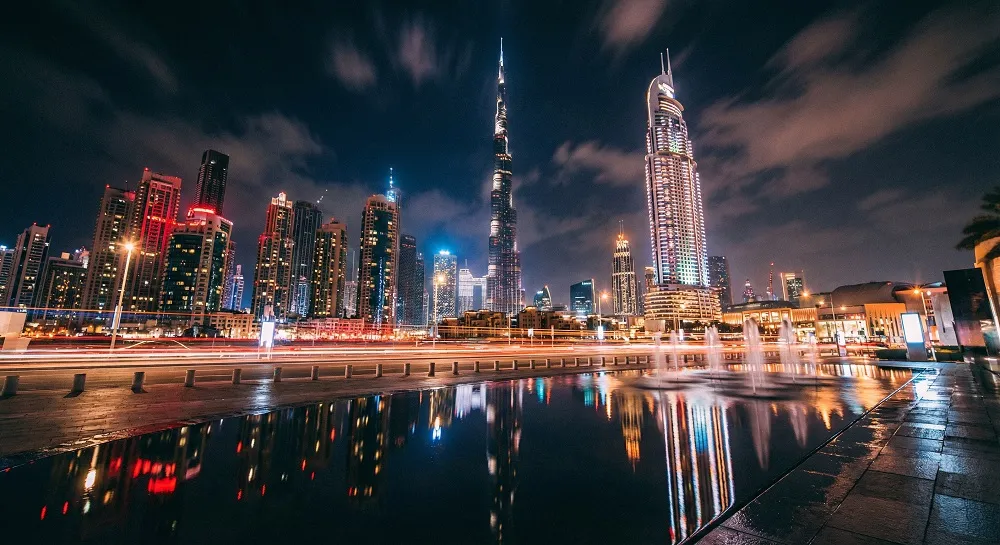
Here is where most agencies working in the UAE immediately go wrong. They treat the country as a single market. It is not. The UAE is seven distinct emirates with different population densities, different economic activities, different consumer demographics, and critically — different local search behaviors on Google.
Dubai has roughly 3.7 million residents and receives over 17 million international tourists per year. The search landscape here is dominated by English, intensely competitive, and skewed heavily toward hospitality, real estate, retail, and professional services. Ranking for “best brunch Dubai” or “villa for rent in Arabian Ranches” requires a serious, sustained SEO campaign because hundreds of well-funded businesses are chasing the same terms.
Abu Dhabi, with around 1.6 million residents, presents a different picture entirely. Government-related searches are far more common. Healthcare, education, and oil and gas sector queries carry significant volume. The mix between Arabic and English searches is more balanced than in Dubai — roughly 45% Arabic, 55% English for local service queries. A business ignoring Arabic SEO in Abu Dhabi is conceding nearly half the market to anyone willing to write content in the language people actually search in.
Sharjah, the third largest emirate by population at approximately 1.8 million, is underserved digitally in a way that represents genuine opportunity. The cost of living difference means a large segment of the UAE’s working population lives in Sharjah and commutes to Dubai. These residents search for local services — groceries, clinics, salons, auto repair, tutoring — using Sharjah-specific queries. Competition for these keywords is a fraction of what it is in Dubai, yet the search volume is substantial.
Ajman, Ras Al Khaimah, Fujairah, and Umm Al Quwain each have their own micro-markets. RAK in particular has seen tourism growth following investments in Jebel Jais and resort developments, creating new demand for hospitality SEO. Businesses operating across multiple emirates need location-specific landing pages, individual Google Business Profiles per location, and content strategies that address the unique search patterns in each area.
Why Your Beautiful Website Ranks Nowhere
This conversation happens weekly with business owners across the UAE. They spent 25,000 to 80,000 AED on a website. The design agency delivered something visually impressive. It has animations, custom graphics, maybe a video background on the homepage. The client is proud of it. Their friends compliment it.
Then nothing happens.
No organic traffic. No phone calls from Google. No contact form submissions from people who found them through search. The website exists on the internet the same way a billboard exists in an empty desert — technically visible, but nobody is driving past.
The gap between a website that looks good and a website that ranks on Google has never been wider. Google’s 2025 ranking algorithm evaluates hundreds of signals, and visual design is not one of them. What matters is technical performance, content depth, user engagement metrics, and authority signals.
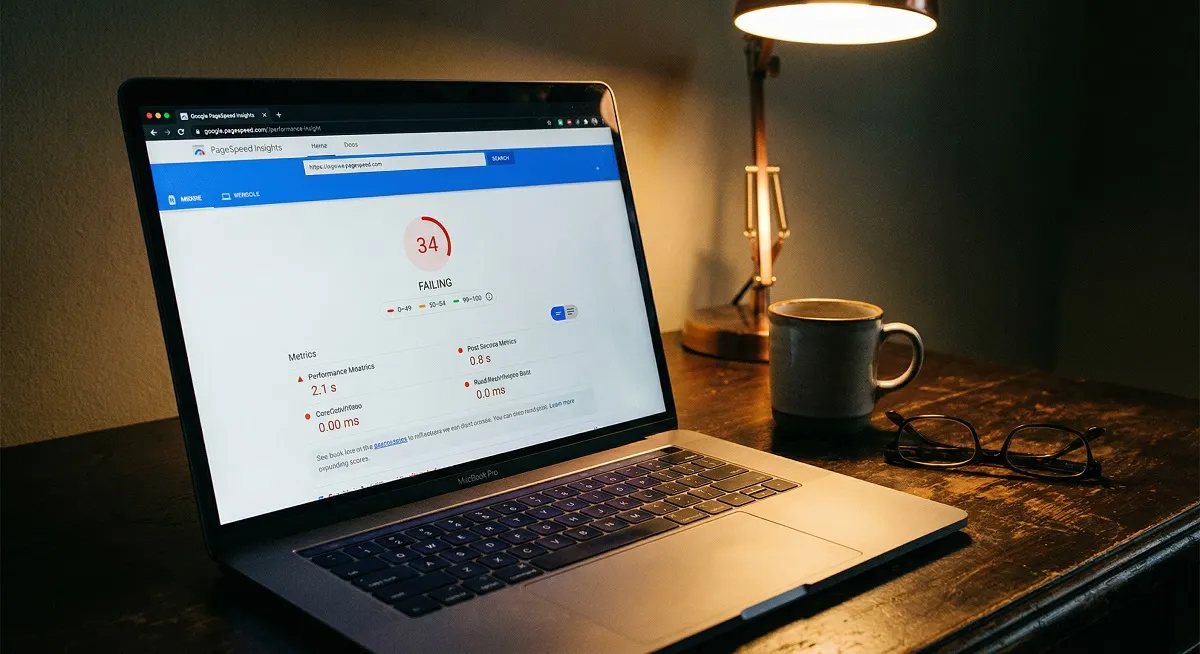
Starting with performance: Google’s Core Web Vitals require Largest Contentful Paint under 2.5 seconds, Interaction to Next Paint under 200 milliseconds, and Cumulative Layout Shift below 0.1. Heavy animations and uncompressed images — the hallmarks of UAE design agency work — directly harm these scores. A homepage with a 4MB hero video might look cinematic, but it loads in 6 seconds on a 4G connection in Sharjah, and Google notices.
Content depth is where most UAE business websites fail catastrophically. A typical services page reads: “We provide high-quality solutions for all your needs. Contact us today.” This tells Google nothing. It matches no specific search query. It contains no E-E-A-T signals. Compare that to a page that says: “Commercial interior fit-out services in Dubai — office renovation, restaurant build-out, and retail shop fitting across Business Bay, DIFC, and JLT, with DM-approved contractors and 340+ completed projects since 2017.” The second version targets real keywords, demonstrates experience, and answers the actual question a searcher has.
Structured data is the final missing piece for most UAE websites. Without proper schema markup, Google has to guess what your business does. With it, Google knows your business type, location, services, pricing range, reviews, and operating hours. For e-commerce sites, product schema enables rich results in search — showing price, availability, and ratings directly in Google’s search listings. This alone can increase click-through rates by 20-35%.
Hospitality SEO: The Sector Where the UAE Leaves the Most Money on the Table
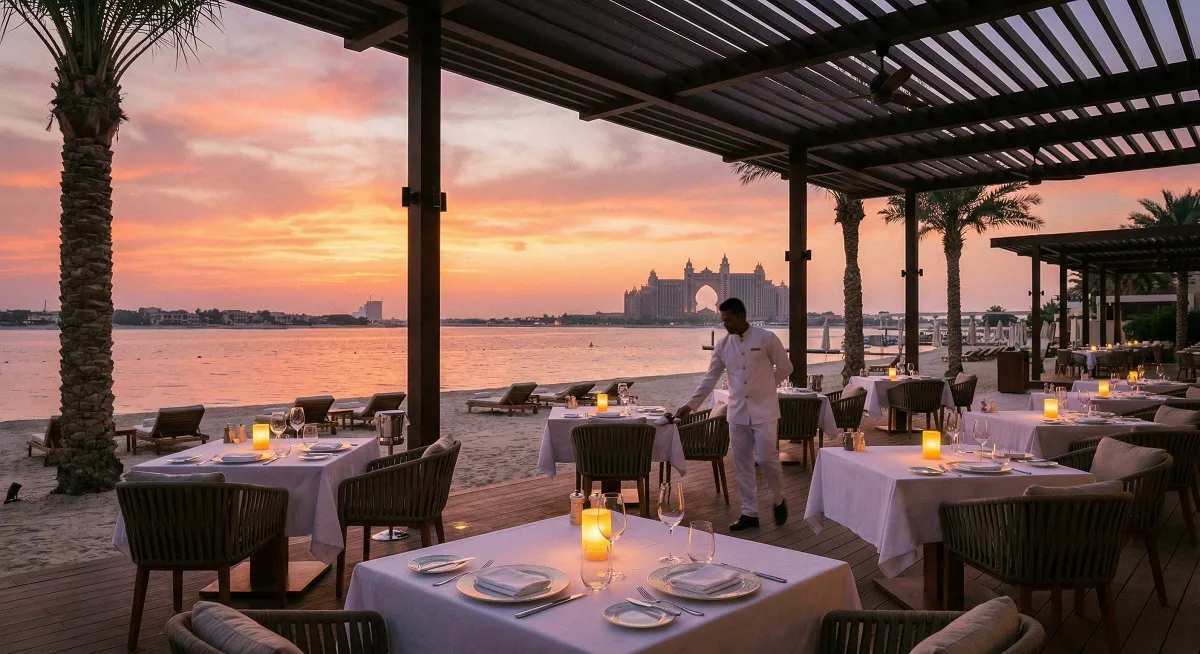
Dubai alone has over 800 hotels and hotel apartments. Abu Dhabi has more than 170. New properties continue to launch across the emirates monthly. The competition for guests is fierce, and yet the vast majority of hotels in the UAE outsource their entire digital strategy to OTAs like Booking.com, Expedia, and Agoda — paying 15-25% commission on every booking that could have come direct.
Direct bookings through organic search are the highest-margin revenue channel any hotel can have. When a traveler searches “boutique hotel JBR Dubai” or “family resort Ras Al Khaimah” and finds your website ranking organically, you pay zero commission on that booking. But earning those rankings requires dedicated hotel SEO: optimized landing pages for each room type, blog content targeting long-tail travel queries, location pages highlighting nearby attractions, proper schema markup for hotel properties, and fast mobile loading speeds since over 70% of travel research happens on phones.
Restaurants across the UAE face a similar dynamic. The food and beverage industry in the UAE was valued at approximately $22 billion in 2024. Dubai alone has over 13,000 restaurants, cafés, and food outlets registered with Dubai Municipality. The restaurants that consistently fill tables are not always the ones with the best food — they are the ones that show up when someone types “seafood restaurant Dubai Marina” or “مطعم هندي في الشارقة” (Indian restaurant in Sharjah) into Google.
Restaurant SEO includes having a crawlable menu on your website, not a downloadable PDF that Google cannot read. It means managing your Google Business Profile with updated photos every two weeks, responding to reviews within 24 hours, and using Google Posts to promote weekly specials and events. It means having your TripAdvisor profile optimized with current photos, complete category tags, and proactive review management.
For hotels and restaurants in tourist-heavy areas — Downtown Dubai, Palm Jumeirah, Saadiyat Island, Al Maryah Island — TripAdvisor optimization is not optional. The platform processed over 1 billion reviews globally in 2024, and UAE hospitality businesses appear in millions of traveler searches annually. A hotel that sits at number 47 on TripAdvisor’s Dubai rankings versus number 12 experiences a measurable difference in booking inquiries. The factors that improve ranking are review velocity, management response rate, photo recency, and listing completeness.
E-Commerce in the UAE: $8 Billion Market, Mostly Running on Ads
The UAE’s e-commerce market surpassed $8.2 billion in 2024, with projections pointing toward $10.5 billion by 2026. Noon, Amazon.ae, Namshi, and thousands of independent Shopify stores split the market. Social commerce through Instagram and TikTok Shop adds another growing layer. But the overwhelming majority of online stores in the UAE have zero organic search strategy.
This dependency on paid acquisition is a business vulnerability, not a strategy. When the cost-per-click on Google Ads for “buy perfume online UAE” sits at 3-5 AED and rising, the math starts breaking for businesses with thin margins. Meanwhile, an organic ranking for the same keyword delivers the same buyer intent click at zero marginal cost.
E-commerce SEO in the UAE requires a fundamentally different approach than service-business SEO. Product pages need unique descriptions — not manufacturer copy that appears on fifty other websites. Category pages require optimized headings, descriptive introductory text, and faceted navigation that Google can crawl without creating duplicate content issues. Collection pages should target commercial keywords like “sustainable fashion UAE” or “عطور نسائية أصلية” (original women’s perfumes) rather than generic labels.
Internal linking architecture determines how Google distributes ranking authority across an online store. Best-selling products should receive links from blog content, category pages, and the homepage. Related product sections need to use contextual anchor text, not generic “you may also like” labels. Breadcrumb navigation with structured data helps Google understand your product taxonomy and can generate enhanced search results with clickable category paths.
Image optimization is another overlooked area. A typical UAE fashion e-commerce store has 5,000-20,000 product images. If none of them have descriptive alt text, that is 5,000-20,000 missed opportunities to appear in Google Image Search, which drives approximately 22% of all web searches globally. Alt text for a product image should not say “IMG_4521.jpg” — it should say “navy blue linen blazer for men UAE online store” or similar descriptive text that matches real search queries.
Google Business Profile: The Free Tool Running Circles Around Paid Ads
If someone told a business owner in Dubai that there is a free Google tool that places your business above all organic results and above all ads in local searches, and that this tool takes 30 minutes per week to maintain, you would expect every business in the country to use it aggressively.
They don’t.
Google Business Profile remains the most underutilized digital asset across the UAE. The Map Pack — those three highlighted business listings with a map that appear for local queries — gets clicked before everything else on mobile. Studies consistently show the Map Pack captures 42-48% of all clicks on local search results pages.
But appearing in the Map Pack requires ongoing work. Google evaluates:
Relevance — Does your profile accurately describe what someone is searching for? Businesses that select overly broad categories or write vague descriptions lose here.
Distance — How close is the business to the searcher? This cannot be manipulated, but it can be supplemented by creating content and service-area definitions that cover multiple neighborhoods.
Prominence — How well-known and well-reviewed is the business? This is where review management, photo frequency, posting consistency, and website authority all converge.
For multi-location businesses across the UAE, each branch needs a fully independent Google Business Profile. A salon chain with locations in JBR, Mirdif, and Abu Dhabi’s Khalifa City needs three separate profiles with unique photos, unique descriptions referencing the specific neighborhood, and individual review management. Duplicate or templated profiles get suppressed by Google.
Service-area businesses — mobile car wash, home cleaning, personal trainers, private chefs — need a different GBP configuration entirely. No physical address is displayed, but service areas are defined by emirate and neighborhood. The business description becomes especially important because it carries the local keyword weight that a physical address normally provides.
The Clock Is Running in the UAE
The reality of SEO is that it rewards first movers. The business that starts building organic authority today has a structural advantage over every competitor that starts six months from now. Backlinks accumulate. Domain authority grows. Content indexes and ages. Rankings compound. This is true everywhere, but in the UAE — where every industry is moving fast and new competitors launch weekly — the window of opportunity has a shorter lifespan than in less competitive markets.
SEO Services Packages
Google Business Profile Packages
Web Design Packages
TripAdvisor & Hospitality Packages
Whether your business operates from a tower in DIFC, a warehouse in Al Quoz, a mall kiosk in Yas Mall, or a laptop in a Sharjah apartment, Google does not care about your office address. It cares whether your website answers the questions people are asking, whether your technical infrastructure meets its standards, and whether your online presence signals credibility and relevance.
The search volume is already there. The buyers are already looking. The only variable left is whether your business is the one they find.
Reach out today:
📞 +968 7922 9535
📧 seoingcc@gmail.com
🌐 SEOinGCC
Google reviews and TripAdvisor serve different audiences with different intent. Google reviews influence local searchers already in the UAE. TripAdvisor influences tourists who are planning visits — often weeks or months before arrival. For hotels, restaurants, and attractions, TripAdvisor rankings directly correlate with tourist booking volume. With Dubai attracting 17 million international visitors and Abu Dhabi targeting 39.3 million by 2030, ignoring TripAdvisor means ignoring a massive pre-arrival discovery channel.
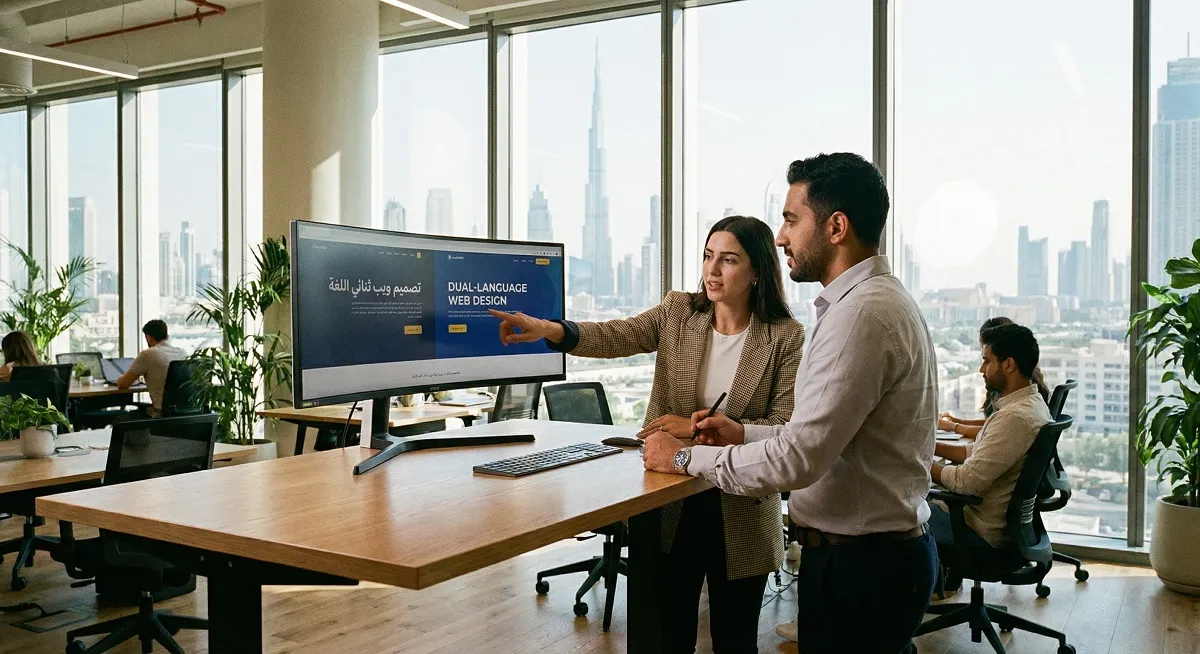
If you serve consumers, yes. While English covers the majority of searches in the UAE, Arabic queries are growing at 24% year-over-year and carry significantly higher conversion rates for local services. A bilingual Arabic-English website does not simply double your content — it opens access to a less competitive keyword space where ranking is faster and the audience is actively looking for providers who speak their language.
Yes. While Google Reviews dominates local discovery, TripAdvisor remains a significant decision-making tool for tourists and international business travelers visiting Riyadh. Hotels and restaurants that maintain optimized profiles on both platforms capture more bookings than those relying on a single channel. With Saudi Arabia targeting 150 million annual visitors by 2030, TripAdvisor visibility will only grow in importance.
New businesses can and do outrank established ones in the UAE regularly. Google does not rank websites based on age — it ranks them based on relevance, content quality, technical health, and user experience. A new dental clinic in Abu Dhabi with a fast, well-structured bilingual website and a carefully managed GBP can outrank a clinic that has been open for a decade but has a neglected website and no SEO strategy.