Right Now a Parent is Googling Schools in Your City and You Are Not Showing up
February is not a quiet month for private schools in the Arab world. It is the month when phones should be ringing nonstop. When inquiry forms should be filling up. When campus tour bookings should be stacking on top of each other. For the 2026-2027 academic year, the registration window across most GCC capitals opened in January and runs through April. In some cities — Riyadh, Abu Dhabi, Amman — early-bird deadlines fall in late March.
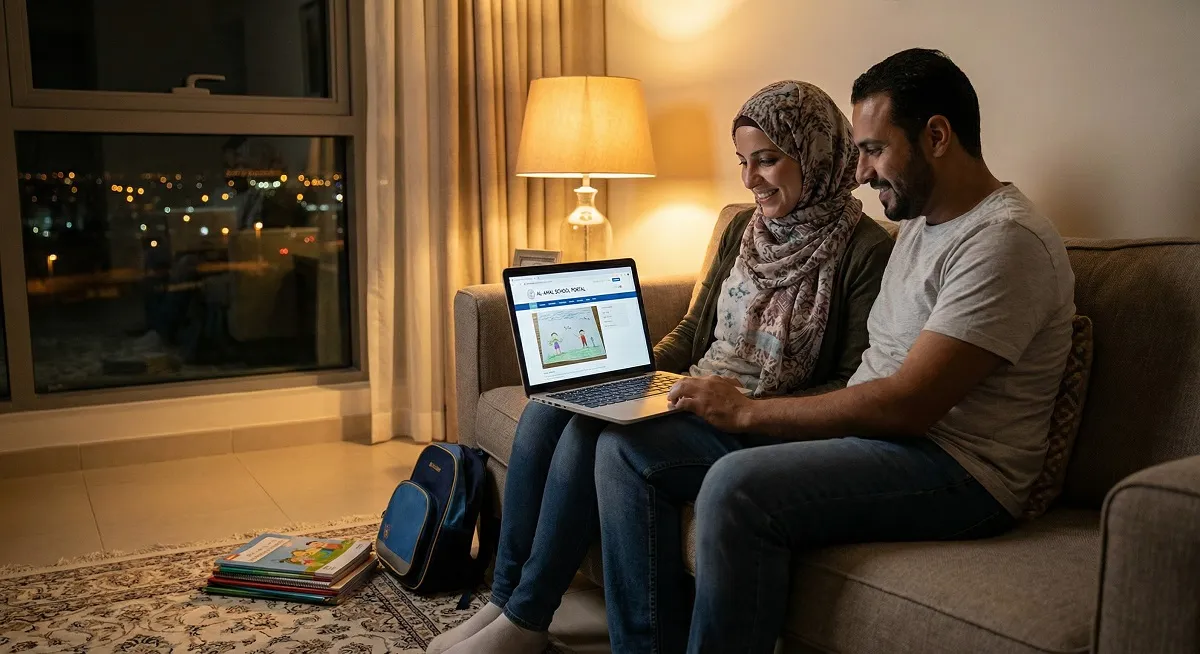
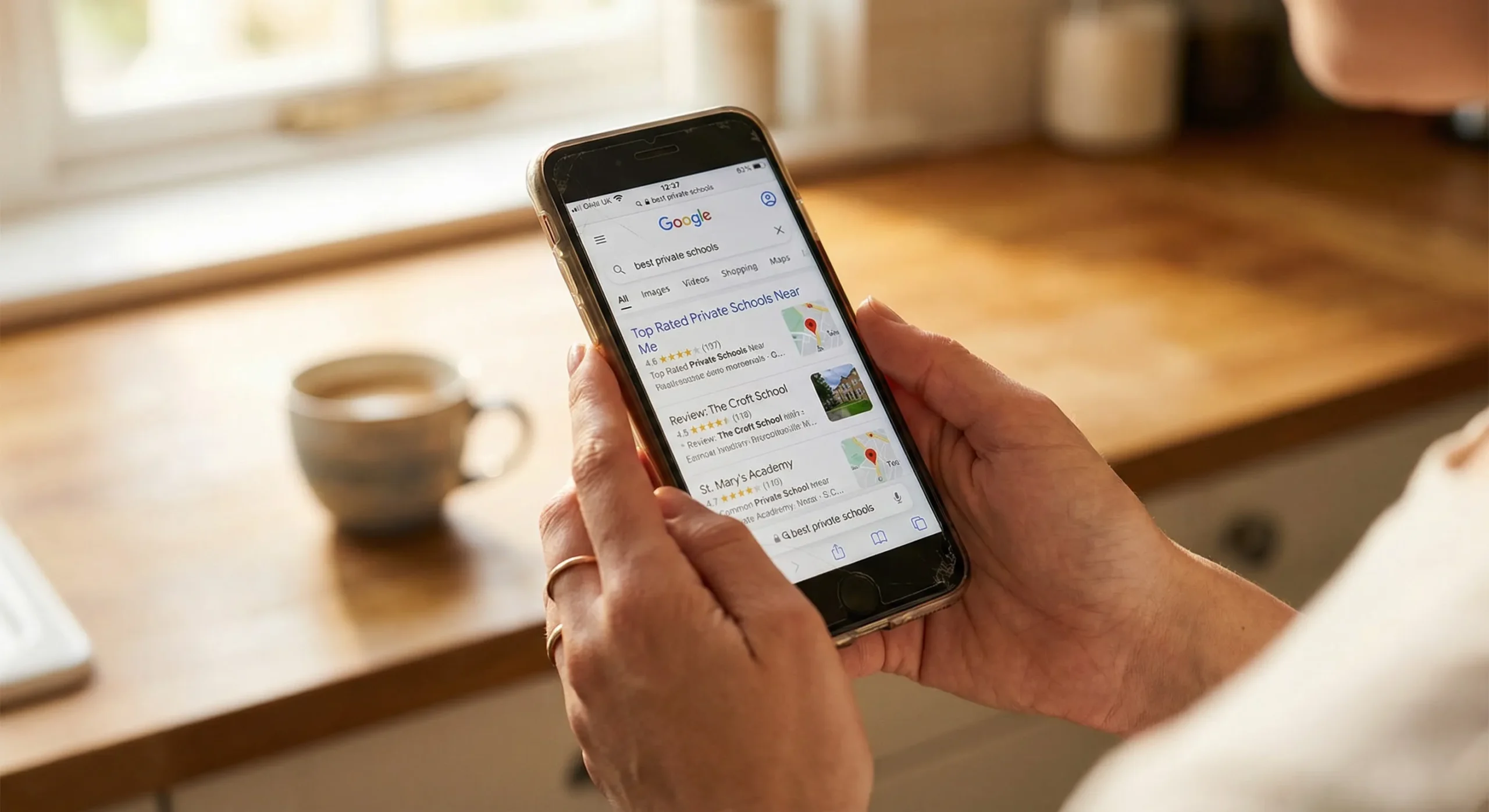
And here is what is actually happening during this window: parents are not driving around neighborhoods looking at school signs anymore. They are searching. On Google. On their phones. At 10 PM after the kids are in bed. During lunch breaks. While waiting at the doctor’s office. The phrases they type are specific: “best British curriculum school in Khalifa City,” “مدارس خاصة في الرياض رسومها معقولة” (affordable private schools in Riyadh), “IB schools near me Doha fees,” “top American schools Kuwait with bus service.”
These are not abstract marketing concepts. These are real queries happening thousands of times per day across Arab capitals right now — during the exact weeks when enrollment decisions are made.
The schools that show up for these searches fill their seats. The schools that don’t show up lower their fees, extend deadlines, and wonder what went wrong. The difference between the two is almost never the quality of education. It is visibility at the moment a parent is ready to choose.
42,000 Searches Per Month — That Is Just Riyadh
Let’s talk numbers because this is where school administrators usually stop and pay attention.
In Riyadh alone, Google processes an estimated 42,000 monthly searches related to private and international schools. This includes English queries like “best private school north Riyadh,” “American school Al Nakheel fees,” and “Cambridge school near Exit 5.” It also includes — and this part is critical — Arabic queries that make up roughly 58% of total school-related searches in the Saudi capital. Phrases like “مدرسة عالمية بالرياض” (international school in Riyadh), “رسوم المدارس الأهلية 2026” (private school fees 2026), and “أفضل مدرسة ابتدائية حي الياسمين” (best primary school Al Yasmin district).
Saudi Arabia’s private education sector is now valued at over $7.1 billion, with more than 4,200 private schools across the Kingdom as of 2025. Riyadh hosts approximately 1,400 of these. The competition is not gentle. Schools in Al Rawdah, Al Malqa, Hittin, and Al Sahafah — neighborhoods where family demographics skew heavily toward school-age children — are fighting for the same pool of parents. And increasingly, that fight happens on Google before it happens at school fairs.
Move to Abu Dhabi and the search volume is smaller but the intent is sharper. Around 15,000 monthly searches for private schools, with parents in Khalifa City, Al Reem Island, Mohammed Bin Zayed City, and Al Shamkha specifically looking for schools within driving distance. ADEK, Abu Dhabi’s education regulator, lists 210 private schools operating in the emirate. Parents here are comparing Irtiqa ratings, checking ADEK inspection reports, and cross-referencing what they find on Google with what they hear in community WhatsApp groups.
Doha’s private school market serves a population where over 85% are expatriates, meaning the search behavior is overwhelmingly in English — but Arabic queries from the Qatari national community and Arab expats still represent about 30% of education searches. Qatar has over 320 private schools, with concentrations in Al Wakrah, Al Gharrafa, West Bay Lagoon, and The Pearl surroundings. Monthly Google searches for school-related terms in Qatar exceed 11,000.
Kuwait City presents its own dynamic. The Kuwaiti private education market enrolled over 340,000 students in 2024-2025, with bilingual and international schools in Salmiya, Hawalli, Mishref, and South Surra seeing the highest demand. Arabic-language school searches in Kuwait make up nearly 63% of total volume, higher than any other GCC capital. Parents search “مدارس ثنائية اللغة الكويت” (bilingual schools Kuwait), “مصاريف المدارس الخاصة حولي” (private school fees Hawalli), and “best Indian school Salmiya” in significant numbers every single day during enrollment season.
These numbers exist whether your school has an SEO strategy or not. The question is who captures them.

What Parents Actually Do Before They Ever Contact Your Admissions Office
Understanding parent behavior during enrollment season is not guesswork. Google’s own consumer insights data tells a clear story, and it looks nothing like what most school marketing teams assume.
A parent in the GCC goes through an average of 5 to 7 online touchpoints before making initial contact with a school. The journey typically starts with a broad Google search — “international schools in [city]” or “best private schools near [neighborhood].” From there, the parent clicks on 3 to 4 school websites, usually within the first five Google results. They spend between 90 seconds and 4 minutes on each site, looking for specific information: curriculum type, fee structure, campus photos, teacher qualifications, and transport options.
If the website does not immediately provide this information — if it is slow, if it is only in English when the parent prefers Arabic, if the fee structure is hidden behind a “contact us for pricing” wall — the parent leaves and clicks on the next result. This is not speculation. Google Analytics data across school websites in the region consistently shows bounce rates above 65% for sites that fail to answer core questions within the first scroll.
After shortlisting 2 to 3 schools, the parent does something that school administrators often underestimate: they check Google reviews. A 2025 survey by Bayt.com found that 73% of parents in the GCC read online reviews before contacting a school. They are not just looking at the star rating. They are reading what other parents say about teacher turnover, communication quality, bullying policies, and whether the school delivers on what its website promises. A school with a 3.8-star Google rating and unresponded complaints loses to a 4.4-star school with thoughtful responses to every review, even the negative ones.
The final step before contact is often checking the school’s Google Business Profile for photos, location, phone number, and operating hours. If the profile looks neglected — outdated photos, wrong phone number, no posts, unanswered questions — the parent’s confidence drops. First impressions are now digital, and they happen long before anyone walks into your reception area.
Your School Website Is Your New Front Gate
There was a time when a school’s reputation was built through word of mouth, newspaper ads, and impressive entrance gates. That era is not completely gone, but it has been overtaken. Today, your website is the first thing a parent sees. It forms their first impression. And in an alarming number of cases across Arab capitals, that first impression is terrible.
Common problems we see on private school websites throughout the GCC:
The site takes 5 to 8 seconds to load because the homepage has an uncompressed drone video of the campus. The fee structure is either missing entirely or requires downloading a PDF. The Arabic version, if it exists, is a Google Translate copy of the English content with broken formatting. The “News” section has not been updated since the 2023 National Day celebration. Mobile users — who make up over 78% of school website traffic — see a desktop layout crammed onto a small screen with text too small to read and buttons too small to tap.
Each of these issues individually pushes parents away. Combined, they guarantee that your school loses enrollment to competitors who have invested in a functional, bilingual, mobile-first website built with search engines in mind.
What does a school website that actually works look like in 2026?
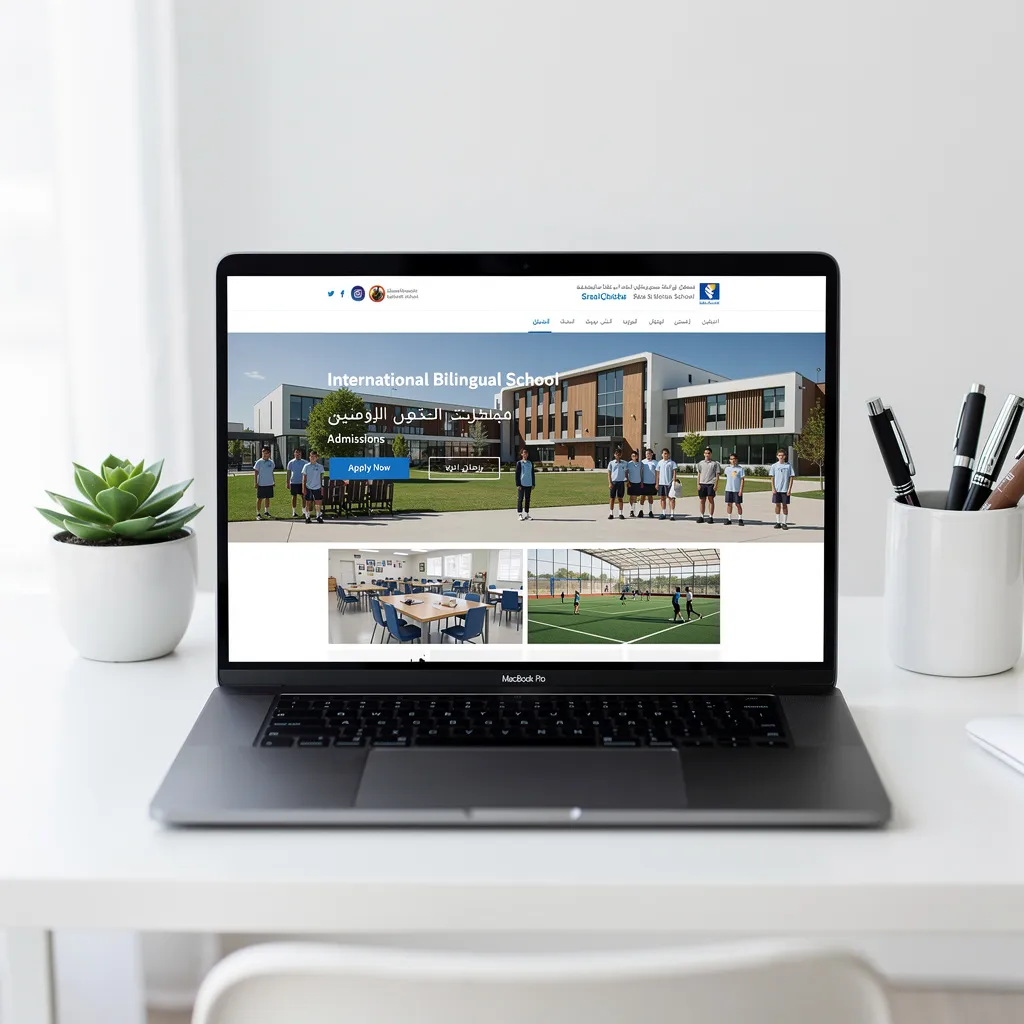
It loads in under 2 seconds. It has a clean Arabic version with natively written content, not translation, using the terms Saudi, Emirati, Qatari, or Kuwaiti parents actually search for. Fee information is accessible without requiring parents to call or email. Curriculum pages explain each stage (FS1, FS2, KG, primary, secondary) with enough detail that Google can match them to specific parent queries. Virtual tour content is embedded efficiently without killing page speed. The admissions page has a clear, short inquiry form that works flawlessly on mobile. And crucially, every page has proper schema markup telling Google exactly what the school offers, where it is located, what age groups it serves, and what curriculum it follows.
Schema markup for schools is particularly powerful because it enables rich results in Google search. When a parent searches “British school fees Abu Dhabi,” a school with proper structured data might show enhanced results with rating stars, fee range, address, and a direct link to the admissions page — all visible before the parent even clicks. This visibility advantage is enormous during enrollment season when parents are comparing multiple schools rapidly.
Google Reviews Can Fill a Classroom or Empty One
No marketing budget in the world can overcome a 3.2-star Google rating with unanswered parent complaints. This is the reality in 2026 and school leadership teams across the region need to absorb it fully.
Private schools in the GCC are reviewed publicly. Parents post about their experiences with specific teachers, with the administration’s responsiveness, with fee increases, with bus service reliability, with cafeteria food quality. These reviews sit permanently on your Google Business Profile and they appear every single time someone searches for your school name.
Here is what we observe across Arab capital cities:
In Riyadh, top-ranking private schools on Google maintain an average rating above 4.2 stars with 100+ reviews. Schools below 3.8 stars see measurably lower inquiry volumes during enrollment season. The gap is direct and quantifiable.
In Abu Dhabi, parents frequently mention ADEK ratings in Google reviews, creating a cross-referencing effect. A school with a strong ADEK Irtiqa rating but poor Google reviews creates confusion. A school with aligned positive signals across both channels builds immediate trust.
In Doha, the expatriate community is highly networked. A single detailed negative review about a school in Al Gharrafa can circulate through community Facebook groups within hours, but the Google review itself remains the permanent anchor that new parents find months later.
In Kuwait, Arabic-language reviews carry significant weight. Schools that only respond to English reviews while ignoring Arabic feedback signal a lack of attention to their Arabic-speaking community — which is the majority.
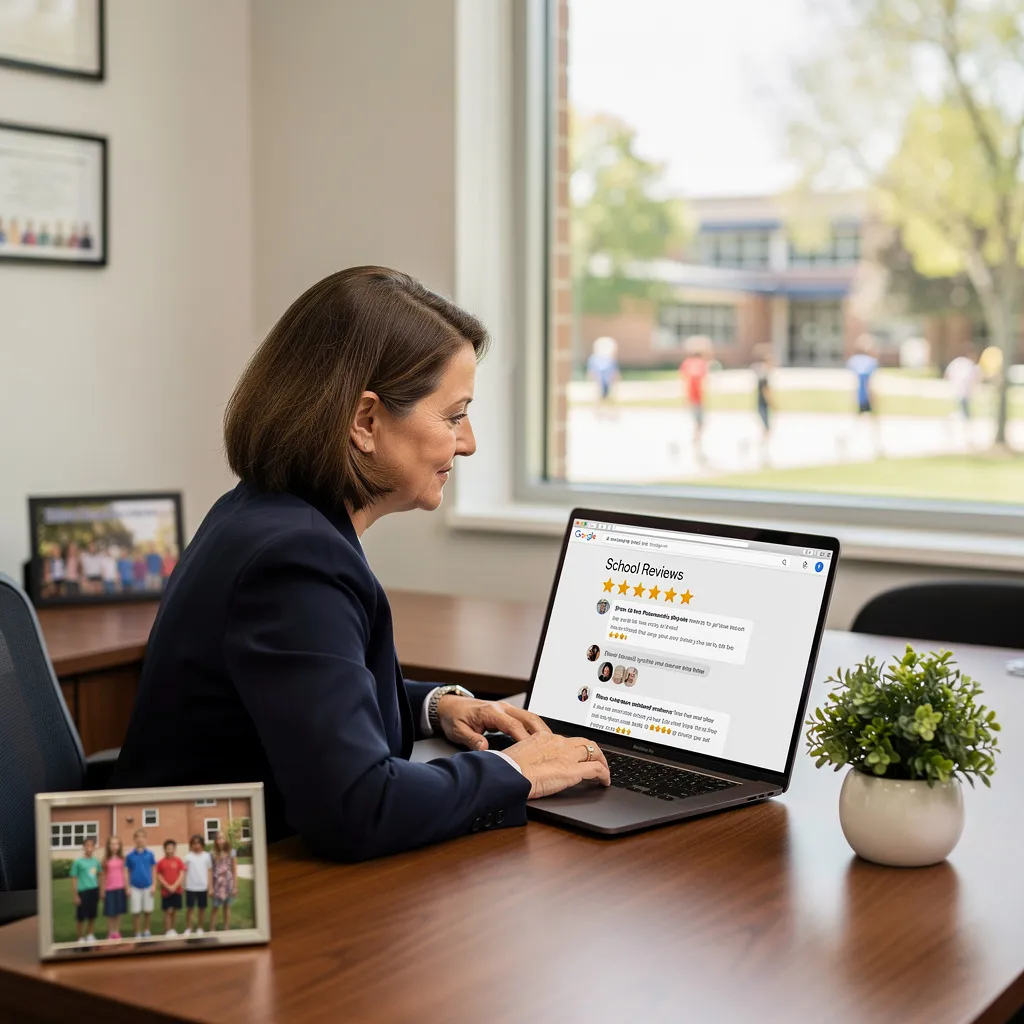
Managing school reviews is not about deleting negative ones or posting fake positive ones. It is about responding to every review with professionalism and specificity. Thanking parents for positive feedback. Addressing concerns raised in negative reviews with genuine accountability. Demonstrating publicly that the school listens, cares, and acts. Google’s algorithm factors in response rate and response time when determining local search rankings. Schools that respond to every review within 48 hours rank higher in the Map Pack than schools that ignore reviews entirely.
The Enrollment Calendar Is Your SEO Calendar
One of the biggest mistakes schools make with digital marketing is treating it as a year-round static effort. School SEO should follow the enrollment calendar because parent search behavior follows the enrollment calendar.
Here is what the annual cycle looks like across most GCC capitals:
October – December: Early research phase. Parents begin Googling school options for the following year. Search volume for terms like “best schools in [city] 2026” starts climbing. This is when your website content needs to be refreshed with updated fee structures, new academic year information, and fresh campus photos.
January – March: Peak enrollment season. Search volume spikes. “School registration open [city]” and “admissions 2026-2027 [school type]” dominate. Google Business Profile posts about open houses, campus tours, and registration deadlines should be published weekly. This is the highest-ROI period for school SEO.
April – June: Late enrollment and waitlist period. Parents who missed early deadlines search with more urgency. Long-tail queries like “schools still accepting students Riyadh September 2026” appear. Schools with content targeting these late-stage queries capture students that competitors have already stopped marketing to.
July – September: New academic year preparation. Search volume for enrollment drops, but queries shift to “school uniform [school name],” “first day of school [city],” and “school bus routes [neighborhood].” This is the time to build content that ranks for the following year’s enrollment cycle.
The schools that align their content publishing, GBP posting, and review management efforts with this calendar don’t just show up on Google — they show up at exactly the right moment when parents are ready to act.

A School in Every Arab Capital Needs Two Languages — Not One
Private schools in the GCC serve linguistically diverse communities. A school in Riyadh may have Saudi, Egyptian, Jordanian, and Sudanese families alongside Indian, Pakistani, Filipino, and Western expat families. A school in Abu Dhabi might serve Emirati nationals alongside 40 other nationalities. This linguistic diversity is not a complication — it is a dual opportunity for any school willing to build a proper bilingual web presence.
Arabic search queries for schools are less competitive than English ones across every GCC capital. The supply of well-written Arabic school content is dramatically lower than demand. A school in Kuwait City that creates genuine Arabic landing pages targeting “مدرسة خاصة مناهج بريطانية الكويت” (British curriculum private school Kuwait) competes against far fewer results than the same school targeting “British school Kuwait” in English.
But bilingual doesn’t mean a language toggle and Google Translate. It means:
Separate Arabic pages with content written by someone who understands how Arab parents phrase their concerns. Fee pages presented in both languages with culturally appropriate framing. Admissions processes explained clearly in Arabic for parents who are more comfortable reading in their native language. Blog articles in Arabic addressing questions that Arabic-speaking parents specifically search for, such as “هل المنهج الأمريكي أفضل من البريطاني” (is American curriculum better than British) or “كيف أختار مدرسة لطفلي في أبوظبي” (how do I choose a school for my child in Abu Dhabi).
The technical requirements are the same as any bilingual site — hreflang tags, RTL design, separate URL structures — but the emotional impact is different. When a Qatari mother in Al Rayyan or a Kuwaiti father in Mishref lands on a school website and finds thoughtful, natural Arabic content that addresses their specific concerns, the trust signal is immediate. It says: this school understands our community. That trust converts to enrollment.
Next September’s Full Classrooms Are Being Built on Google Right Now
Every seat that fills in September 2026 traces back to a decision made between now and April. That decision increasingly starts with a Google search. Not a billboard. Not a flyer in a mailbox. Not a school fair booth. A search.
SEO Services Packages
Google Business Profile Packages
Web Design Packages
TripAdvisor & Hospitality Packages
The schools across Riyadh, Abu Dhabi, Doha, Kuwait City, Muscat, Manama, and Amman that dominate those search results are not necessarily the best schools. They are the most visible ones. They have websites that load fast and answer questions clearly in both Arabic and English. They have Google Business Profiles that are active, reviewed, and managed weekly. They have content that matches what parents type into their phones at night when making one of the most important decisions of their family’s year.
Your campus might be beautiful. Your teachers might be exceptional. Your results might speak for themselves. But if a parent three kilometers away doesn’t find you when they search, none of that matters. Someone else gets that family. Someone else gets that tuition fee. Someone else fills that classroom.
Enrollment season does not wait. Neither does Google.
Reach out today:
📞 +968 7922 9535
📧 seoingcc@gmail.com
🌐 SEOinGCC
Word of mouth remains powerful, but its reach is shrinking. In 2025, a BPG Group survey across the GCC found that 81% of parents used Google at some point in their school selection process, even if they initially heard about the school from a friend. The recommendation starts the conversation. Google either confirms or kills it. If a parent Googles your school and finds an outdated website with no reviews, the word-of-mouth referral loses its power.
A well-optimized website does not replace your admissions team — it multiplies their efficiency. Instead of fielding 50 calls asking about fee structures and curriculum type, your website answers those questions before the parent picks up the phone. The inquiries that do come through are pre-qualified. These parents have already read your fees, seen your campus, and checked your reviews. They are calling to book a tour, not to ask basic questions.
Social media puts your school in front of people who may or may not be looking for a school. SEO puts your school in front of people who are actively searching for a school right now. The intent is fundamentally different. A parent searching “international school fees Doha 2026” has purchase intent. A parent scrolling Instagram and seeing your sponsored post might not even have children.
For this season, quick wins are still possible through Google Business Profile optimization, review management, and targeted improvements to your website’s admissions and fees pages. For the 2027-2028 enrollment cycle, starting SEO now means you will be firmly established in search results by the time peak research begins in October 2026.