Perfume Retail Market in Oman
There is a perfume shop at the entrance of Muttrah Souq that has been blending attars for three generations. The grandfather sourced Hojari luban directly from families in Salalah. The father introduced oud blending. The son now runs the counter, greeting regulars by name, knowing which customer prefers a heavy Cambodi oud and which one returns every Eid for the same rose-saffron blend.
This shop has never had a slow day during tourist season. Between October and March, Europeans, Americans, Japanese, and Korean visitors walk into Muttrah, breathe in, and follow their nose straight to these wooden shelves stacked with glass bottles. The shop does not advertise. It has never needed to. The product sells itself through scent, and scent travels through narrow souq corridors better than any marketing campaign.
But something has changed in the past two years, and this shopkeeper has noticed. The tourist who walks in no longer browses. She walks in holding her phone, showing a screenshot of a specific product she found on some website, asking “Do you have this?” The product is often from an Emirati brand or a Saudi online store. The tourist found it on Google before arriving in Oman. She planned her fragrance shopping before her plane landed. The discovery happened online, 4,000 kilometers away, and this Muttrah shop — with its three generations of blending expertise, its direct frankincense supply chain, its oud quality that no online retailer can match — was not part of that discovery.
Because Google has never heard of this shop.
Oman’s relationship with fragrance is unlike any other country in the Gulf. This is the land of luban — the birthplace of the frankincense trade that once rivaled gold in value. Omani bukhoor culture is deeply embedded in daily life. Amouage, one of the most respected niche perfume houses in the world, was founded in Muscat in 1983 by royal decree. The country’s fragrance heritage is not a marketing angle — it is historical fact documented over 5,000 years.
And yet, when someone anywhere in the world types “buy authentic Omani oud” or “best Arabic perfume from Oman” into Google, what appears? Dubai-based e-commerce sites. Saudi retailers. Amazon listings from third-party sellers in Ajman. International niche fragrance blogs reviewing Amouage but linking to European retailers.
The heritage is Omani. The search results are not.
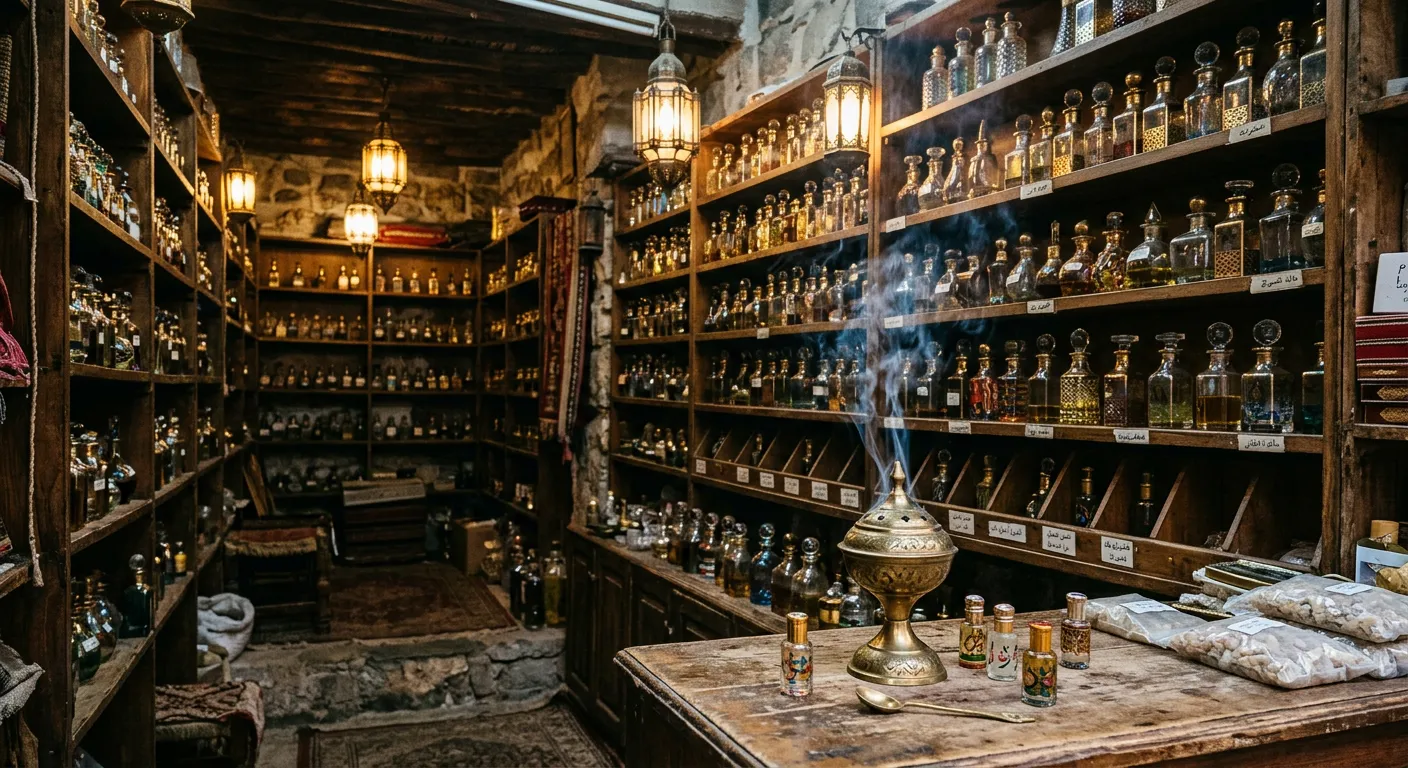
The Fragrance Customer Has Changed. Muscat’s Perfume Shops Have Not
A decade ago, buying perfume in Muscat followed a predictable ritual. You walked into a mall, passed by Ajmal or Arabian Oud or one of the independent attar shops, got drawn in by a spritz from an employee standing at the entrance, sampled three or four scents on paper strips, and bought the one that lingered best on your wrist by the time you reached the food court.
That ritual is not dead. But it is no longer how most fragrance purchases begin.
The modern perfume buyer in Muscat — whether Omani national, Arab expat, South Asian resident, or visiting tourist — now starts their fragrance journey on a screen. The path looks different depending on who they are:
The Omani groom preparing for his wedding searches “أفضل عطر رجالي للعرس” (best men’s perfume for wedding) or “دهن عود عماني فاخر” (luxury Omani oud oil). He reads comparisons. He watches Arabic YouTube reviews. He checks prices across three or four retailers before driving to the shop with the best combination of selection and value.
The Indian engineer living in Al Khuwair who wants to bring premium oud home for Diwali gifts searches “buy oud oil Muscat” or “original oud perfume Oman price.” He is comparing Muscat prices against what is available on Dubai-based sites that ship to India.
The British tourist arriving next week searches “best place to buy perfume in Oman” from her hotel room in London. She reads a blog post written by a travel writer who visited Muscat in 2023. The blog mentions Muttrah Souq generally but links to no specific shop. She adds “Muttrah perfume” to her itinerary but has no destination in mind. She will wander, guess, and probably buy from whoever has the best English-speaking salesperson — not necessarily the best product.
The German perfume enthusiast — and this is a larger market than most Omani shops realize — searches “Amouage buy in Oman” or “Frankincense perfume authentic Muscat.” Germany’s niche perfume community is one of the largest in Europe, and Oman holds almost mythical status among fragrance collectors. These buyers will spend 80-200 OMR per purchase without hesitation. They just need to find you.
Every one of these customer journeys has a Google search at its origin. And at that origin point, Muscat’s perfume shops are almost universally absent.
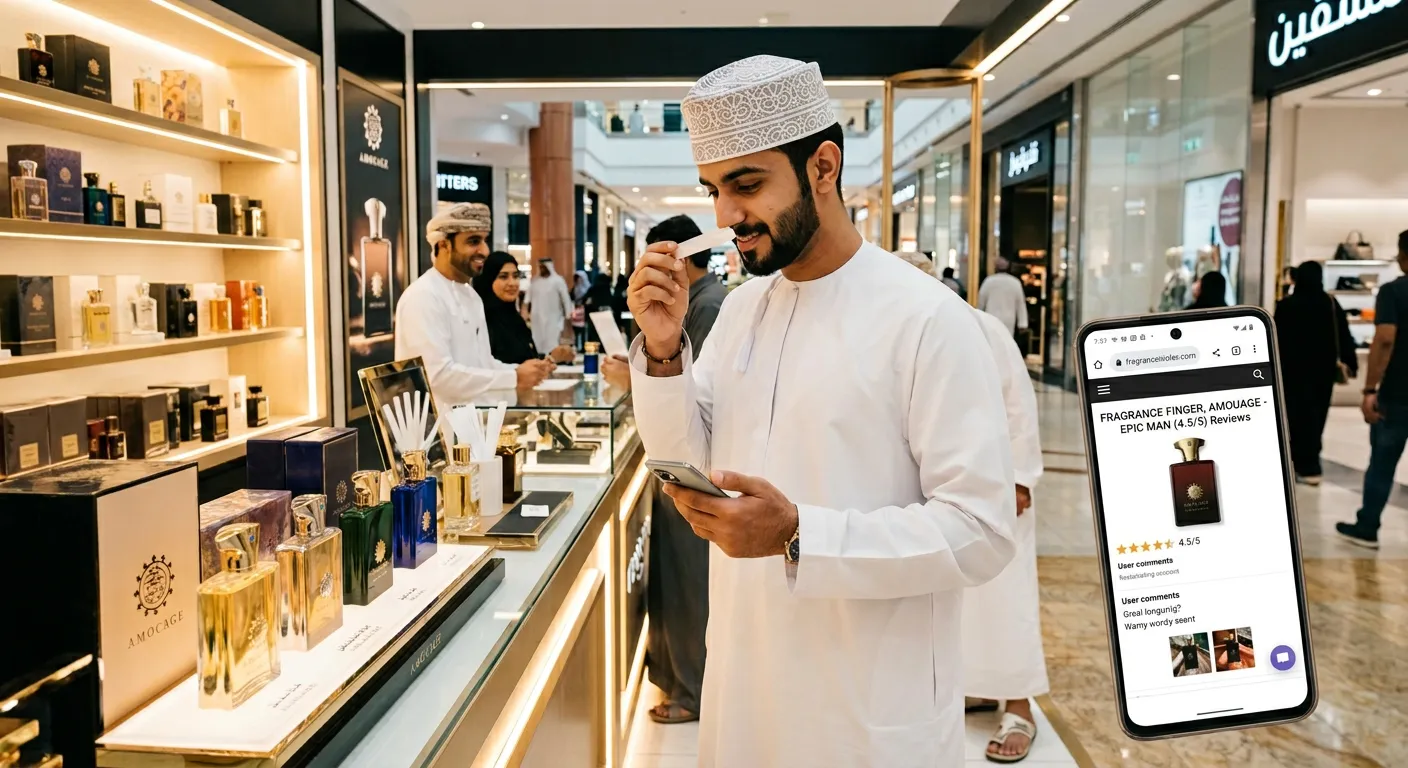
9,400 Searches Per Month. Going to Everybody Except Perfume Shops in Muscat
The fragrance search market in Oman is larger than most retailers assume because they only think about the people who physically walk through their door. They never see the ones who searched, found nothing local, and bought elsewhere.
Monthly Google search volumes for perfume-related queries in Oman, as of January 2026:
“Buy perfume Muscat” / “عطور مسقط” — combined 870/month across English and Arabic variations.
“Oud oil Oman” / “دهن عود عماني” — 640/month. A term with extremely high commercial intent and virtually no Muscat-based competition in search results.
“Amouage Oman price” — 520/month. Buyers searching for Oman-specific pricing, often tourists hoping to buy at origin for a lower price than European retail.
“بخور عماني” (Omani bukhoor) — 480/month. Seasonal spikes during Ramadan and Eid push this above 1,100.
“Arabic perfume shop near me” — 410/month. A mobile-dominant query from people already in Muscat looking for a nearby option.
“عطور رجالية عمان” (men’s perfumes Oman) — 390/month.
“عطور نسائية مسقط” (women’s perfumes Muscat) — 340/month.
“Frankincense perfume buy” — 580/month globally, with a notable concentration from European and North American searchers specifically adding “Oman” or “Muscat” as a modifier.
“Best perfume Muttrah Souq” — 290/month. Almost entirely from tourists planning visits.
“Bukhoor shop Muscat” / “محل بخور مسقط” — 310/month.
Assorted brand-specific searches — “Swiss Arabian Muscat,” “Rasasi Oman,” “Ajmal perfume Oman price,” “Arabian Oud Muscat” — collectively add another 2,100+ monthly.
Total identifiable fragrance-related search volume: approximately 9,400 monthly searches.
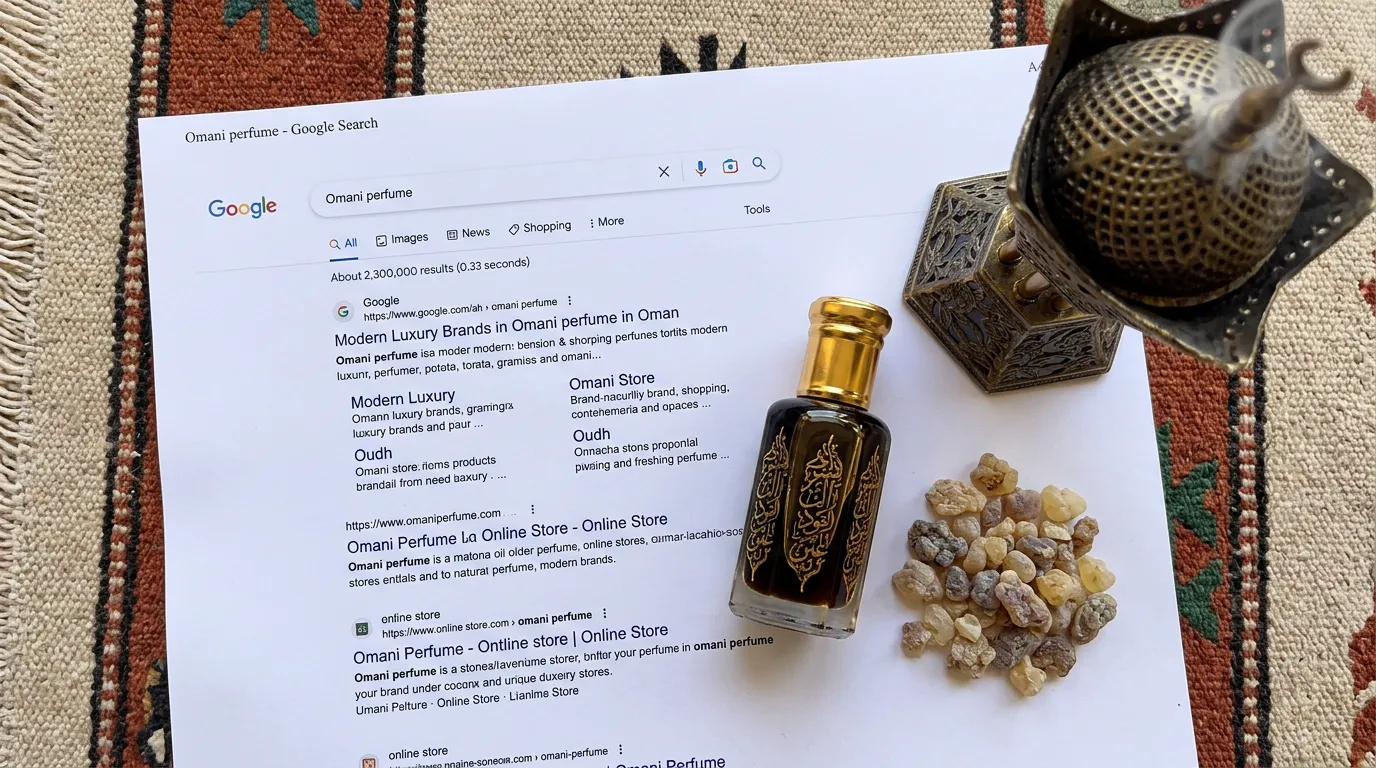
Now perform the exercise yourself. Search any of these terms from a device in Muscat. What you will find: international e-commerce sites, Dubai retailers with aggressive SEO, Amazon and Noon product listings, brand global websites, and the occasional fragrance blog. What you will not find: the perfume shop in Mall of Oman that has 200 fragrances in stock. The attar blender in Muttrah with a recipe book older than most Muscat buildings. The bukhoor specialist in Seeb who ships to regular customers across the Gulf using nothing but WhatsApp and trust.
The Mall Floor Is Not the Problem. The First Floor of Google Is
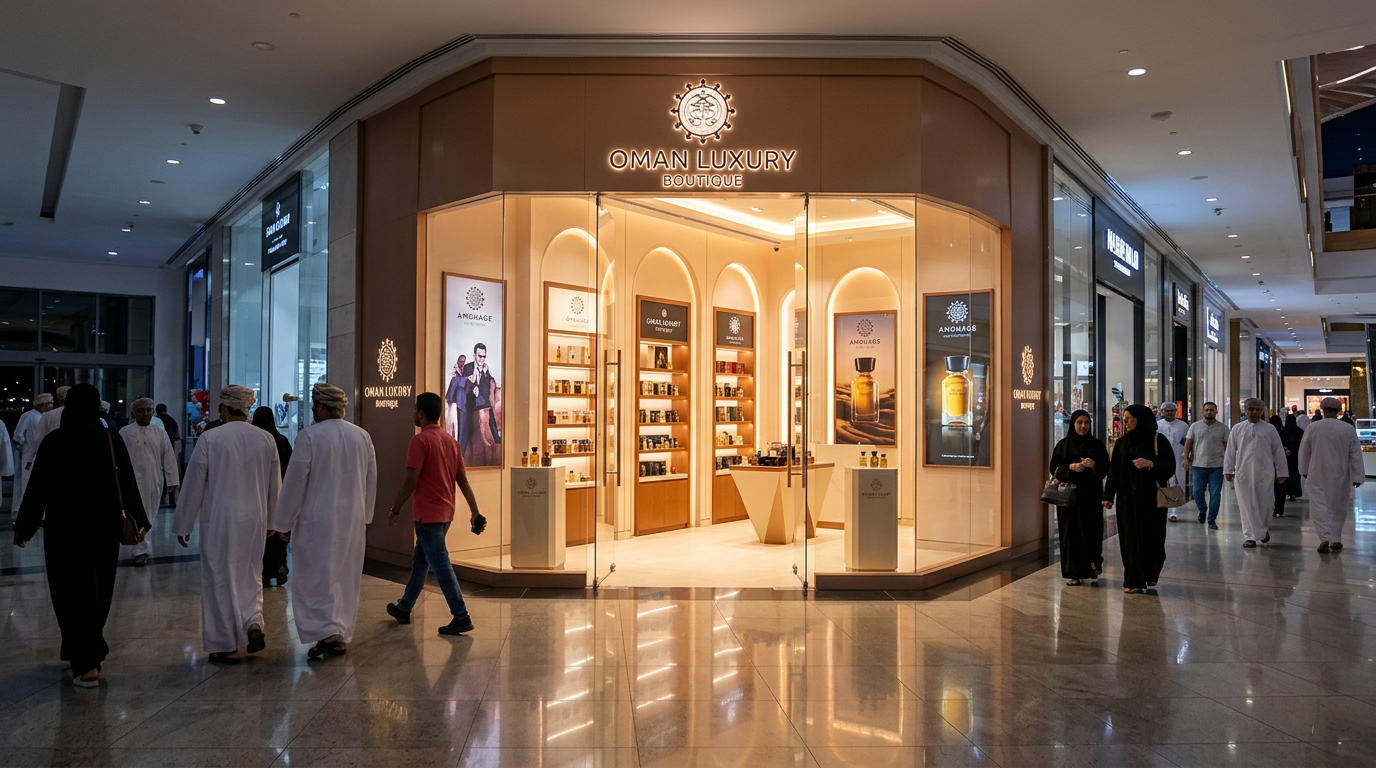
Walk through Mall of Oman on a Friday evening. Ground floor, near the anchor stores. A perfume retailer with backlit brand displays — Armani, Versace, Dior on one side, Arabian Oud and Swiss Arabian on the other. Six staff members. Testers ready on the counter. Tissue paper pre-folded. The shop is ready.
Ready for the customer who happens to pass by. Not ready for the customer who searches before they drive.
Cross the corridor. Another fragrance boutique. This one specializes in niche and independent brands — the kind of shop that fragrance enthusiasts actively seek out. The owner has personally curated 60 scents from perfumers in Grasse, Dubai, and Muscat. His knowledge is encyclopedic. His recommendations are legendary among repeat customers. His Google Business Profile has 11 reviews and a profile photo that is his shop’s logo at a resolution so low it appears as a colored blur.
Drive to City Centre Muscat in Qurum. The perfume section of the ground floor has four competing fragrance retailers within a 40-meter stretch. Combined staff across all four: approximately 15 employees on a typical shift. Combined Google reviews across all four: fewer than 90. Combined product listings on Google Business Profile: zero. Combined blog posts, product descriptions, or web pages targeting any fragrance search term in Arabic or English: zero.
This is not four businesses failing individually. This is an entire product category in Oman’s largest city that has collectively decided Google does not apply to them. And Google has reciprocated by pretending they do not exist.
Meanwhile — and this detail matters — an online-only perfume retailer based in a Dubai apartment, running a Shopify store with 400 product pages, each with unique descriptions and proper schema markup, is ranking for “buy Arabic perfume Oman,” shipping bottles to Muscat addresses, and earning revenue that could have stayed in these mall units if any one of them had bothered to exist online.
A Bottle of Oud Cannot Be Smelled Through a Screen. But It Can Be Sold Through One
The most common objection from perfume retailers, more than any other product category, is this: “Perfume is a sensory product. You need to smell it. Online doesn’t work for us.”
This objection sounds logical. It is also demonstrably false.
The global online fragrance market reached approximately $14.3 billion in 2024 and is projected to exceed $19 billion by 2028, according to Mordor Intelligence. People are buying perfume online in enormous and growing quantities. They are buying without smelling. They are making purchase decisions based on descriptions, reviews, ingredient lists, brand reputation, bottle design, and — critically — the recommendations and information they find through search.
A customer searching “oud perfume with rose notes under 40 OMR” is not looking for a smell test. They are looking for options that match their preference profile. The shop that presents its products online with detailed scent descriptions — “a warm Cambodi oud base opening with Turkish rose and settling into a dry amber and sandalwood finish” — gives that customer enough information to narrow their choice to two or three options. The customer then either orders online or, more commonly in Muscat where every shop is within 20 minutes of every resident, drives to the shop to confirm their selection in person.
This is the “research online, purchase offline” (ROPO) pattern, and in fragrance retail it is dominant. Google’s own data from GCC retail shows that 68% of in-store luxury purchases are preceded by online research. For perfume, the percentage is likely higher because fragrance is complex — customers research notes, longevity, sillage, and seasonal appropriateness before committing.
The perfume shops in Muscat that provide this research material online get the drive-in visit. The ones that provide nothing get the customer only if they happen to walk past in the mall. One approach is strategic. The other is chance.
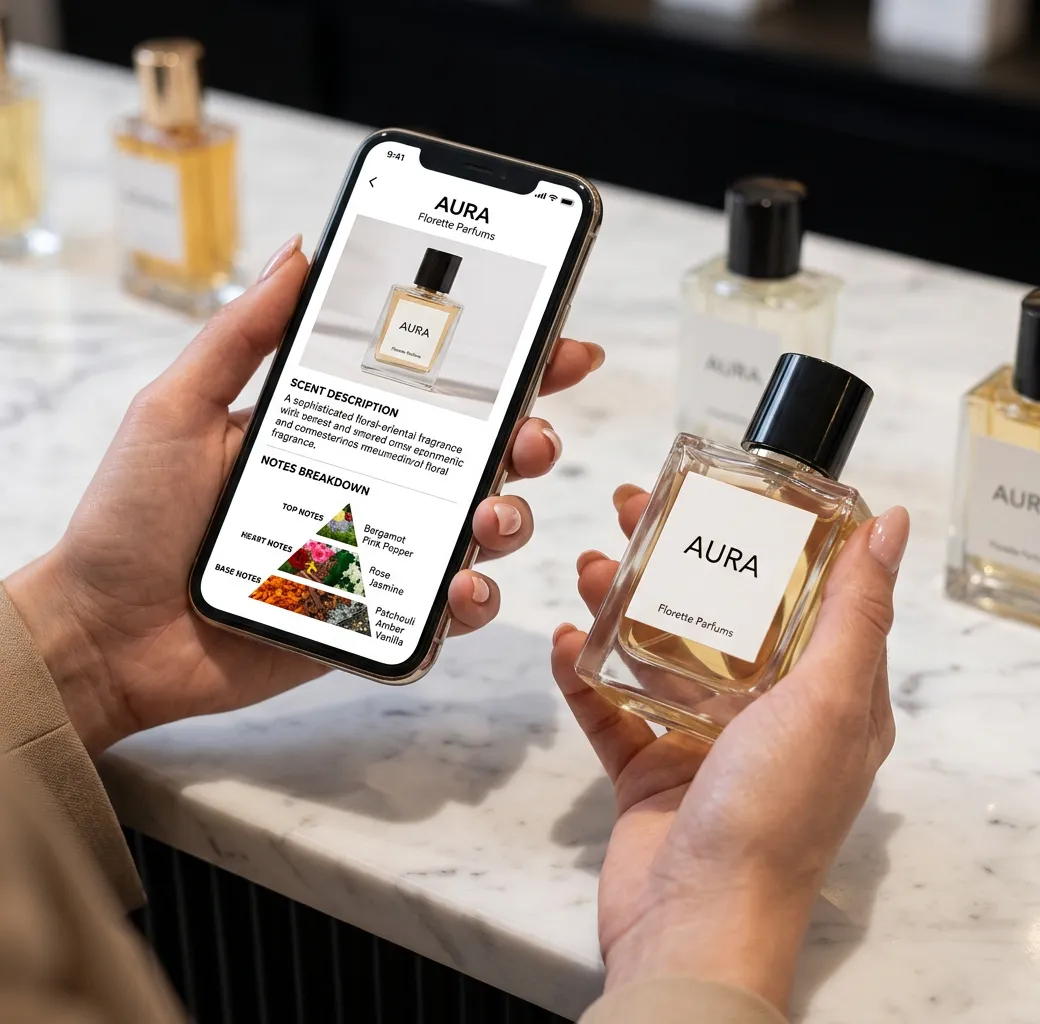
Bukhoor, Dukhoon, and the Seasonal Goldmine Nobody Is Mining Online
There is a category within Omani fragrance retail that follows a seasonal pattern as predictable as the tides, and almost no retailer in Muscat is capitalizing on it digitally.
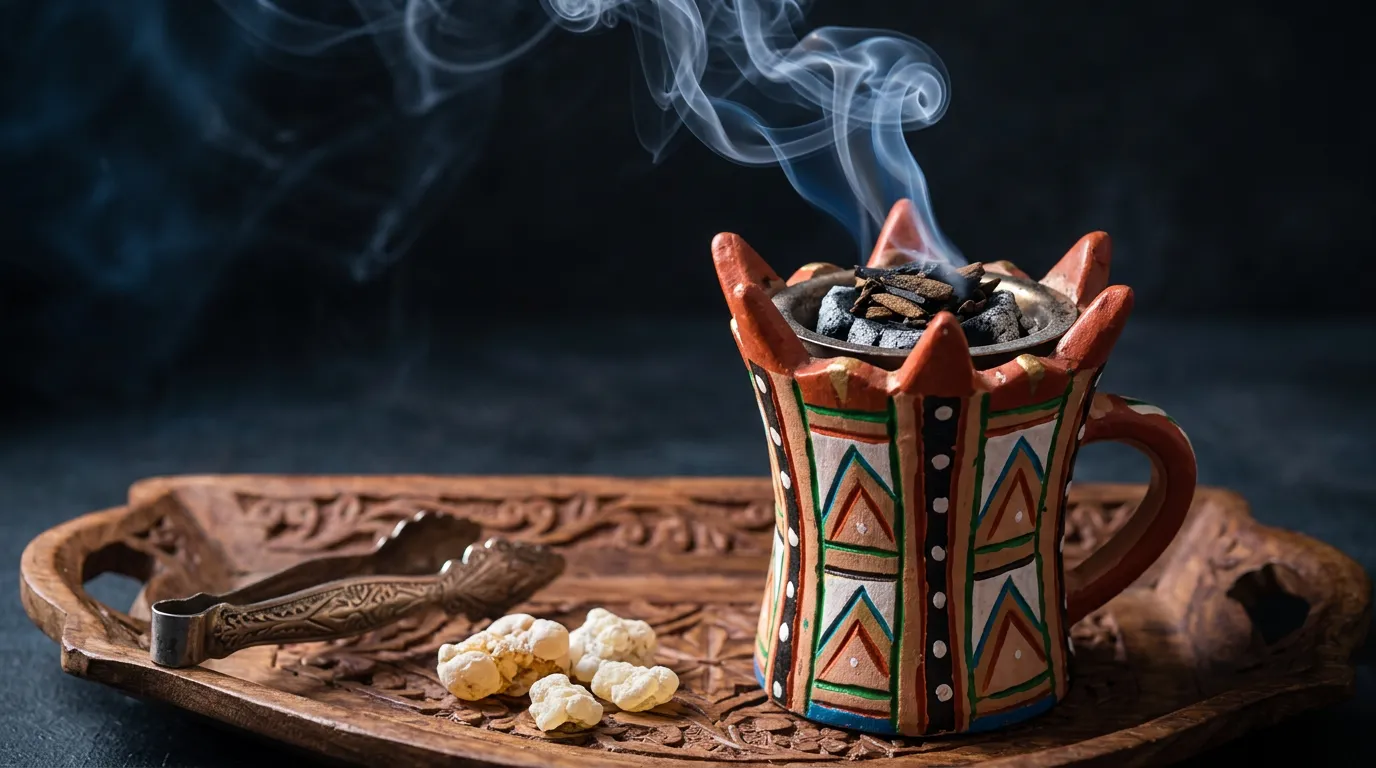
Bukhoor — the scented wood chips burned on charcoal to fragrance homes, clothing, and gathering spaces — is a daily-use product in most Omani and Gulf Arab households. Consumption is steady year-round but spikes dramatically during three periods: Ramadan (daily burning before Iftar and during evening gatherings), Eid al-Fitr and Eid al-Adha (home preparation for guests), and the wedding season (October through March, when Omani weddings peak).
Google search data reflects this precisely. “بخور عماني” (Omani bukhoor) averages 480 monthly searches but exceeds 1,100 during Ramadan. “بخور فاخر” (luxury bukhoor) follows the same curve. “Bukhoor gift set” peaks around Eid. “مبخرة كهربائية” (electric bukhoor burner) has grown 35% year-over-year as younger Omani consumers shift from traditional charcoal to electric incense warmers.
A bukhoor specialist in Seeb or Ruwi who creates product pages for their top-selling blends — with descriptions of the wood base, the added oils, the recommended burning method, and the setting each blend suits — targets dozens of search queries simultaneously. A page titled “Royal Hojari Bukhoor — Premium Frankincense Blend for Omani Homes” targets “Hojari bukhoor,” “premium bukhoor Oman,” and “بخور هوجري فاخر” all at once.
The traditional dukhoon market — the heavier, more intense incense blends used in Gulf wedding preparations and formal gatherings — has an even more underserved search space. “دخون عماني للأعراس” (Omani dukhoon for weddings) is searched by brides, grooms, and their families during the planning phase. A retailer who has a page addressing this specific need, with product options and pricing, captures a customer ready to spend 30-80 OMR per order.
These are not aspirational customers. They are buyers with credit cards and immediate purchase intent who happen to check Google before driving to the shop. The shop that appears first gets the visit. The shop that does not appear does not.
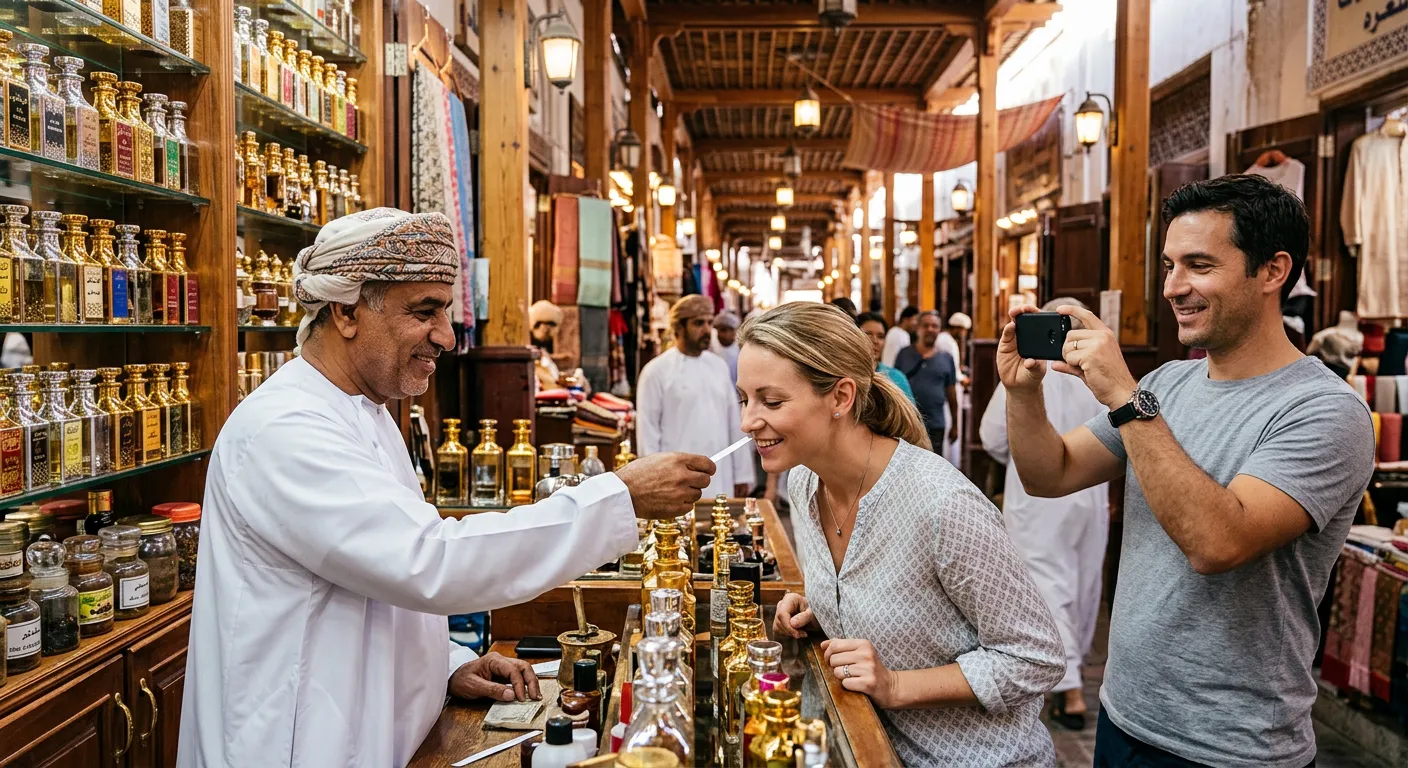
Tourists Will Spend Money in Your Shop. They Just Need to Know Your Shop Exists Before They Land.
Oman welcomed 3.9 million international tourists in 2024. The government is targeting 5.2 million by 2027. Fragrance shopping is consistently listed as a top-five tourist activity in Oman, alongside wadi visits, desert camping, fort tours, and seafood dining. The Ministry of Heritage and Tourism actively promotes Oman’s frankincense heritage in international marketing campaigns.
But here is the disconnect: the Ministry drives awareness. Individual shops must capture demand. And demand capture in 2026 happens on Google and TripAdvisor before the tourist arrives.
The tourist fragrance shopping journey typically begins 7-21 days before arrival:
Phase 1 — Research. “What perfume to buy in Oman.” “Is Amouage cheaper in Muscat?” “Best souvenirs from Oman fragrance.” Travel blogs, Reddit threads, TripAdvisor forums. The tourist builds a mental list.
Phase 2 — Locate. “Perfume shop Muttrah Souq.” “Where to buy oud in Muscat.” “Best perfume store near Shangri-La Barr Al Jissah.” Google Maps. Google Business Profile results. The tourist identifies specific shops to visit.
Phase 3 — Validate. Google reviews. TripAdvisor reviews. Photos uploaded by other tourists. “Is this shop authentic?” “Are the prices fair?” “Do they speak English?” The tourist narrows from five shops to two.
Phase 4 — Visit. The tourist walks in with intent. They already know what category they want. They may already know the specific product. The staff’s role shifts from “selling” to “confirming.” These are the highest-converting, highest-average-spend customers any perfume shop can have.
The shops that appear in phases 2 and 3 get this customer. The shops that do not appear are not even considered. There is no accidental discovery when the tourist has a list on their phone.
TripAdvisor is particularly powerful for fragrance retail in Muscat. Tourist reviews about perfume shopping experiences in Muttrah Souq drive significant foot traffic to the shops that are mentioned by name. A shop with 50+ TripAdvisor reviews describing the experience — “the owner explained the difference between Hojari grades and let us smell each one” — becomes a must-visit destination that tourists add to their itinerary alongside Sultan Qaboos Grand Mosque and Royal Opera House.
You Have 200 Products. Google Knows About Zero of Them
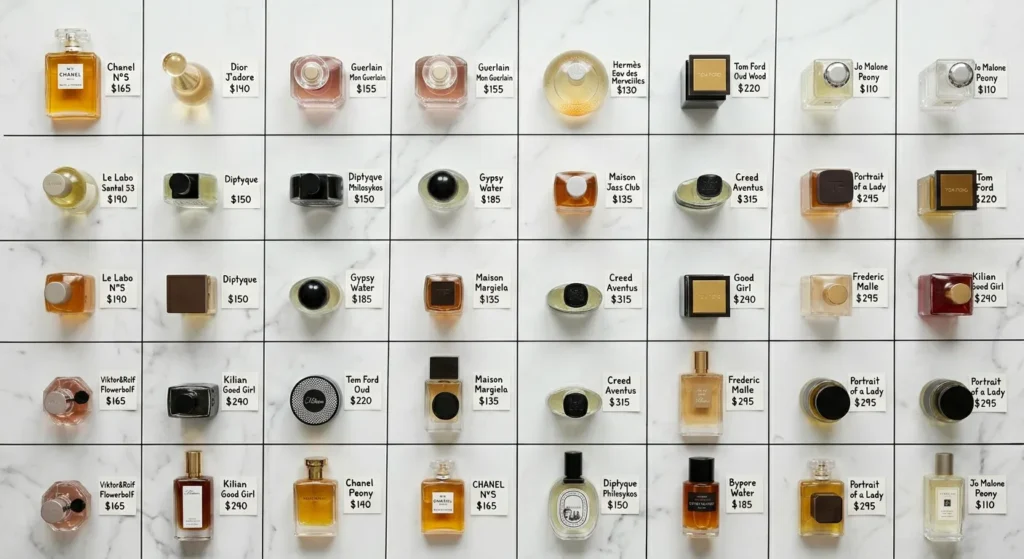
The average multi-brand perfume shop in a Muscat mall carries between 120 and 300 individual fragrance products. The average number of those products listed on their Google Business Profile: zero. The average number described on their website: zero, because a website does not exist.
This is the equivalent of a bookshop that locks all its books in a warehouse, puts an empty shelf in the window, and wonders why nobody comes in to browse.
Google Business Profile has a Products feature specifically designed for retailers. Each product entry includes a photo, a name, a description, a price, and a category. When a customer searches “Rasasi Hawas price Oman” and your Google profile has Rasasi Hawas listed as a product with a photo and price, that listing can appear directly in search results — before the customer clicks on any website.
For a perfume shop, populating this product catalog is straightforward:
Step 1: Photograph each product on a clean surface with consistent lighting. A white countertop and a smartphone camera are sufficient. One employee, one afternoon, 100 photos.
Step 2: Write a brief description for each product. Not marketing copy. Practical information: brand, product name, size (ml), concentration (EDP/EDT/parfum), and one sentence about the scent profile. “Ajmal Amber Wood, 100ml EDP. A warm amber fragrance with oud and cedar notes. Unisex.” This takes 30-60 seconds per product.
Step 3: Upload with prices. A customer searching “Ajmal Amber Wood Oman price” now finds the answer directly on your Google profile.
Step 4: Categorize logically. Men’s fragrances. Women’s fragrances. Unisex. Oud collection. Bukhoor and incense. Gift sets. Each category helps Google understand your inventory and match it to relevant searches.
A shop that completes this process for even 50 core products will have a more comprehensive Google presence than every other perfume retailer in Muscat combined. The barrier to entry is not money or technology. It is the willingness to spend six hours turning physical inventory into digital content.
The Arabic Content Gap That Is Handing Omani Customers to Saudi Websites
Omani nationals — the customers with the highest per-transaction spend in fragrance retail — search predominantly in Arabic. Their search phrases are specific, colloquial, and commercially loaded:
“أفضل عطر رجالي عماني” — best Omani men’s perfume. 260 searches/month. No Muscat retailer ranks.
“عطر عود طبيعي مسقط” — natural oud perfume Muscat. 190 searches/month. Results dominated by Saudi and UAE sites.
“دهن عود أصلي سعره” — authentic oud oil price. 310 searches/month. Not a single Omani retailer on page one.
“هدية عطر رجالي فخم” — luxury men’s perfume gift. 440 searches/month across GCC. Omani shops are nowhere.
“أفضل بخور للمنزل” — best bukhoor for home. 370 searches/month. A search that should naturally point to Omani retailers given the country’s heritage, yet the top results are Saudi e-commerce platforms.
The irony is sharp. Oman is the ancestral home of Arabian fragrance culture. Omani oud, Omani luban, Omani bukhoor are considered among the finest in the world. And yet Omani perfume shops have ceded the entire Arabic-language Google space to retailers in Riyadh, Jeddah, and Dubai who produce content in Arabic about products that are often sourced from Oman in the first place.
A perfume shop in Muscat that creates genuine Arabic product content — not translated English, but natively written Arabic using the terms Omani and Gulf customers actually type — enters a competitive space where very few Muscat businesses exist. The ranking opportunity is wide open. A single well-written Arabic page about “مجموعة العود العماني الأصلي” (authentic Omani oud collection) with product photos, scent descriptions in Arabic, and pricing can rank within weeks because competition at the local level is virtually nonexistent.
SEO Services Packages
Google Business Profile Packages
Web Design Packages
TripAdvisor & Hospitality Packages
The fragrance retail landscape in Muscat splits into two worlds that share the same problem.
Muttrah Souq houses traditional perfumers with generational knowledge, raw material access, and artisanal blending skills that cannot be replicated by any online retailer. These shops are treasured by repeat customers and praised by travel writers. But they exist in a digital vacuum. Most have no Google Business Profile, no website, no TripAdvisor listing. Their visibility depends entirely on a tourist physically walking through the souq entrance and stumbling upon them. In 2026, with tourists planning every stop on their itinerary through Google before arrival, “stumbling upon” is an increasingly rare occurrence.
Mall-based fragrance retailers — the branded shops and multi-brand galleries in Mall of Oman, City Centre Muscat, Oman Avenues, Al Araimi Boulevard — have professional displays, trained staff, and commercial products that match exactly what thousands of people search for monthly. But they treat their digital presence as an afterthought delegated to nobody. Their Google profiles are skeletal. Their product inventory exists physically but not digitally. Their staff expertise — the knowledge about which Montale competes with which Tom Ford at half the price — lives in verbal conversations and dies when the customer walks out without buying.
Both worlds have what Google needs: authentic products, real expertise, physical presence, and customers who want to find them. Neither world is giving Google what it needs to make the connection: structured content, product listings, photos, reviews, and web pages that answer the questions searchers are asking.
The perfume shop — whether in a 400-year-old souq or a 4-year-old mall — that bridges this gap first does not just gain a competitive advantage. In a market this uncontested, they gain something closer to a monopoly on an entire city’s fragrance search traffic.
Reach out today:
📞 +968 7922 9535
📧 seoingcc@gmail.com
🌐 SEOinGCC
Walk-ins are declining industry-wide. But more importantly, the walk-ins you still get were often influenced by what they saw online before they came to the mall. A McKinsey luxury retail study in 2025 found that 76% of in-store luxury purchases in the Gulf were preceded by online research. Your customer “walked in” — but they Googled first. If your competitor showed up in that Google search and you didn’t, you lost a customer you never knew existed.
The brand markets itself globally. Nobody markets your specific shop in your specific mall in Muscat. When someone searches “buy Longines Muscat,” the brand’s global website appears — but it does not tell the customer that your shop at Mall of Oman has the HydroConquest in blue dial in stock right now. Only your website and your Google profile do that. You are not competing with the brand. You are competing with the other retailer in the same city carrying the same brand.
Your competitors can walk into your shop and check prices anytime. Price secrecy is an illusion. Meanwhile, the customer searching “Tissot PRX price Oman” and finding no price information from any Muscat retailer buys from a Dubai website that shows the price clearly. You did not protect your margin — you lost the entire sale.
Negative reviews happen. They happen whether you have a Google profile or not — customers can review your business even if you haven’t claimed the profile. The difference is whether you respond professionally or whether the negative review sits unanswered, telling every future customer that you don’t care. A watch shop with 120 reviews at 4.5 stars including a few 3-star reviews that were responded to thoughtfully looks far more trustworthy than a shop with 4 reviews at 5.0 stars.