Riyadh Is Spending Big on Digital — But Most of That Money Is Wasted
There is a pattern across Riyadh that anyone in digital marketing has noticed. Businesses are throwing serious budgets at Google Ads, influencer campaigns, and social media management. The spending is aggressive. The results, for most, are disappointing. And the reason is almost always the same: there is no organic foundation underneath any of it.
Saudi Arabia now has over 36.8 million internet users, according to the 2025 Digital Report by We Are Social and Meltwater. That represents roughly 98.6% of the total population. In Riyadh alone, the metropolitan area houses approximately 8.5 million people, making it not only the largest city in the Kingdom but one of the most digitally active capitals in the entire Middle East. Google processes millions of local search queries daily from Riyadh residents, and the businesses that capture those clicks organically are building long-term revenue streams. Everyone else is renting attention through ads and hoping for the best.
The shift happening right now in Riyadh is not subtle. Vision 2030 has accelerated digital transformation across every sector, from government services to hospitality to retail. The Saudi Communications, Space, and Technology Commission reported that digital economy contributions to GDP exceeded 4.4% in 2024. Every new mall, restaurant, clinic, and startup in Riyadh needs online visibility. But visibility on Google is earned through structure, strategy, and content — not through spending alone.
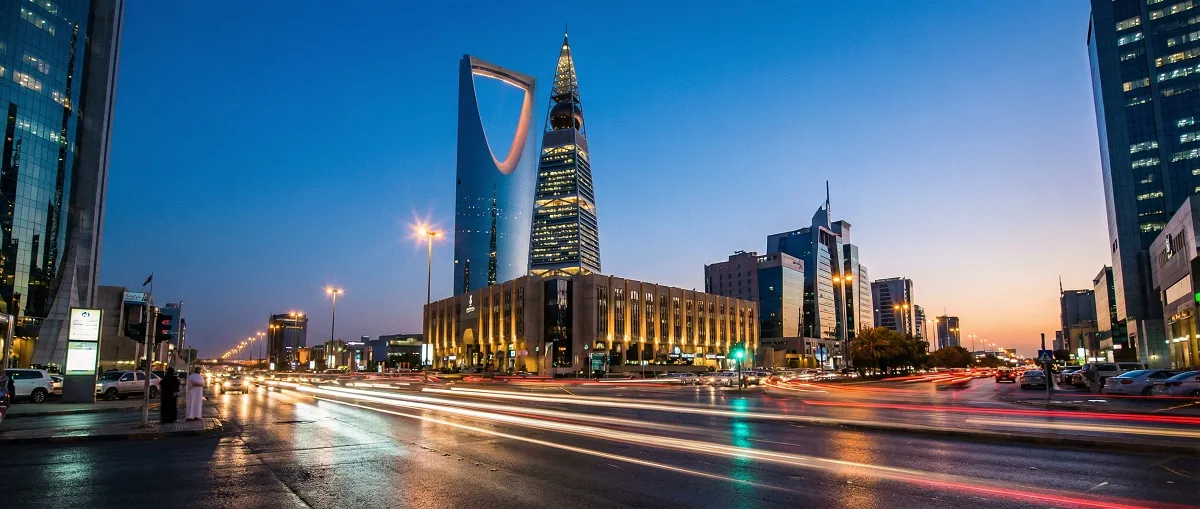
What Makes Riyadh Different from Every Other City in the GCC for SEO
This is something most agencies either don’t understand or deliberately ignore because it requires more work. Riyadh is not Dubai. It is not Doha. The search behavior, language split, and competitive landscape are fundamentally different, and any SEO strategy imported from another Gulf city will underperform here.
First, language. Unlike markets such as Qatar or the UAE where English dominates commercial search, Riyadh has a significantly higher volume of Arabic-language searches. Roughly 65-70% of local service queries in Riyadh are conducted in Arabic. When someone needs a plumber, a family restaurant, a pediatrician, or a car detailing service, they are far more likely to type “أفضل مطعم عائلي في الرياض” than “best family restaurant in Riyadh.” This single fact changes everything about how content should be created, how websites should be structured, and which keywords actually drive traffic.
Second, competition. Riyadh’s digital market is more crowded than most people realize. There are hundreds of businesses competing for the same search terms in sectors like real estate, healthcare, automotive, and food delivery. The businesses that rank consistently are the ones with technically sound websites, genuine Arabic content strategies, and ongoing SEO maintenance. A one-time optimization project does not hold in a market this active.
Third, user expectations. Saudi consumers in 2025 are sophisticated. They compare. They read reviews. They check multiple sources before making a decision. Google’s own data shows that the average Saudi user interacts with 8 to 10 touchpoints before converting. If your website is slow, your Google Business Profile is empty, and your Arabic content reads like it was machine-translated, you lose that customer before they even consider contacting you.
Arabic SEO Is Not a Feature — In Riyadh, It Is the Foundation
There is a misconception among business owners in Saudi Arabia that Arabic SEO means translating your English website and calling it done. This approach fails every single time, and the evidence is visible across search results daily.
Arabic SEO for the Riyadh market starts with keyword research conducted natively in Arabic. The terms people use in spoken Saudi Arabic often differ from Modern Standard Arabic, and Google recognizes these variations. A search for “كافيه حلو بالرياض” (nice café in Riyadh, using Saudi dialect phrasing) returns different results than “مقهى في الرياض” (café in Riyadh, MSA). A proper Arabic SEO strategy accounts for both formal and colloquial search patterns, especially for B2C businesses.
Content structure in Arabic also follows different reading patterns. Arabic readers scan right-to-left, and page layout must accommodate this natively. RTL website design is not just about flipping the text direction. Navigation menus, image placement, call-to-action button positioning, and even form field alignment need to feel natural for an Arabic-first user. Websites that get this wrong create friction, and friction kills conversions.
The opportunity in Arabic SEO remains massive despite growing awareness. Arabic content still accounts for less than 3% of all indexed web pages globally, yet Arabic is spoken by over 420 million people. In Saudi Arabia alone, there are more than 30 million Arabic-speaking internet users actively searching Google every day. Businesses in Riyadh that produce high-quality, locally relevant Arabic content are competing in a space where demand dramatically outweighs supply.
For businesses targeting both Saudi nationals and the expatriate community — which includes around 13 million residents from South Asia, the Philippines, Egypt, and Western countries — a bilingual Arabic-English website is not a luxury. It is a competitive necessity. But it must be built correctly from the ground up, with separate content strategies for each language, proper hreflang implementation, and dedicated URL structures that Google can crawl and index independently.
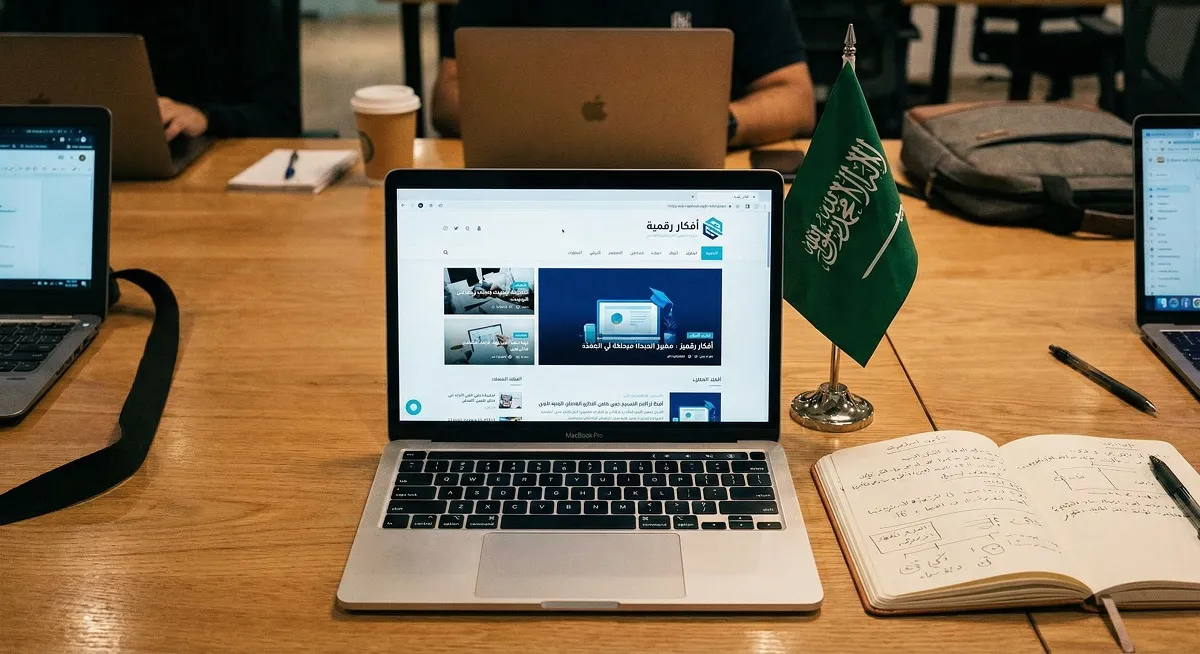
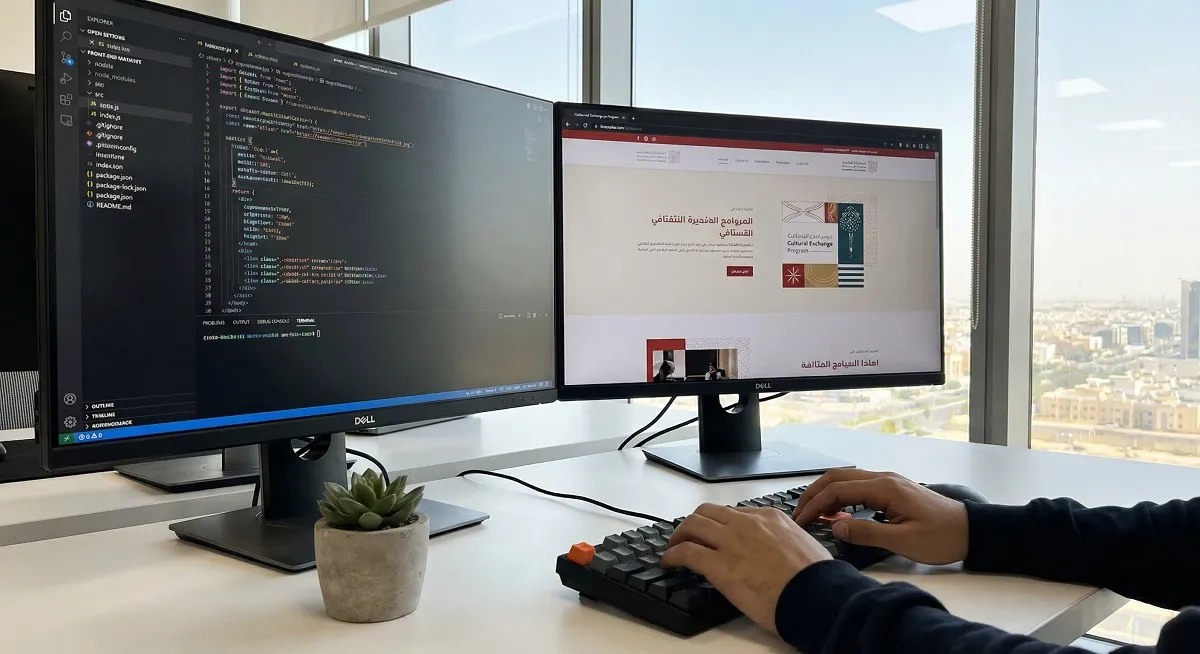
Building a Website in Riyadh That Google Actually Ranks
Every week, new businesses launch in Riyadh. New restaurants in Al Malqa. New clinics along Olaya Street. New retail brands in Riyadh Park and Riyadh Front. And almost every one of them starts with the same mistake: they build a website that looks good but does nothing on Google.
Google does not rank websites based on visual design. It ranks them based on technical performance, content relevance, authority signals, and user experience metrics. In 2025, Google’s Core Web Vitals continue to play a direct role in ranking decisions. Your Interaction to Next Paint (INP) score needs to stay under 200 milliseconds. Largest Contentful Paint (LCP) must load within 2.5 seconds. Cumulative Layout Shift (CLS) should remain below 0.1. These benchmarks are non-negotiable, and most websites built by local agencies in Riyadh do not meet them.
Beyond performance, the architecture of your website determines how well Google understands your business. Service pages need to target specific keywords with clear intent. A law firm in Riyadh should not have one generic “Services” page — it should have individual pages for corporate law, family law, employment law, and commercial litigation, each optimized for Arabic and English search terms specific to the Saudi market. A dental practice along Tahlia Street needs separate pages for teeth whitening, implants, orthodontics, and pediatric dentistry, each answering the exact questions patients are typing into Google.
Schema markup is another technical element that separates websites that rank from those that don’t. Structured data tells Google precisely what your business does, where it is located, what services it offers, its operating hours, and its reviews. For restaurants, this includes menu schema. For medical practices, it includes physician schema. For e-commerce stores, it includes product and pricing schema. Websites without structured data are essentially asking Google to guess what they’re about. Google does not reward guessing.
Restaurants, Hotels, and the Hospitality Boom in Riyadh
Riyadh’s hospitality sector is experiencing a level of growth that has no recent parallel in the GCC. Riyadh Season 2024 attracted over 17 million visitors to events, pop-ups, and dining experiences across the city. The General Entertainment Authority continues to license new venues monthly. And Saudi Arabia’s tourism strategy targets 150 million annual visitors by 2030, with Riyadh positioned as a primary destination alongside Jeddah, AlUla, and the Red Sea coast.
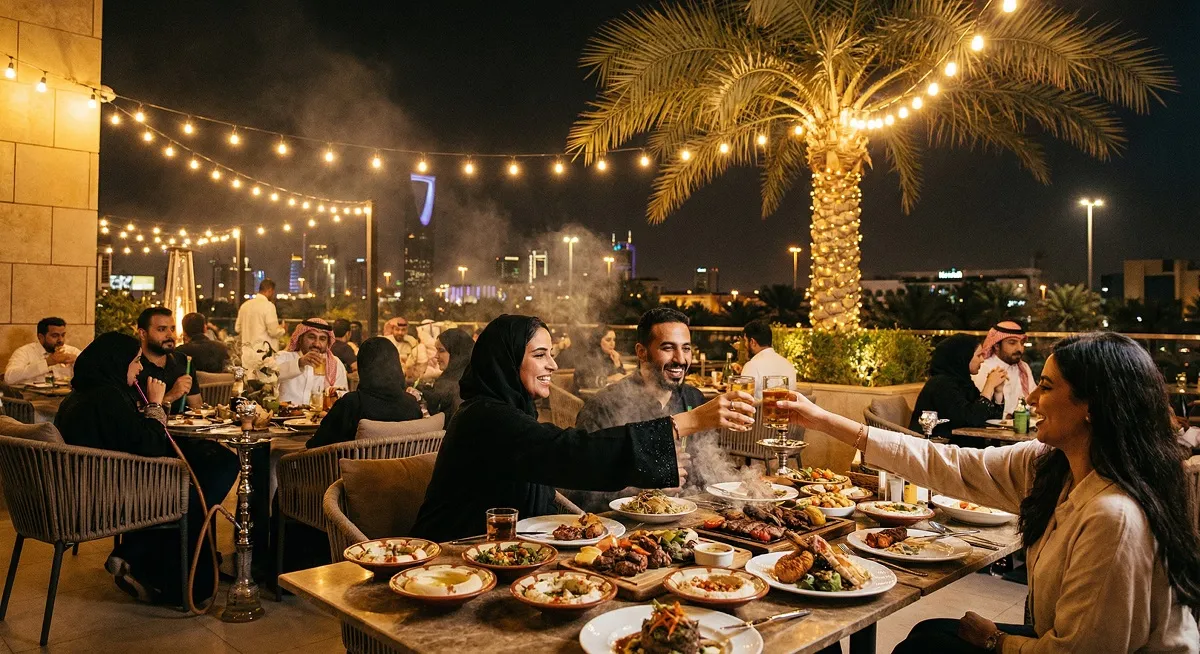
For restaurants in Riyadh, this growth translates directly into search demand. Queries like “best restaurants in Riyadh,” “مطاعم الرياض,” “rooftop dining Riyadh,” and “shisha café near me” have grown year over year. But here is what most restaurant owners miss: Instagram alone cannot sustain visibility. Instagram stories disappear. Posts get buried by the algorithm. But a Google search result stays. A top-three ranking for “Italian restaurant Riyadh” delivers customers every single day without any additional spending.
Restaurant SEO involves several moving parts. Your website needs menu pages that are crawlable by Google, not embedded as PDF files or images. Your Google Business Profile must have complete menu information, updated photos taken within the last 90 days, responses to every review, and posts published at least weekly. For restaurants in tourist-heavy areas or those targeting visitors during Riyadh Season, TripAdvisor optimization adds a critical second layer of visibility.
Hotels in Riyadh face similar dynamics. The Kingdom is investing heavily in hospitality infrastructure, with over 320,000 hotel rooms either operational or under development as of 2025. Hotels along King Abdullah Road, in the Diplomatic Quarter, and near the future New Murabba development are competing for both business travelers and tourists. A hotel’s ranking on Google and TripAdvisor directly influences occupancy rates. Reviews, response speed, photo quality, and NAP consistency across platforms all factor into these rankings. A boutique hotel that manages these elements strategically can outperform a five-star chain that neglects its digital presence.
E-Commerce SEO in Saudi Arabia: The Biggest Growth Sector Nobody Is Optimizing Properly
Saudi Arabia’s e-commerce market reached approximately $13.6 billion in 2024, according to Statista, and projections place it above $16 billion by 2026. Riyadh accounts for the largest share of online transactions in the Kingdom. Platforms like Noon, Jarir, and independent Shopify and Salla stores are all competing for the same pool of buyers. Yet the vast majority of Saudi online stores rely almost exclusively on paid traffic.
The math is straightforward. A product page that ranks organically for “شراء عطور أصلية الرياض” (buy original perfumes Riyadh) or “gaming laptop Saudi Arabia” receives free, high-intent traffic every day. Paid ads deliver the same click but at a cost that compounds monthly. Over a 12-month period, organic rankings consistently outperform paid campaigns on return per riyal spent.
Product page optimization is where most Saudi e-commerce sites fail. Titles are generic. Descriptions are copied from suppliers. Images lack alt text. Category pages have no unique content. Internal linking between related products is nonexistent. Each of these issues individually limits ranking potential. Combined, they make it nearly impossible to compete organically.
For e-commerce businesses in Riyadh selling in Arabic, the advantage is even more pronounced. Arabic product searches on Google Shopping and organic results have less competition than their English equivalents. A store that creates unique Arabic product descriptions, optimizes category pages with relevant Saudi search terms, and builds a content strategy around buyer questions (“أفضل لابتوب للطلاب 2025” — best laptop for students 2025) can capture market share that larger competitors are leaving on the table.
Google Business Profile Management: Riyadh’s Most Overlooked Revenue Driver
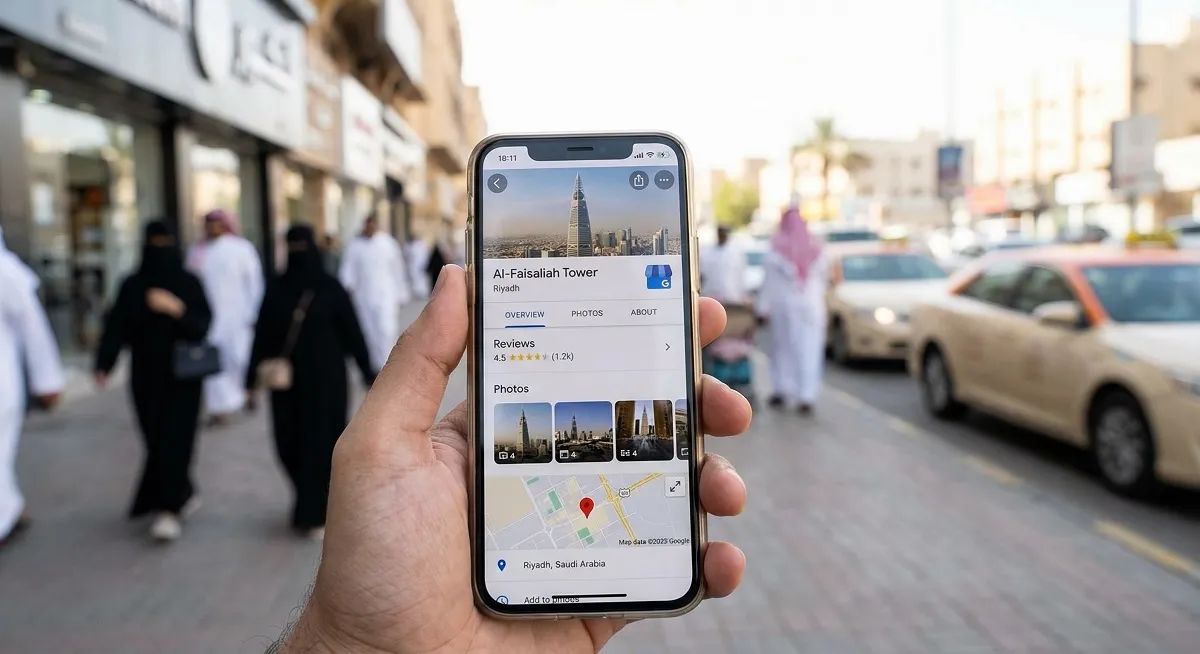
The Google Map Pack — those three business listings that appear with a map above organic results — captures the highest click-through rates on mobile search. For location-based queries in Riyadh, which include everything from “barber shop near me” to “office furniture store Olaya,” the Map Pack is where conversions happen. Not on page one of organic results. Not on ads. On the map.
Managing a Google Business Profile for a Riyadh business goes far beyond creating the listing. It requires a consistent weekly rhythm. Publishing Google Posts with updates, offers, and news. Uploading fresh photos that show real customers, real products, and real staff. Responding to reviews within 24 hours, both positive and negative, because response rate and speed are ranking factors. Keeping business hours accurate, including adjustments for Ramadan, Saudi National Day, and Founding Day. Using the Q&A feature proactively to answer common questions before customers ask them.
Multi-location businesses face an additional challenge. A restaurant group with branches in Al Nakheel, Exit 5, and Al Malqa needs three separate optimized profiles, each with unique descriptions, location-specific photos, and independent review management. Google penalizes duplicate content across Business Profiles just as it does across websites.
For service-area businesses — companies that serve customers across Riyadh without a physical storefront, such as cleaning services, mobile mechanics, or private tutors — Google Business Profile optimization follows different rules. Service areas must be defined accurately. Categories must be selected strategically. And the business description must include natural references to the specific Riyadh neighborhoods and districts served.
Riyadh Will Not Wait for Your Business to Catch Up
The capital is moving at a speed that leaves no room for hesitation. New projects. New competitors. New consumer expectations. The businesses that establish organic search authority in Riyadh today are not just getting traffic — they are building an asset that appreciates over time while their competitors keep paying for every single click.
SEO Services Packages
Google Business Profile Packages
Web Design Packages
TripAdvisor & Hospitality Packages
Your website is either working for you around the clock or it is just sitting there costing you hosting fees. Your Google Business Profile is either bringing customers through the door or it is invisible. Your Arabic content is either capturing the searches Saudi users actually make or it does not exist. These are not abstract marketing concepts. In Riyadh, in 2025, this is the difference between growing and getting left behind.
Reach out today:
📞 +968 7922 9535
📧 seoingcc@gmail.com
🌐 SEOinGCC
Small and medium businesses in Riyadh often see faster SEO results than large corporations because they can target hyper-local keywords with less competition. A neighborhood bakery ranking for “مخبز في حي الياسمين” faces far fewer competitors than a national chain trying to rank for generic terms. Local SEO levels the playing field in Riyadh more than any other marketing channel.
It depends on who your customers are. If you serve primarily Saudi nationals, Arabic must be your primary language, but adding English pages extends your reach to the expat community. If you serve businesses or international clients, English is essential with Arabic as a strong supplement. The technical implementation — hreflang tags, RTL design, separate URL paths — matters as much as the language choice itself.
Yes. While Google Reviews dominates local discovery, TripAdvisor remains a significant decision-making tool for tourists and international business travelers visiting Riyadh. Hotels and restaurants that maintain optimized profiles on both platforms capture more bookings than those relying on a single channel. With Saudi Arabia targeting 150 million annual visitors by 2030, TripAdvisor visibility will only grow in importance.
Google Ads delivers immediate visibility but stops entirely when the budget runs out. SEO builds compounding organic traffic that grows over time and continues working without ongoing ad spend. For most businesses in Riyadh, the optimal approach is using Google Ads for short-term launches and promotions while building SEO as the long-term growth engine.