E-commerce SEO Service Package Detail | Reading Time: 10 minutes
How much did you spend on ads last month?
Take a moment. Check your Google Ads dashboard. Your Facebook Ads manager. Add it all up.
Now imagine if half of those customers found you for free.
That’s not a fantasy. That’s what happens when your product pages rank on Google. Real customers, searching for exactly what you sell, clicking through to your store — without you paying a single fils for that click.
The problem? Most online stores treat SEO as an afterthought. They throw up product pages, add a few keywords, and wonder why nothing happens.
E-commerce SEO doesn’t work that way. It’s a different game entirely, with different rules than regular website SEO.
Let me show you how it actually works.
The Math That Should Keep You Awake
Let’s do some simple calculations.
Say you’re running a fashion store. Your average order value is 25 OMR. You’re paying 0.50 OMR per click on ads. Your conversion rate is 2%.
That means you need 50 clicks to get one sale. At 0.50 OMR per click, that’s 25 OMR in ad spend for a 25 OMR sale.
You just broke even. Before counting product costs, shipping, staff, or anything else.
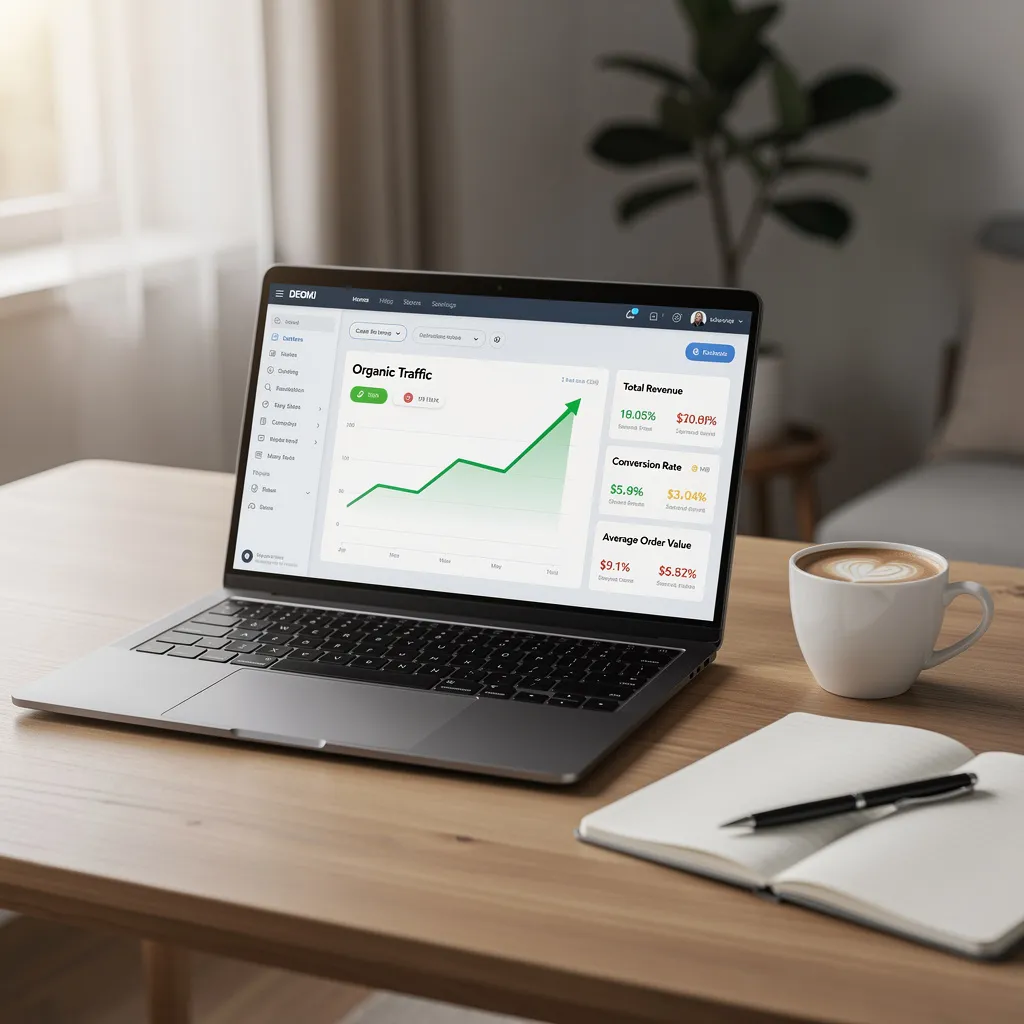
Now imagine ranking organically for “women’s abaya online” or “men’s watches Oman.” Those clicks cost you nothing. Every sale is pure margin improvement.
This is why e-commerce businesses that invest in SEO become more profitable over time, while those dependent on ads keep feeding the machine.
SEO Services Packages
Google Business Profile Packages
Web Design Packages
TripAdvisor & Hospitality Packages
Why Regular SEO Doesn’t Work for Online Stores
Here’s something most business owners don’t realize: the SEO advice you read online isn’t written for e-commerce.
Blog SEO, service business SEO, local SEO — they all follow different playbooks.
E-commerce SEO has unique challenges:
Hundreds or thousands of product pages. Each one needs optimization. You can’t manually craft unique content for 500 products the same way you’d write 10 blog posts.
Duplicate content everywhere. The same shirt in red, blue, and green creates three URLs with nearly identical content. Multiply that across your catalog. Google gets confused.
Faceted navigation nightmares. When customers filter by size, color, and price, your website creates countless URL variations. Without proper handling, this creates massive technical problems.
Products go out of stock. What happens to a page that ranked well when the product disappears? Most stores handle this wrong and lose their rankings.
Category pages that actually matter. In e-commerce, category pages often drive more traffic than individual products. But most stores treat them as simple product lists.
If you’re applying generic SEO tactics to your online store, you’re fighting the wrong battle.
The Foundation: Product Page Optimization
Your product pages are where sales happen. They’re also where most stores fail at SEO.
Let’s break down what actually matters.
Product Titles That Rank AND Sell
Most product titles are either too vague or stuffed with keywords.
Bad: “Beautiful Dress”
Also bad: “Women’s Dress Abaya Kaftan Islamic Modest Fashion Dubai Style Dress”
Good: “Embroidered Cotton Abaya – Navy Blue | Free Shipping Oman”
The right product title includes:
- What the product actually is
- A key distinguishing feature (material, style, color)
- Something that encourages clicks (free shipping, size available)
We optimize every product title to balance searchability with click appeal.
Unique Product Descriptions (Yes, Every One)
Here’s where most stores cut corners. They copy manufacturer descriptions, write the same generic paragraph for similar items, or worse — leave descriptions empty.
Google sees this as thin or duplicate content. Your products don’t rank.
Unique descriptions don’t mean writing novels. They mean:
- Answering the questions buyers actually have
- Including natural variations of search terms
- Highlighting what makes this specific product worth buying
- Providing specifications in a scannable format
We help you develop systems to create unique content at scale — even for large catalogs.
Image Optimization That Gets Overlooked
Product images aren’t just for customers. They’re SEO assets.
Every image should have:
- Descriptive file names (not IMG_4532.jpg)
- Alt text that describes the product for search engines
- Proper compression for fast loading
- Multiple angles submitted to Google Image search
A surprising amount of e-commerce traffic comes through Google Images. Your competitors probably aren’t optimizing for it.

Category Pages: The Hidden Traffic Drivers
Here’s something counterintuitive: category pages often matter more than product pages for SEO.
Why? Search intent.
When someone searches “running shoes,” they’re not ready to buy a specific shoe. They want to see options. Google knows this, so it ranks category pages (showing multiple products) over individual product pages.
Yet most online stores treat category pages as simple grids of products with no content.
What Optimized Category Pages Include
Unique category descriptions. Not keyword-stuffed paragraphs, but genuinely helpful introductions that explain what customers will find and help them choose.
Proper heading structure. H1 for the category name, organized subcategories, logical hierarchy.
Internal linking. Connections to related categories, featured products, buying guides.
Breadcrumb navigation. Helps both users and Google understand your site structure.
Sorting and filtering that don’t create SEO problems. This is technical, but critical. Wrong implementation creates thousands of useless URLs.
We audit your category structure and optimize each page to capture traffic at every stage of the buying journey.
The Technical Nightmare Most Stores Ignore
E-commerce websites are technically complex. Things break in ways that regular websites don’t experience.
Let me walk you through the problems we solve.
Faceted Navigation and URL Explosions
Your store has filters. Size. Color. Price range. Brand. Material.
Every combination creates a new URL:
- yourstore.com/shoes
- yourstore.com/shoes?color=black
- yourstore.com/shoes?color=black&size=42
- yourstore.com/shoes?color=black&size=42&price=under-50
You might have 20 products but suddenly 2,000 URLs. Most with duplicate or near-duplicate content.
Google wastes its time crawling these useless pages instead of your important ones.
We implement proper canonical tags, robot directives, and parameter handling to keep Google focused on what matters.
Out-of-Stock Products That Kill Rankings
A product page ranks well. Organic traffic flows. Then you sell out.
What happens?
Most stores either:
- Show an out-of-stock message (frustrating users)
- Delete the page (losing all ranking power)
- Redirect to homepage (confusing Google)
None of these are optimal.
We implement strategies that preserve ranking value while guiding customers to alternatives. When products return, they haven’t lost their position.
Site Speed for Shopping
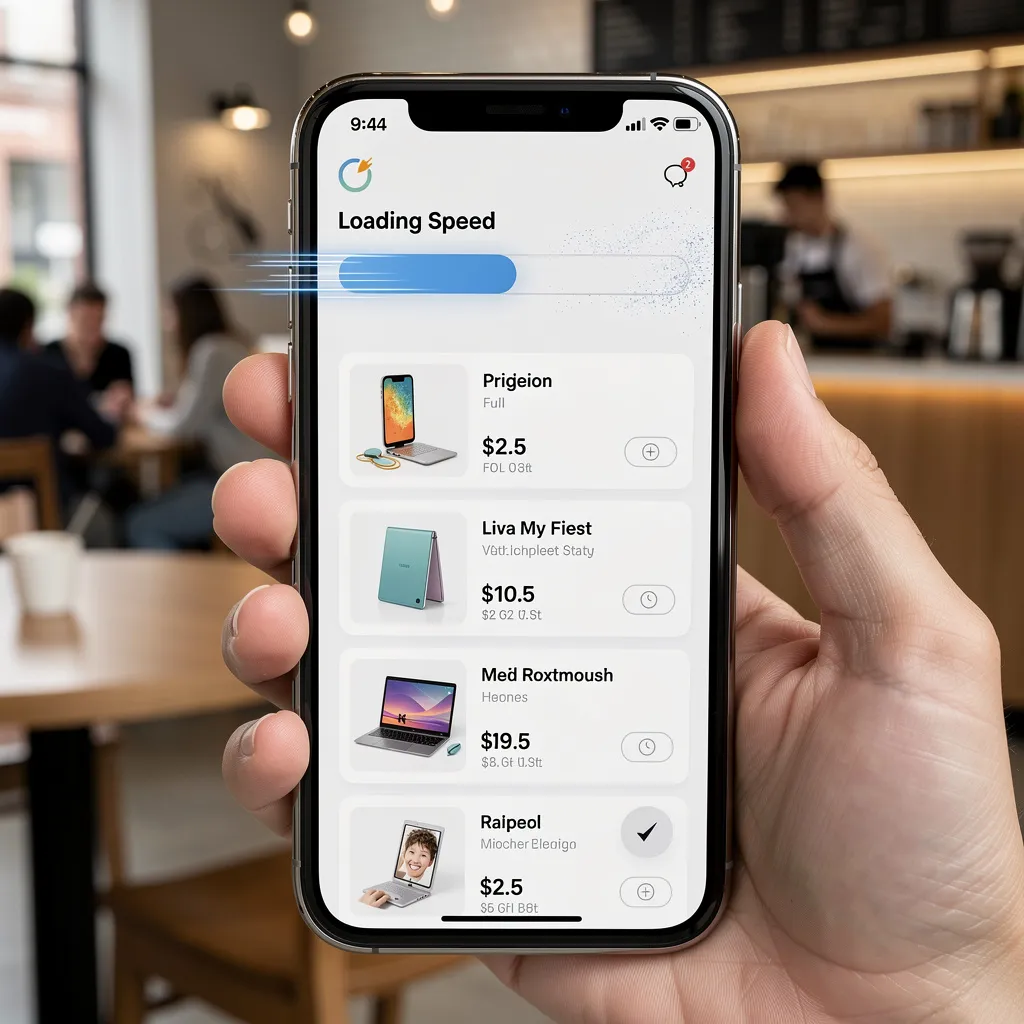
E-commerce sites are heavy. High-resolution product images. JavaScript for shopping carts. Third-party apps for reviews, chat, recommendations.
Every second of load time costs you conversions AND rankings.
Google’s Core Web Vitals specifically measure:
- How fast main content appears
- How quickly users can interact
- Whether elements jump around during loading
We audit your store’s performance and fix the specific issues slowing you down.
Product Variants Without Duplicate Content
The same t-shirt in 5 colors. The same chair in 3 sizes.
Each variant might have its own URL. Each URL has nearly identical content. Google sees 5 pages that look the same.
This dilutes your ranking power and confuses search algorithms.
We implement proper variant handling using canonical tags, structured data, and smart URL strategies. One product, proper signal consolidation.
Rich Snippets: Stand Out in Search Results
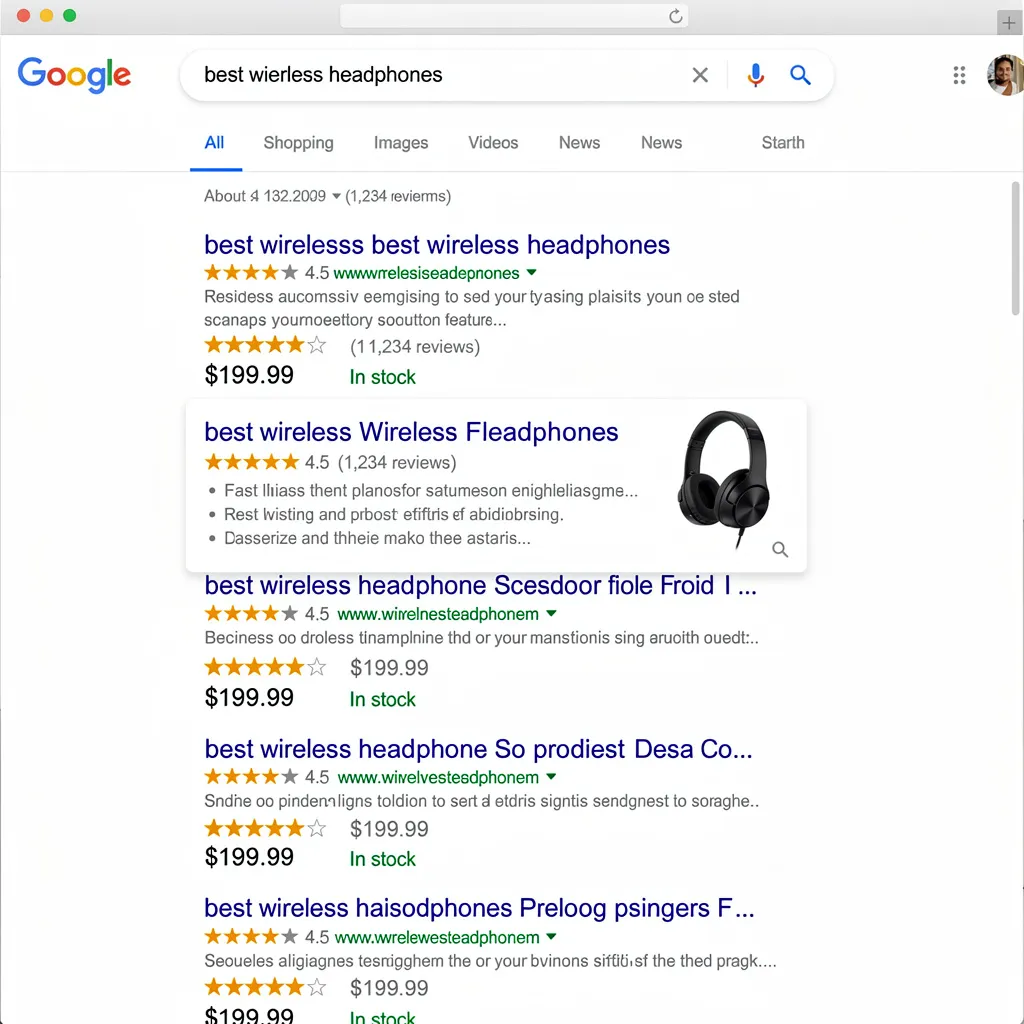
When you search for a product on Google, some results show star ratings, prices, and availability badges. Others show nothing.
Which ones get more clicks?
The enhanced ones. Obviously.
These are called rich snippets, and they come from structured data markup on your website.
Product Schema We Implement
For every product, we add schema markup that tells Google:
- Product name and description
- Price and currency
- Availability (in stock, out of stock, pre-order)
- Brand information
- Review ratings and count
- SKU and product identifiers
When implemented correctly, your products display with rich information directly in search results. Higher visibility, higher click rates.
Other E-commerce Schema
Beyond products, we implement:
- Breadcrumb schema: Shows your site structure in search results
- Organization schema: Establishes your brand identity
- Review schema: Displays aggregate ratings
- FAQ schema: For product FAQ sections
Every schema type increases your search result real estate and click potential.
Content Strategy for E-commerce
Product pages alone don’t build lasting SEO success. You need supporting content that captures customers earlier in their journey.
Buying Guides
Someone searching “how to choose running shoes” isn’t ready to buy yet. But they will be soon.
A well-crafted buying guide:
- Captures this early-stage traffic
- Positions your store as the expert
- Links naturally to your product categories
- Builds trust before the purchase decision
We identify which buying guides make sense for your catalog and provide content strategies to create them.
Product Comparisons
“Nike vs Adidas running shoes”
“iPhone 15 vs Samsung S24”
Comparison searches show high purchase intent. The person is deciding between options.
Creating comparison content for products you sell (even comparing your products to competitors) captures this valuable traffic.
Category Content
Beyond basic descriptions, category pages can include:
- Seasonal buying advice
- Size guides and fit information
- Care instructions and tips
- Trend discussions and recommendations
This adds unique value that helps pages rank while genuinely helping customers.
Platforms We Work With
E-commerce platforms aren’t all the same. Each has unique SEO capabilities and limitations.
Shopify
Excellent for most stores. Some URL structure limitations we work around. Strong app ecosystem for SEO enhancements.
WooCommerce
Maximum flexibility. Requires careful plugin selection and configuration. Can achieve excellent results with proper setup.
Magento
Enterprise-level power. Complex but capable. Needs experienced optimization to avoid bloat.
OpenCart
Popular in the region. Needs more manual SEO work. Achievable with the right approach.
Salla
Growing platform in GCC. Arabic-first approach. We understand its unique requirements.
Zid
Saudi-focused platform gaining regional adoption. Specific optimization strategies for its structure.
Custom platforms
We work with custom-built stores too. The principles remain the same; implementation varies.

What Results Look Like (And When)
Let me give you honest expectations.
E-commerce SEO is not instant. Anyone promising quick results is lying or using tactics that will backfire.
Here’s the realistic timeline:
Month 1-2: Foundation
We audit everything. Fix technical issues. Optimize site structure. Begin product and category optimization. You won’t see ranking changes yet — we’re building infrastructure.
Month 3-4: Movement
Rankings start shifting. Long-tail product keywords begin appearing. Traffic may not change dramatically, but the foundation is working.
Month 4-6: Growth
Noticeable traffic increases. More products appearing in search. Revenue from organic sources growing measurably.
Month 6+: Compounding
This is where SEO investment pays off. Rankings strengthen. Traffic grows consistently. The gap between you and non-optimized competitors widens.
We recommend a minimum 6-month commitment because the first few months are infrastructure. The returns come later — but they keep coming.
Who This Service Fits Best
E-commerce SEO works for stores that meet certain criteria.
You have products worth ranking.
If you sell commodities at razor-thin margins, organic traffic helps but may not transform your business. If you have reasonable margins and products people search for, SEO multiplies your profits.
You’re planning to exist long-term.
SEO is an investment. It pays returns over years, not weeks. Stores building sustainable businesses benefit most.
You have at least 50+ products.
Very small catalogs have limited keyword opportunities. Larger catalogs have exponentially more ranking potential.
You’re currently dependent on paid ads.
If ads are your only traffic source, you’re vulnerable. One algorithm change, one cost increase, and your business suffers. Organic traffic provides stability.
Specific Industries We Serve
Fashion and apparel
High search volume. Strong visual component. Seasonal opportunities.
Electronics and gadgets
Comparison-heavy purchases. Long research cycles perfect for SEO.
Beauty and cosmetics
Brand-loyal but discovery-driven. Content opportunities around tutorials and advice.
Home and furniture
High-value purchases with long consideration. SEO captures the research phase.
Specialty and niche products
Less competition. Passionate audiences searching for specific items.
Multi-vendor marketplaces
Complex but high-potential. Aggregating products creates massive ranking opportunities.

What You Actually Pay For
Starting from 200 OMR per month.
This is not a one-size-fits-all price. Your investment depends on several factors:
Number of products
50 products requires different effort than 5,000. More products mean more optimization work but also more ranking opportunities.
Number of categories
Category structure complexity affects scope. More categories need more optimization attention.
Platform
Some platforms require more technical workarounds than others.
Competition level
Highly competitive niches require more aggressive strategies.
Languages
English-only versus English and Arabic changes the scope.
Target markets
Oman-only versus GCC-wide requires different approaches.
Most stores fall in the 200-400 OMR monthly range. Large stores or highly competitive markets may be higher.
Minimum commitment: 6 months recommended
You can start with 3 months, but 6 months allows proper strategy execution and measurable results.
Getting Started: Free E-commerce SEO Audit
Before recommending anything, we need to understand your situation.
Our free audit examines:
- Current organic visibility and traffic
- Technical SEO issues specific to your platform
- Category and product page optimization status
- Competitive landscape in your market
- Realistic opportunity assessment
No commitment. No pressure. Just clarity on where you stand and what’s possible.
The Cost of Waiting
Every month you delay, you’re:
Paying more for ads while competitors build organic traffic
Losing sales to stores that rank where you don’t
Falling further behind as Google establishes their authority over yours
Missing compound growth that could transform your business over time
E-commerce SEO isn’t optional for serious online retailers. It’s infrastructure. The stores investing now will dominate organic search for years.
The question isn’t whether you’ll need it. It’s whether you’ll start before your competitors make the gap impossible to close.
Ready to Reduce Your Ad Dependency?
Let’s talk about your store.
Get a free e-commerce SEO audit. We’ll analyze your current situation, identify the biggest opportunities, and show you exactly what’s possible.
No commitment. No generic advice. Specific insights for your store.
🛒 Stop Paying for Every Click
Your products deserve to rank organically.
Your margins deserve to grow.
💬 Chat with us on WhatsApp
Our standard service focuses on optimization strategy, technical implementation, and guidance. Content creation for product descriptions is available as an additional service. We can also provide templates and guidelines for your team to create SEO-friendly content at scale.
We implement proper out-of-stock handling that preserves ranking value while directing customers to alternatives. When products return, they maintain their search position. Poor out-of-stock handling is one of the most common e-commerce SEO mistakes.
We work with all major e-commerce platforms: Shopify, WooCommerce, Magento, OpenCart, Salla, Zid, and custom-built stores. Each platform has specific considerations, but the SEO principles remain consistent.
Large catalogs are actually better for SEO — more ranking opportunities. We develop scalable optimization systems, prioritize high-value products, and implement site-wide improvements that benefit all pages. More products mean more work but also more potential returns.