Why Google Decides Who Gets the Booking Before the Plane Lands
Somewhere over the Arabian Sea, about ninety minutes before touchdown, a German couple pulled out a phone connected to in-flight WiFi. They typed four words into Google: “rent a car Muscat.” Scrolled briefly. Tapped a listing with 326 reviews and a 4.7-star rating. Saw prices, fleet photos, a WhatsApp button, and an “Open 24 hours” badge. Booked a Nissan Patrol for six days. Paid a deposit through the website. Done before the seatbelt sign came back on.
By the time this couple walked through arrivals at Muscat International, they already had a confirmation number, a pickup location pin, and a contact name. They walked past your counter. They did not even glance at the sign. Not because your prices are worse. Not because your cars are older. Because the decision was finished before they entered Omani airspace.
This is what the car rental market in Muscat looks like in 2026. The booking does not happen at the airport counter anymore. It does not happen through hotel concierges or tourist brochures at the luggage carousel. It happens on Google, on a phone, often hours or days before the customer arrives. And the rental companies that understand this are running full fleets while competitors down the road sit with vehicles parked in rows, waiting for walk-ins that come less frequently every season.
Oman welcomed 3.9 million international visitors in 2024. The Oman Ministry of Heritage and Tourism projects 5.2 million by 2027 under the National Tourism Strategy. Muscat is the entry point for the overwhelming majority of these travelers, and unlike Dubai or Bahrain, Oman is fundamentally a driving destination. There is no metro. Bus coverage is minimal. Taxis exist but the distances between attractions — Nizwa is 170 km away, Sur is 330 km, Jebel Akhdar requires a 4×4 permit — make renting a vehicle not a convenience but a necessity.
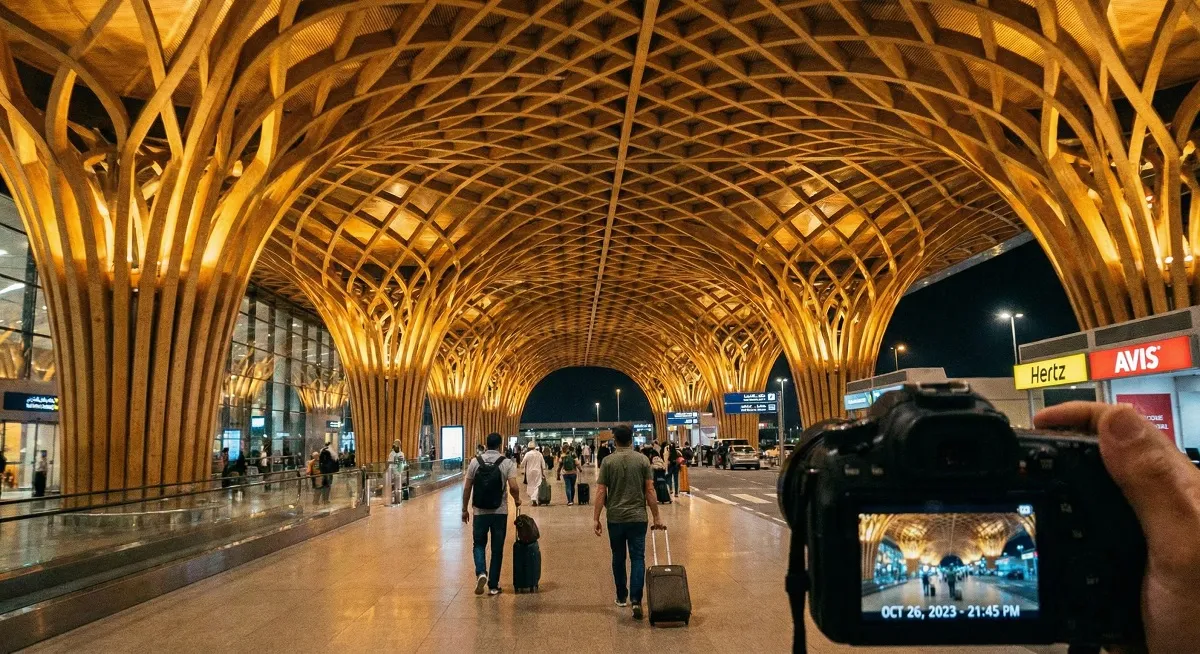
14,600 Monthly Searches for Car Rental in Muscat
The math behind car rental SEO in Muscat is brutal in its simplicity.
Google processes roughly 14,600 searches per month in Oman directly related to renting a vehicle. This includes English queries — “rent a car Muscat airport,” “cheap car rental Oman,” “SUV hire Muscat” — and a growing segment of Arabic searches — “تأجير سيارات مسقط,” “استئجار سيارة رخيصة مسقط,” “تأجير دفع رباعي عمان.” The English-to-Arabic ratio currently sits around 71% to 29%, but Arabic search volume has increased year over year as regional Arab tourism to Oman grows, particularly from Saudi Arabia, UAE, and Kuwait.
Now here is where the math gets uncomfortable for most rental companies:
Google’s Map Pack — the three business listings that appear with a map at the top of local search results — captures between 44% and 52% of all clicks on mobile for “near me” and location-based service queries. For car rental, the concentration is even higher because travelers searching at the airport or from their hotel are in immediate-need mode. They are not browsing. They are booking.
Three spots. Twelve or more active rental companies in Muscat competing. That means nine companies are functionally invisible in the most valuable real estate on Google.
Below the Map Pack, organic search results offer another opportunity — but only if your website exists, loads fast, and contains content that Google considers relevant to the search query. A one-page website with your company name, a phone number, and a stock photo of a white sedan does not rank. A five-page website with fleet listings, pricing tables by vehicle type, location pages for airport pickup and city delivery, and genuine customer testimonials does.
The rental companies currently occupying those top Google positions in Muscat are not there by accident. They built it. And every month they hold those positions, they absorb bookings that should have gone to competitors with better cars, better service, and better prices — but worse Google visibility.
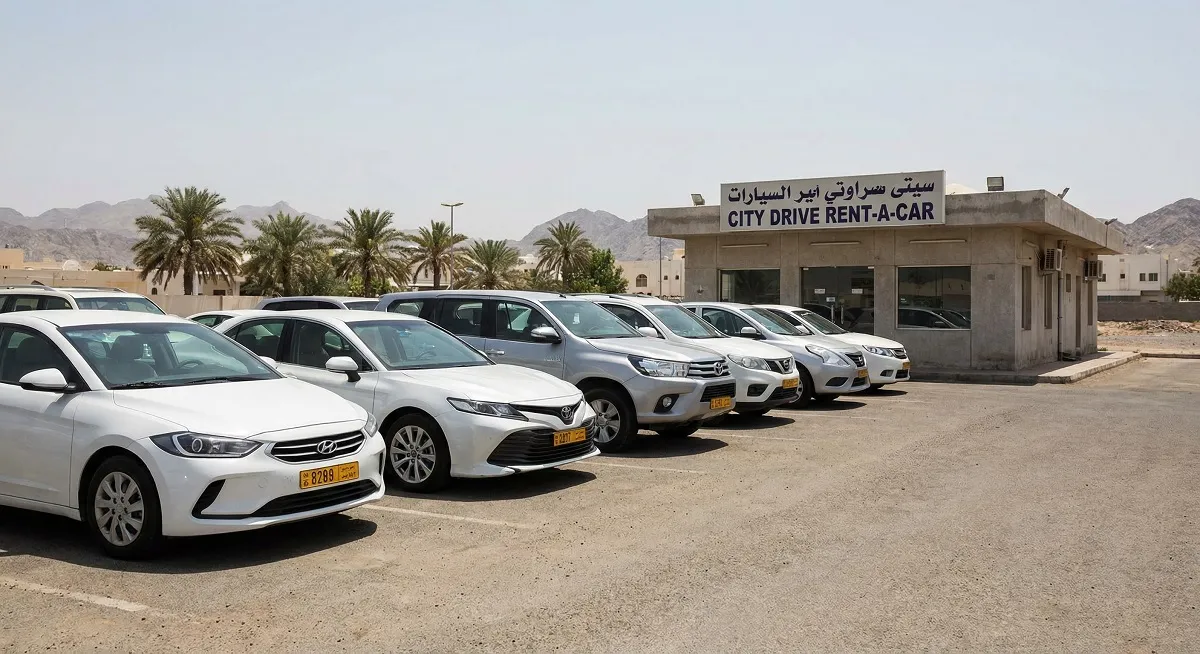
The Jebel Akhdar Search: How One Keyword Separates Smart Rental Companies from Everyone Else
There is a specific search query that perfectly illustrates the difference between a car rental company that understands SEO and one that does not.
“4×4 rental Muscat Jebel Akhdar.”
This query gets searched approximately 1,200 times per month between October and March — Oman’s peak tourism season. The Royal Oman Police requires a 4WD vehicle with a minimum engine displacement to drive the road up to Jebel Akhdar, one of the country’s most popular tourist destinations. Travelers know this. They Google it before they arrive.
A rental company that has a dedicated page on its website titled “4×4 Rental for Jebel Akhdar — Requirements, Vehicles & Pickup from Muscat Airport” — with content explaining the ROP regulation, listing which vehicles in their fleet qualify, showing photos of those specific vehicles on mountain roads, and offering a clear booking or WhatsApp button — owns this search. That single page, if properly optimized, can generate 30 to 50 qualified leads per month during peak season. At an average booking value of 35-50 OMR per day for a 4×4, that is potentially 5,000+ OMR in monthly revenue from a single web page.
The same logic applies to other destination-specific searches:
“Car rental for Wahiba Sands” — travelers searching for desert-capable vehicles.
“Rent a car Salalah from Muscat” — customers planning the 1,000 km southern road trip.
“SUV rental Oman road trip” — adventure travelers planning multi-day itineraries.
“Monthly car rental Muscat” — expats and long-stay visitors looking for extended deals.
Each of these queries represents a distinct customer need. Each deserves its own landing page. Each is an opportunity that generic car rental websites completely miss because their entire site consists of a homepage, a “Fleet” page with tiny thumbnails, and a “Contact Us” page.
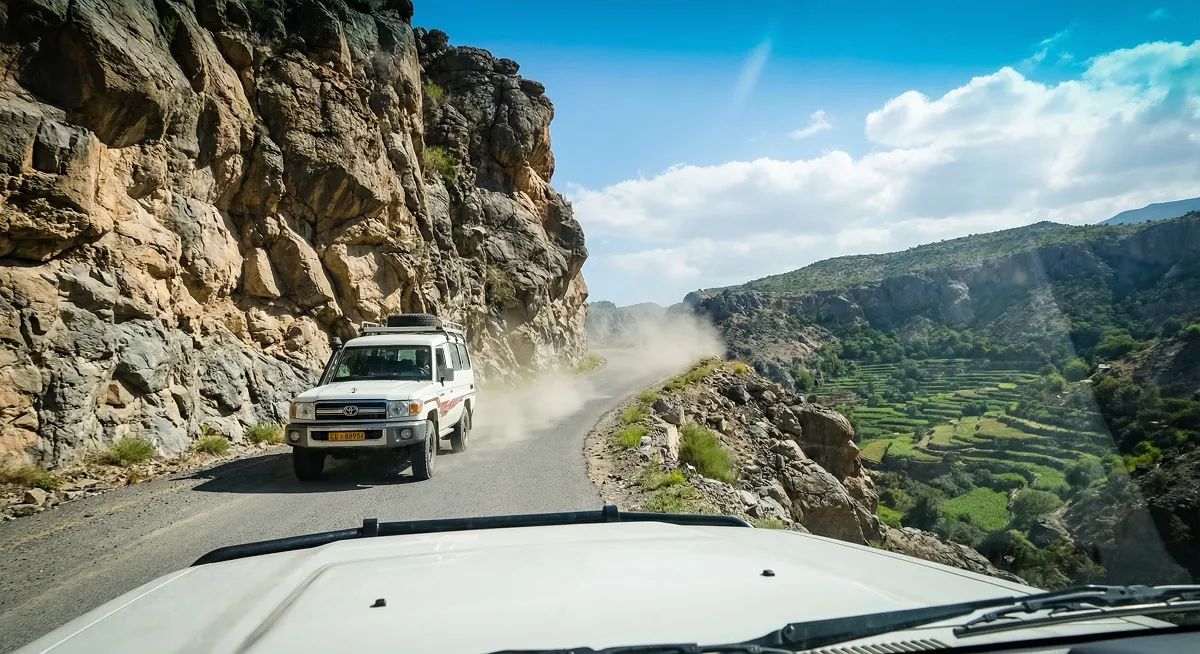
Between October and March, Your Fleet Should Be Fully Booked. It Is Not. Here Is Exactly Why.
Oman’s tourism season follows a predictable curve. International arrivals begin climbing in October as temperatures drop below 35°C. November through February is peak season — pleasant weather, clear skies, ideal conditions for wadi hiking, desert camping, and mountain driving. March starts the wind-down. By April, heat pushes most tourist activity to Salalah’s khareef season or stops it entirely until autumn.
During those peak five months, Google search volume for car rental in Muscat increases by approximately 160-180% compared to the summer baseline. Hotel occupancy in Muscat exceeds 75% in December and January. Flights into Muscat International from Europe, particularly Lufthansa, KLM, British Airways, and Turkish Airlines, run at or near capacity.
Every one of these travelers needs ground transportation. And the search pattern follows a consistent timeline:
14-30 days before arrival: Travelers begin comparing rental options. Searches like “best car rental Muscat” and “car hire Oman reviews” appear. This is when your website’s content, pricing transparency, and fleet presentation determine whether you make the shortlist.
3-7 days before arrival: Bookings happen. Searches shift to “rent a car Muscat airport pickup” and “book car Oman online.” Customers want a seamless digital experience — see the car, see the price, book it, done. Websites that require email inquiries or phone calls for pricing lose to competitors with online booking capability.
Day of arrival / in-country: Last-minute and walk-up searches. “Car rental near me” from a hotel in Shatti Al Qurum or directly at the airport. Google Business Profile dominance is critical here because the Map Pack is the first and often only thing these searchers see.
A car rental company that builds its SEO strategy around this seasonal calendar — refreshing content in September, pushing Google Business Profile activity from October onward, publishing blog content about Oman road trip itineraries in November, and maintaining review velocity throughout the season — captures demand at every stage of the traveler’s journey. A company that treats its website as a static brochure year-round captures almost nothing.
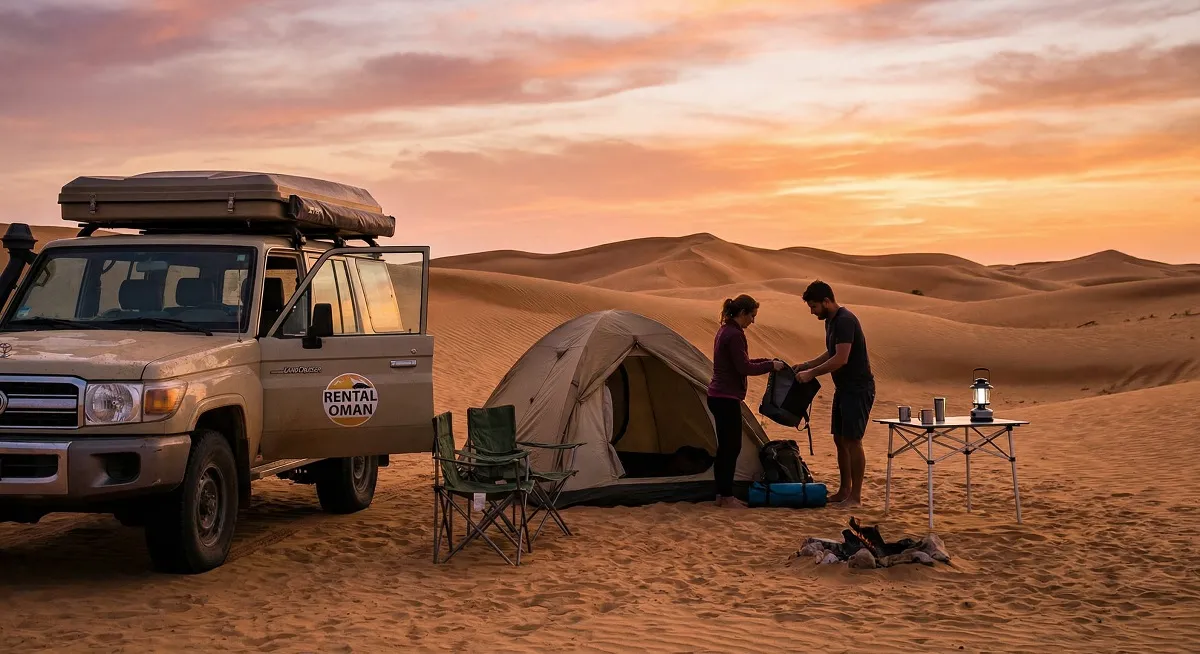
What a Tourist Sees When They Google “Rent a Car Muscat” — A Brutal Honest Audit
I searched “rent a car Muscat” on Google from a clean browser with location set to Muscat International Airport. Here is what appeared, and what it tells us about the competitive landscape:
The top three Map Pack results all had one thing in common: over 100 Google reviews with ratings above 4.3 stars. The businesses outside the Map Pack? Under 40 reviews, lower ratings, and profiles that looked like they were created and abandoned.
Clicking into the websites of the top-ranking companies revealed another pattern. They had dedicated landing pages for airport pickup. They showed real photos of actual vehicles in their fleet, not manufacturer stock images. They listed prices per day by vehicle category. They had Arabic content — not on a separate website, but integrated as a language option on the same domain. They loaded in under three seconds on mobile.
The bottom-ranking companies? One had a website that took 7.2 seconds to load. Another had a homepage with a single paragraph about “providing excellent service” and no fleet information whatsoever. A third had a Google Business Profile showing “Temporarily closed” despite being fully operational — because someone forgot to update the status after a holiday closure months ago.
The difference between the top three and the rest was not fleet size. It was not pricing. It was not years in business. It was digital execution. Clean website, fast loading, real photos, visible pricing, active Google profile, consistent reviews. Every business that nailed these elements was thriving. Every one that missed even two of them was struggling for visibility.
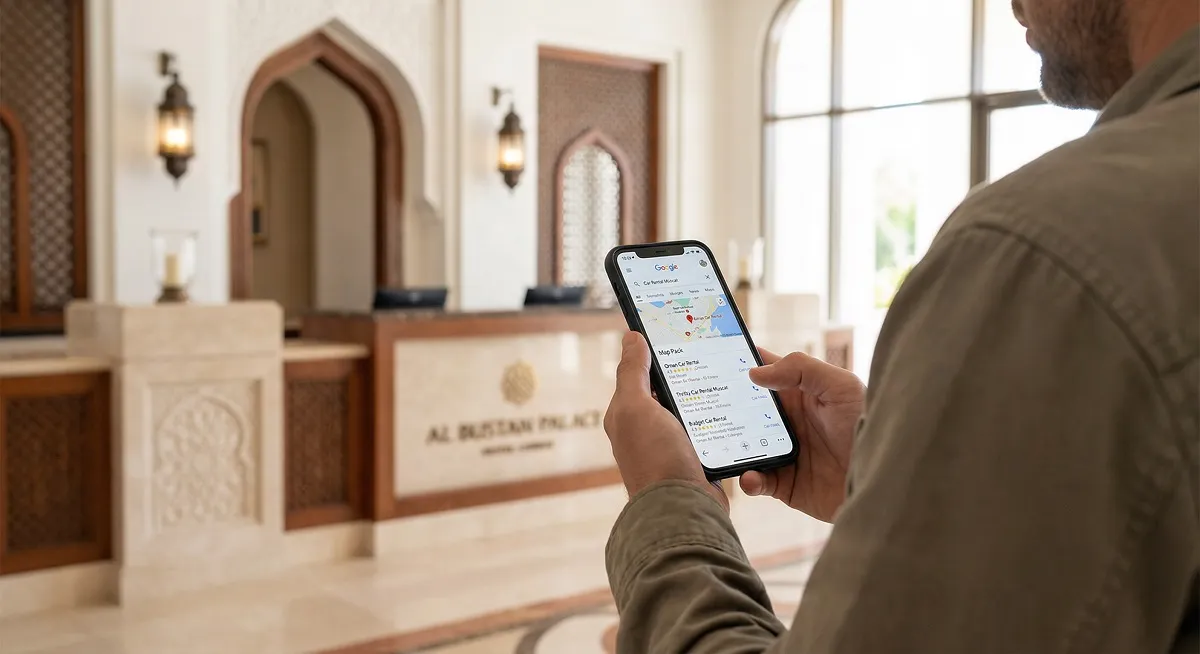
Reviews Run This Industry — A Single Star Changes Everything
In most industries, the difference between a 4.2 and a 4.6 Google rating is marginal. In car rental, it is the difference between a full fleet and idle inventory.
Car rental generates anxiety. Travelers worry about hidden charges, deposit holds, vehicle condition, insurance scams, and roadside breakdowns in unfamiliar territory. Before handing over their passport and credit card to a company they have never heard of in a country they may be visiting for the first time, they do one thing without exception: they read reviews.
A study by BrightLocal in 2025 found that 87% of consumers read online reviews for local businesses, and 73% only pay attention to reviews written within the past three months. For car rental in Muscat, this means a company with 200 reviews — but where the most recent one is from September 2024 — loses credibility compared to a competitor with 90 reviews where the most recent one was posted yesterday.
The content of reviews matters as much as the quantity. Travelers searching for rental cars in Oman specifically look for mentions of:
- Airport pickup experience (was someone actually there on time?)
- Vehicle condition (was the car clean and as described?)
- Hidden fees (were there surprise charges at return?)
- 4×4 quality (was the vehicle genuinely capable for mountain/desert driving?)
- Communication (did the company respond to WhatsApp messages quickly?)
A car rental company that actively collects reviews after each rental — through a simple WhatsApp message with a direct Google review link sent at vehicle return — can accumulate 20-40 new reviews per month during peak season. Over a single tourism season (October to March), that is 120-240 reviews. In a market where most competitors have fewer than 50 total reviews, this volume creates an insurmountable advantage in Google’s local ranking algorithm.
Responding to every review — positive and negative — is equally important. A thoughtful response to a negative review about a late airport pickup (“We apologize for the delay, Ahmed. We’ve since added a second airport dispatch driver for late-night flights to prevent this from happening again”) demonstrates accountability. Future customers reading that response see a company that cares. Google’s algorithm sees a business that is actively engaged.
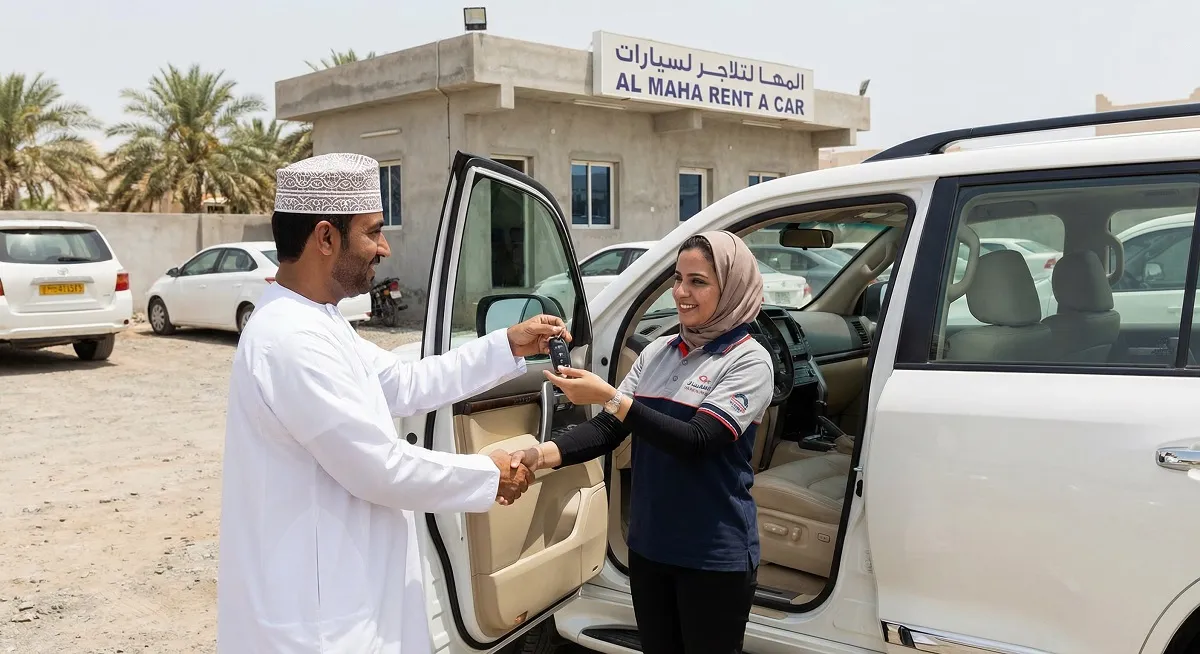
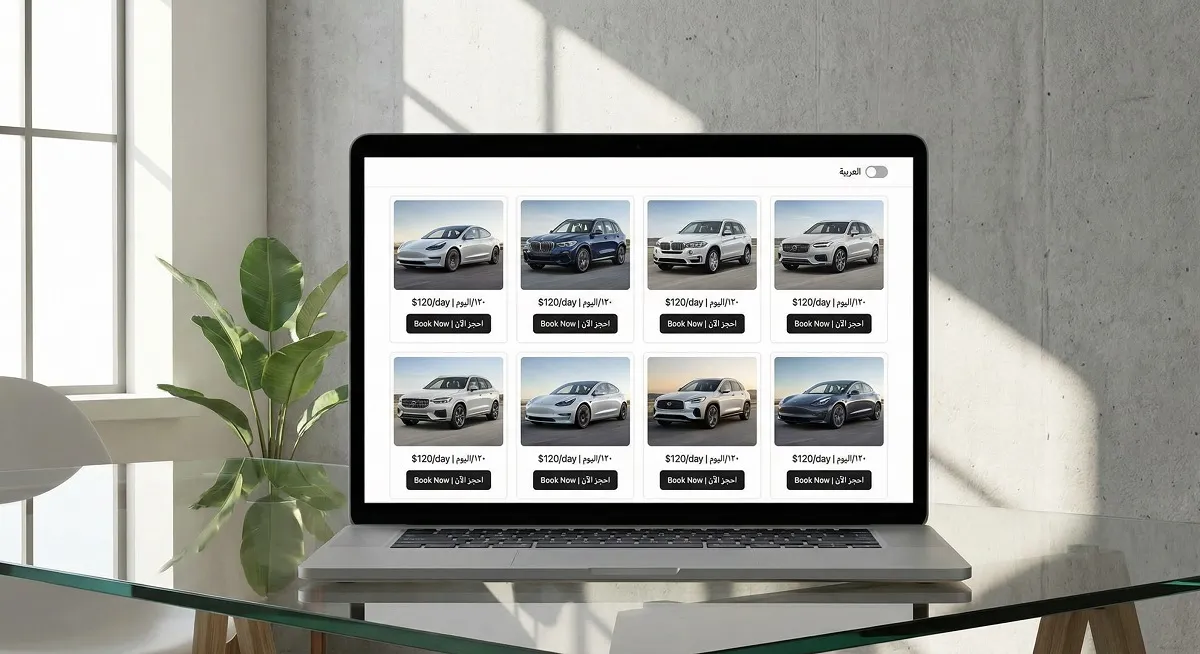
Your Website Should Book Cars, Not Just Describe Them
Most car rental websites in Muscat function like digital flyers from 2014. A logo at the top. A few sentences about “premium service and competitive rates.” A grid of car thumbnails that may or may not reflect the actual current fleet. A contact form or phone number. That is it.
This is not a website. It is a placeholder. And Google treats it accordingly.
A car rental website that ranks and converts in 2026 needs to function as a booking engine, a trust-building platform, and a content hub simultaneously:
Fleet pages organized by use case, not just vehicle type. Instead of simply listing “Toyota Corolla” and “Nissan Patrol,” create pages around how customers actually search: “Economy cars for Muscat city driving,” “4×4 vehicles for Jebel Akhdar and Wahiba Sands,” “Family SUVs for Oman road trips,” “Budget cars for monthly rental in Muscat.” Each page targets a different search query and serves a different customer need.
Transparent pricing visible without clicking or calling. The moment a visitor has to email you for a price quote, you have lost them to a competitor who shows prices openly. Display daily, weekly, and monthly rates directly on each vehicle page. Include insurance options and deposit information. Transparency is both a trust signal for customers and a content signal for Google.
Location-specific pickup pages. A page dedicated to “Muscat Airport Car Rental — Terminal Pickup & Return” with details about where your desk or driver meets the customer, what documents they need, and how late-night pickups work. Another page for “Car Rental Delivery to Hotels in Shatti Al Qurum, Al Mouj & Muttrah.” These pages target location-specific searches and demonstrate operational presence across Muscat.
Arabic content as a genuine second layer. Not a translated version of the English site. Written Arabic pages targeting queries like “تأجير سيارات رخيصة مسقط” (cheap car rental Muscat), “أفضل شركة تأجير سيارات في عمان” (best car rental company in Oman), and “سيارة دفع رباعي للإيجار مسقط المطار” (4×4 for rent Muscat airport). The growing number of Saudi, Emirati, and Kuwaiti tourists driving to Oman or flying into Muscat search predominantly in Arabic.
Schema markup for vehicle rental. Google supports structured data for car rental businesses, including vehicle types, pricing, location, and availability. Implementing this schema enables rich results in search — showing your fleet categories and price ranges directly in Google before the customer even clicks through to your site.
Al Khuwair, Seeb, Bawshar, Ruwi, Muttrah, Al Mouj — Google Cares About Neighborhoods, Not Just Cities
A mistake that almost every car rental company in Muscat makes with their Google Business Profile is listing their service area as simply “Muscat.” Google’s algorithm is far more granular than that, and so are customer searches.
Travelers staying at a hotel in Shatti Al Qurum search “car rental Qurum.” Expats in Al Khuwair search “rent a car Al Khuwair monthly.” Someone at a resort in Yiti or Shangri-La Barr Al Jissah searches “car hire near Barr Al Jissah.” Residents in Bawshar, Seeb, and Ruwi all use their neighborhood names in searches because Muscat’s geography is long and linear — distances matter and people want a nearby option.
Your Google Business Profile should define service areas at the neighborhood level, not just the city level. And your website should have content that references these specific areas naturally. A sentence on your airport pickup page that reads “We deliver vehicles to hotels across Muscat, including Shatti Al Qurum, Al Mouj, Muttrah Corniche, Seeb, and Barr Al Jissah” is worth more for local SEO than a paragraph of generic marketing copy.
Google Posts on your Business Profile should also reference specific locations. Instead of “We offer great rental deals this season,” post “Special weekly rates on SUV rental with free delivery to Al Mouj Marina and Shatti Al Qurum hotels — book through our website or WhatsApp.” Every neighborhood name mentioned in a Google Post becomes a local relevance signal that helps your profile appear for searches originating from that area.
SEO Services Packages
Google Business Profile Packages
Web Design Packages
TripAdvisor & Hospitality Packages
A mistake that almost every car rental company in Muscat makes with their Google Business Profile is listing their service area as simply “Muscat.” Google’s algorithm is far more granular than that, and so are customer searches.
Travelers staying at a hotel in Shatti Al Qurum search “car rental Qurum.” Expats in Al Khuwair search “rent a car Al Khuwair monthly.” Someone at a resort in Yiti or Shangri-La Barr Al Jissah searches “car hire near Barr Al Jissah.” Residents in Bawshar, Seeb, and Ruwi all use their neighborhood names in searches because Muscat’s geography is long and linear — distances matter and people want a nearby option.
Your Google Business Profile should define service areas at the neighborhood level, not just the city level. And your website should have content that references these specific areas naturally. A sentence on your airport pickup page that reads “We deliver vehicles to hotels across Muscat, including Shatti Al Qurum, Al Mouj, Muttrah Corniche, Seeb, and Barr Al Jissah” is worth more for local SEO than a paragraph of generic marketing copy.
Google Posts on your Business Profile should also reference specific locations. Instead of “We offer great rental deals this season,” post “Special weekly rates on SUV rental with free delivery to Al Mouj Marina and Shatti Al Qurum hotels — book through our website or WhatsApp.” Every neighborhood name mentioned in a Google Post becomes a local relevance signal that helps your profile appear for searches originating from that area.
Reach out today:
📞 +968 7922 9535
📧 seoingcc@gmail.com
🌐 SEOinGCC
Airport counter walk-ins are declining globally in the car rental industry, and Oman is no exception. Pre-booked online rentals now account for an estimated 62% of all leisure car rentals worldwide. In a market like Muscat where tourism is growing and travelers are increasingly independent, the share of pre-bookings will only increase. The counter is not disappearing tomorrow, but the company that captures the customer before they land captures a higher-margin, pre-committed booking rather than a last-minute negotiation at the desk.
Aggregators send you customers but take a 15-25% commission on each booking. They also control the customer relationship — the renter remembers the aggregator, not your brand. A direct booking through your own Google-ranked website costs you nothing in commission and builds your brand for repeat business. The smartest approach is using aggregators for baseline volume while building organic direct bookings as your primary growth channel.
Photos on your website serve a design purpose. Photos on your Google Business Profile serve a trust and ranking purpose. Google confirms that businesses with more than 100 GBP photos receive significantly more direction requests and website clicks. The photos should show real vehicles — not manufacturer renders — in recognizable Muscat locations. A Pajero at the airport. A Fortuner at Jebel Akhdar viewpoint. A Corolla at Muttrah Corniche. These photos tell both Google and customers that your business is real, active, and local.
Currently, yes. But the customer mix is shifting. Saudi tourism to Oman increased approximately 24% in 2024. Kuwaiti and Emirati visitors also grew. These travelers search in Arabic. A company that has Arabic content targeting “تأجير سيارة عائلية مسقط” (family car rental Muscat) or “أرخص تأجير سيارة في عمان” (cheapest car rental in Oman) captures this growing segment before competitors even recognize the shift.